
Indian Government Orders Removal of E-Rickshaw Battery Apps After Remote Shutdown Videos


 5 min. read
  Published on
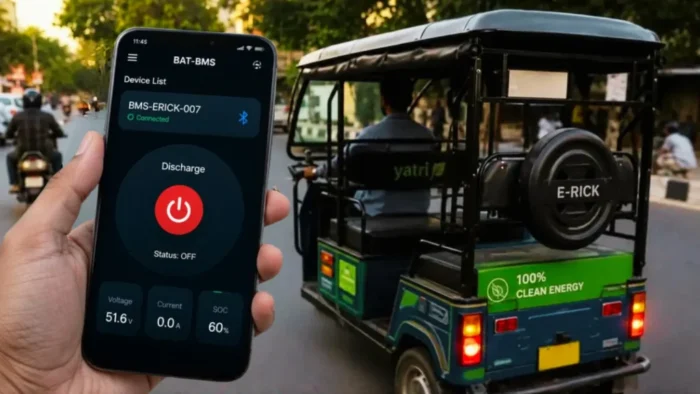
The Indian government has directed Google and Apple to remove seven battery management apps after reports that some of them were being misused to remotely stop e-rickshaws and other electric vehicles.
The action followed viral videos showing people connecting to nearby e-rickshaws and cutting battery power while the vehicles were moving. The issue raised safety concerns for drivers, passengers, and other road users.

Access content across the globe at the highest speed rate.
70% of our readers choose Private Internet Access
70% of our readers choose ExpressVPN

Browse the web from multiple devices with industry-standard security protocols.

Faster dedicated servers for specific actions (currently at summer discounts)
The apps named in reports include BAT-BMS, Lossigy, Epoch Li-ion, and Smart BMS, among others. The Indian Express reported that the government asked Apple and Google to take down seven apps after these shutdown videos spread online.
Why India Took Action Against These E-Rickshaw Apps
The apps were designed as Battery Management System tools. Such apps help users check battery voltage, current, temperature, charging cycles, and battery health.
However, some apps also include controls that can turn a battery’s discharge function on or off. In an electric vehicle, that function supplies power to the motor. Turning it off can stop the vehicle immediately.
Moneycontrol reported that MeitY issued notices to Google Android and Apple iOS over alleged misuse of these apps to shut down batteries in e-rickshaws and other vehicles.
| Issue | What Reports Say |
|---|---|
| Apps targeted | Seven apps were reportedly ordered for removal from app stores. |
| Apps named | BAT-BMS, Lossigy, Epoch Li-ion, Smart BMS, and others. |
| Main risk | Remote shutdown of compatible battery systems in e-rickshaws. |
| Technical trigger | Bluetooth-enabled BMS units with weak, missing, or default passwords. |
| Safety concern | Vehicles could stop suddenly while carrying passengers. |
How a Phone Could Stop a Moving E-Rickshaw
The issue does not affect every e-rickshaw or every electric vehicle. It appears to affect vehicles using compatible Bluetooth-enabled lithium-ion battery systems that lack strong access controls.
In some low-cost battery packs, the BMS can pair with a nearby phone without strong password protection. Once connected, a user may be able to disable discharge and stop the vehicle.
Reports say this is a short-range problem rather than a universal remote-control flaw. The Bluetooth range in these cases can be around 15 metres, which still creates a serious risk in busy streets and markets.
MeitY Says App Stores Must Exercise Due Care
MeitY Secretary S Krishnan confirmed that some apps had come to the government’s notice and had been taken down from app stores. He also said app stores must ensure that potentially damaging apps do not reach users.
According to the same Moneycontrol report, the Centre acted after complaints and reports of sudden operational disruptions faced by e-rickshaw drivers.
YourStory reported that BAT-BMS was developed by China’s Shenzhen Grenergy Technology as a companion app for Bluetooth-enabled lithium-ion batteries.
Why This Matters for India’s EV Market
E-rickshaws play a major role in last-mile transport across many Indian cities. They are cheap, widely available, and often used for short trips around metro stations, markets, and residential areas.
The incident shows how low-cost connected hardware can create public safety risks when software controls lack proper authentication. A feature meant for diagnostics, servicing, or battery protection can become dangerous if strangers can access it.
The issue also comes as India pushes deeper into electric mobility. More vehicles now depend on connected components, including battery controllers, chargers, apps, and cloud dashboards.
Not Every EV Is Exposed
The reported flaw does not mean all electric vehicles can be stopped with a phone. Many e-rickshaws still use lead-acid batteries, and branded EVs often rely on proprietary or encrypted systems.
The exposed vehicles appear to be those fitted with Bluetooth-enabled lithium-ion BMS units that do not require secure pairing. The risk grows when dealers, workshops, fleet operators, or users leave default credentials unchanged.
The Delhi Transport Department has also started looking into the issue, according to reports, which suggests the matter may lead to closer checks of e-rickshaw battery systems.
What Fleet Operators and Battery Vendors Should Do
Fleet owners, battery makers, and service centres should treat remote battery controls as safety-critical features. A shutdown command should never work without verified ownership, secure authentication, and safeguards that prevent misuse on public roads.
- Require strong passwords before any BMS app can pair with a battery.
- Disable factory-default credentials before vehicles reach drivers.
- Block discharge-off commands when a vehicle is moving.
- Add audit logs for every battery control command.
- Restrict service controls to verified technicians and owners.
- Use encrypted pairing for Bluetooth-enabled BMS units.
- Run independent security tests before selling connected battery packs.
The Bigger Cybersecurity Lesson
The e-rickshaw app removals highlight a growing problem in connected transport. When apps control physical systems, weak software security can quickly become a road safety issue.
India’s action sends a clear message to app stores, EV component makers, and fleet operators. Battery software cannot be treated like a simple utility app when it can stop a moving vehicle.
The next step should involve stronger standards for BMS access, app store review, and vehicle-level safety locks. Without those checks, similar problems could appear in other low-cost connected EV systems.
FAQ
India reportedly asked Google and Apple to remove seven battery management apps. Reports identified BAT-BMS, Lossigy, Epoch Li-ion and Smart BMS among the affected apps.
The government acted after videos and complaints suggested that some apps could be misused to cut battery power in compatible e-rickshaws, causing sudden stoppages and creating passenger safety risks.
No. Reports suggest the risk applies mainly to some e-rickshaws using compatible Bluetooth-enabled lithium-ion battery management systems with weak, missing, or default password protection.
A Battery Management System app lets users monitor battery health, voltage, temperature, current, charging cycles and related battery data. Some apps also include controls for battery discharge, which can affect vehicle movement.
Operators should use strong passwords, remove default credentials, restrict Bluetooth pairing, disable shutdown commands while vehicles are moving, and work only with battery vendors that support secure authentication.


Read our disclosure page to find out how can you help VPNCentral sustain the editorial team Read more


Improve this guide


User forum
0 messages