
Hackers Abuse 2026 FIFA World Cup Hype to Harvest PII and Payment Card Details


 10 min. read
  Published on
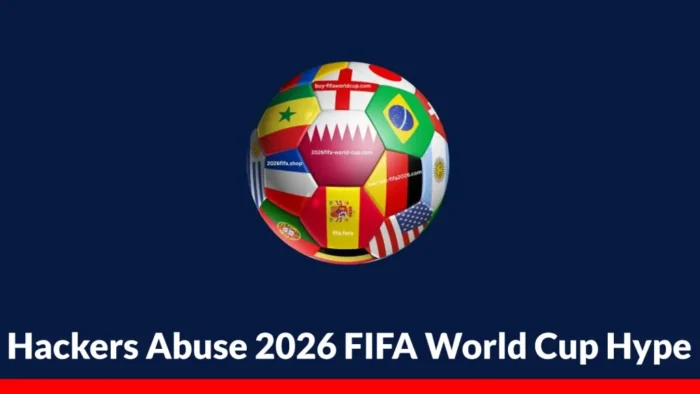
Threat actors are exploiting 2026 FIFA World Cup interest with phishing emails that lead fans to fake reward pages designed to steal personally identifiable information and payment card details. The campaign uses authentication-passing emails, redirect chains, and geo-cloaking to hide the final scam page from many automated scanners.
A Unit 42 Intel post describes a World Cup-themed phishing flow that starts with an email, moves through redirects, and ends on a fake reward page that asks for personal data and card information. The lure works because fans are already searching for tickets, merchandise, giveaways, travel deals, and last-minute offers.

Access content across the globe at the highest speed rate.
70% of our readers choose Private Internet Access
70% of our readers choose ExpressVPN

Browse the web from multiple devices with industry-standard security protocols.

Faster dedicated servers for specific actions (currently at summer discounts)
The timing gives attackers a large audience. Unit 42’s broader World Cup attack surface analysis notes that the 2026 tournament spans 16 host cities across three countries and includes 104 matches, creating a major target for fraud, phishing, impersonation, and credential theft.
How the World Cup phishing campaign works
The attack begins with an email that looks legitimate enough to pass basic trust checks. Instead of sending the victim directly to a fake checkout page, the message links into a staged redirect chain.
That redirect chain is important. Each hop separates the original email from the final phishing page, which can make the campaign harder for automated email scanners and browser security tools to evaluate at the first click.
The final stage uses geo-cloaking. Visitors from regions the attackers want to target may see a World Cup reward or prize page, while researchers, crawlers, or users from other locations may see harmless content or a different destination.
| Attack stage | What the fan sees | What the attackers gain |
|---|---|---|
| Phishing email | A World Cup prize, reward, ticket, or giveaway lure | Initial click from a motivated fan |
| Redirect chain | Several page loads before the final site appears | Extra distance from security scanners |
| Geo-cloaked redirector | Different content based on location or visitor profile | Selective delivery of the scam page |
| Fake reward page | A checkout-style claim form | Name, address, card number, expiry date, and CVV |
Why the fake reward page is convincing
The scam does not rely only on a fake FIFA logo or a suspicious email. It uses a layered path that delays the moment when the victim reaches the actual credential or payment collection page.
By the time the fan sees the prize page, the offer can feel more believable because the journey looks like a normal promotional flow. A small shipping fee, verification step, or claim form can look routine when attached to a high-demand event.
Related mobile phishing research from Zimperium found World Cup-themed mobile scams using a low-cost payment trap, such as a small shipping fee, to collect card numbers, expiration dates, and CVV data. That same pattern makes fake reward scams dangerous because a tiny payment request can expose the full card.
FBI warned about fake FIFA websites before the campaign
The FBI previously warned that threat actors were spoofing FIFA websites ahead of the 2026 World Cup. The FBI public service announcement said criminals were creating deceptive versions of legitimate FIFA pages to collect personal information, sell fake tickets and hospitality products, and support other fraud.
That warning fits the current phishing pattern. Attackers are not only targeting users who search for tickets. They are also targeting fans who react quickly to offers that appear to involve rewards, gifts, exclusive access, or event-related promotions.
Fans should assume that any unsolicited World Cup offer asking for payment details carries risk, especially when the offer claims to be free but still asks for a credit card number.
- Free ticket or merchandise offers that ask for card details
- Prize pages that request a small shipping or handling fee
- Emails that send users through several redirects
- Domains that imitate FIFA branding or event language
- Pages that create urgency around limited-time rewards
Why geo-cloaking helps attackers avoid detection
Geo-cloaking lets attackers decide what content to show based on location, browser profile, IP reputation, or other signals. A real victim in a target region may see the payment-card theft page, while a scanner may see a benign page.
This can delay takedowns because the malicious content does not always appear during automated review. It also lets the attackers tailor the scam to specific regions, languages, payment habits, or tournament interest.
The Unit 42 Intel alert describes the campaign as moving from an authentication-passing email to a geo-cloaked redirector and then to a fake reward page. That structure shows how attackers combine email reputation tricks with web-level evasion.
What information the scam tries to steal
The final phishing page is built to collect personal and financial data. A victim may be asked for a full name, physical address, phone number, email address, payment card number, expiration date, and CVV.
This information can support several types of fraud. Criminals can attempt unauthorized card charges, sell the data, create fake accounts, or use the personal details in future identity theft attempts.
The FBI warning says access to a victim’s personally identifiable information can help criminals create new accounts in the victim’s name and defraud the victim. That risk increases when PII and payment data are stolen together.
| Data requested | Why attackers want it |
|---|---|
| Full name | Supports identity matching and fraud checks |
| Home address | Helps pass card billing verification or build identity profiles |
| Email address | Enables follow-up phishing and account targeting |
| Payment card number | Enables unauthorized purchases or resale of card data |
| Expiry date and CVV | Completes the card data needed for many online transactions |
Official ticketing guidance matters
Fans should rely on official ticketing and resale paths instead of links in emails, ads, or social posts. FIFA’s Resale and Exchange Marketplace guidance says FIFA World Cup 2026 tickets purchased through FIFA’s ticket sales can be resold or exchanged through the official marketplace.
The FTC also warns fans to watch for copycat World Cup websites. Its World Cup scam guidance says fraudsters use paid search results and social media to push people toward scam websites.
The safest habit is to type the known website address directly into the browser or use a saved bookmark. That removes the redirect chain from the decision and reduces the chance of landing on a fake prize, ticketing, or payment page.
How fans can spot a fake World Cup reward page
The most obvious warning sign is a reward that asks for payment card details. A legitimate giveaway should not need a full card number, CVV, and expiry date just to release a free prize.
Fans should also check whether the page arrived through an unexpected email, a shortened link, a sponsored search result, or a social media ad. Redirect-heavy paths deserve extra caution because they can hide the final domain until the last moment.
The FTC alert also reminds fans that most World Cup tickets are delivered electronically through the FIFA app. Anyone offering paper tickets, screenshots, or unusual delivery methods should be treated with suspicion.
- Do not enter card details to claim a free World Cup reward.
- Do not trust a page only because it uses football imagery or tournament branding.
- Check the domain before entering personal or payment data.
- Avoid sponsored links when searching for tickets or promotions.
- Use official apps and official marketplaces for ticket activity.
- Report suspicious emails to your employer or email provider.
Businesses should also prepare for employee-targeted scams
World Cup scams do not only target fans at home. Corporate inboxes are also exposed because employees may click ticket offers, travel deals, streaming links, fake HR watch-party promotions, or contest emails from work devices.
Security teams should tune phishing detection for event-themed lures, especially messages that pass authentication checks but still include suspicious redirects. Email security tools should expand final-URL inspection and detonation logic where possible.
Unit 42’s 2026 World Cup threat analysis describes the tournament as a large global attack surface for financially motivated criminals, hacktivists, and other threat actors. That makes user awareness, brand monitoring, and payment-card fraud response important during the tournament window.
| Defense area | Recommended action |
|---|---|
| Email security | Inspect redirect chains and final landing pages, not only the first link |
| Awareness training | Warn staff about World Cup rewards, ticket offers, and fake streams |
| Web filtering | Block newly registered or suspicious event-themed domains |
| Brand protection | Monitor lookalike domains and fake promotion pages |
| Incident response | Prepare a clear process for compromised cards and leaked PII |
What victims should do after entering card details
Anyone who entered payment details on a suspicious World Cup reward page should contact their card issuer immediately. The bank can block the card, monitor for unauthorized charges, and advise whether a replacement card is needed.
Victims should also save the phishing email, page address, screenshots, and transaction details if available. These details can help banks, employers, security teams, and fraud-reporting services connect related cases.
If the same password was used anywhere on the scam site, it should be changed everywhere else it appears. Fans should also enable multi-factor authentication on email, banking, ticketing, and travel accounts.
Why this campaign is likely to continue
The World Cup creates urgency, emotion, and heavy spending in a short period. Fans are trying to secure tickets, travel, viewing access, and merchandise while prices and availability change quickly.
That pressure helps phishing pages convert. A fake reward page does not need to fool every visitor. It only needs to reach enough fans who believe they have found a limited promotion or a low-cost path into an expensive event.
Related Zimperium research found World Cup-themed phishing campaigns targeting mobile users with social engineering built around ticket scarcity, urgency, and small payment requests. Those tactics are likely to remain active as knockout matches, travel changes, and last-minute resale demand continue.
Bottom line
The latest World Cup phishing campaign shows how attackers combine familiar scam themes with stronger evasion. The lure is simple, but the delivery path is more advanced: authentication-passing email, redirect chains, geo-cloaking, and a checkout-style reward page.
Fans should treat any unsolicited World Cup reward that asks for card details as fraudulent. Organizations should monitor event-themed phishing, inspect redirect chains, and remind users to rely on official ticketing and resale sources.
For ticket-related activity, fans should start from the official FIFA ticketing pages or the FIFA Resale and Exchange Marketplace rather than links in email, search ads, social posts, or messaging apps.
FAQ
Hackers are using World Cup-themed emails, fake rewards, prize pages, ticket offers, and redirect chains to lure fans into entering personal information and payment card details on fraudulent websites.
Fake reward pages can ask for names, home addresses, phone numbers, email addresses, payment card numbers, expiry dates, and CVV codes. This data can support card fraud, identity theft, and follow-up phishing.
Geo-cloaking lets attackers show the scam page only to selected visitors, such as fans in targeted countries. Researchers, scanners, or users from other regions may see harmless content, which helps the campaign avoid detection.
Fans should type official website addresses directly into the browser, use official FIFA ticketing and resale platforms, avoid unsolicited reward emails, check domains carefully, and never enter card details to claim a supposedly free prize.
They should contact their card issuer immediately, request monitoring or card replacement, save evidence of the phishing page, report the message to their email provider or employer, and change any reused passwords.


Read our disclosure page to find out how can you help VPNCentral sustain the editorial team Read more


Improve this guide


User forum
0 messages