
Linus Torvalds Says Linux Is Not an Anti-AI Project


 6 min. read
  Published on
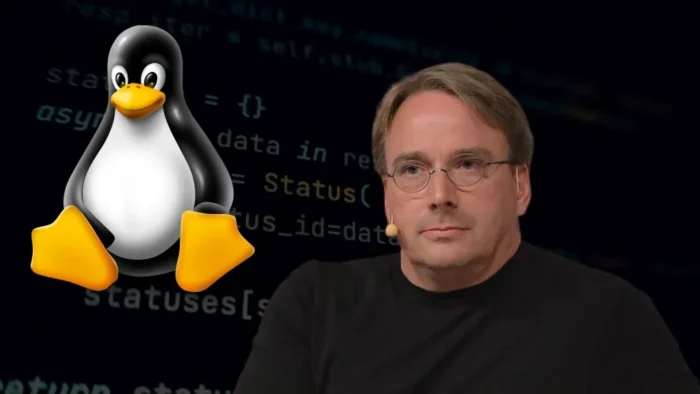
Linux creator Linus Torvalds has rejected calls for the kernel project to take a broadly anti-AI position. In a Linux kernel mailing-list response, he described artificial intelligence as a useful development tool that should receive judgment based on its technical results.
“Linux is not one of those anti-AI projects,” Torvalds wrote. He also said people who fundamentally disagreed with that position could fork the kernel or leave the project.

Access content across the globe at the highest speed rate.
70% of our readers choose Private Internet Access
70% of our readers choose ExpressVPN

Browse the web from multiple devices with industry-standard security protocols.

Faster dedicated servers for specific actions (currently at summer discounts)
His comments do not mean Linux developers must use AI coding assistants. They also do not lower the standards applied to kernel patches. The discussion focused on whether maintainers should allow AI-assisted review tools such as Sashiko to analyze proposed changes and send findings to developers.
Sashiko Triggered the Linux AI Debate
Sashiko is an agentic code-review system designed specifically for Linux kernel patches. It can collect proposed changes from mailing lists or local Git repositories and use several large language model providers to inspect the code.
The tool performs multiple review stages covering architecture, execution flow, memory management, locking, security risks and hardware behavior. It then consolidates the findings, checks potential conflicts and generates a review report.
Sashiko’s developers say the system detected 53.6% of the bugs in a test involving the latest 1,000 upstream fixes carrying relevant tags. Those bugs had already passed through human review before reaching the main Linux tree. However, the project estimates that false positives remain within a 20% range based on limited manual assessment.
| Area | Sashiko’s reported approach |
|---|---|
| Primary purpose | Review proposed Linux kernel changes |
| Supported inputs | Mailing-list patches, local Git changes and experimental pull request integrations |
| Review process | Multiple stages covering logic, security, memory, concurrency and hardware concerns |
| Reported detection rate | 53.6% in a test based on 1,000 upstream fixes |
| Estimated false positives | Within 20% based on limited manual reviews |
| Final authority | Human developers and maintainers |
Developers Disagreed Over Direct AI Reviews
The mailing-list debate examined whether Sashiko should send its findings directly to patch authors. Kernel developer Laurent Pinchart raised concerns about unwanted AI-generated reviews and argued for human involvement before the tool’s output reached developers.
The discussion referenced the Software Freedom Conservancy’s recommendations for generative AI use in free and open-source software. Those recommendations support contributors who reject LLM tools, call for human review of AI-assisted work and discourage unattended submissions outside designated areas.
Roman Gushchin, one of Sashiko’s developers, argued that requiring a person to review and forward every result would reduce the tool’s value. Such a process could move the review workload back to maintainers instead of helping them find problems more efficiently.
- Sashiko reviews patches but does not approve or merge them.
- Its findings can contain false positives or uncertain conclusions.
- Maintainers still decide whether a reported issue requires action.
- Patch authors remain responsible for the code they submit.
- AI-assisted work must still satisfy the kernel’s technical and licensing requirements.
Torvalds Wants AI Judged by Its Results
Torvalds said “AI is a tool, just like other tools we use” and argued that its usefulness was no longer seriously in question. His mailing-list message presented a technology-first position rather than unconditional support for every AI-generated result.
He acknowledged that AI systems make mistakes, but noted that human reviewers also miss bugs. Sashiko’s ability to identify problems that survived earlier review gave him a practical reason to defend its continued use.
This position differs from accepting bulk AI-generated patches or unverified vulnerability reports. Torvalds has previously criticized low-quality AI output that creates additional work for maintainers. His latest response supports tools that produce useful findings without removing human accountability.
Human Review Remains Essential
The Sashiko project documentation openly warns that its output is probabilistic. The same patch may produce different results, while genuine bugs can go undetected. The system may also send patch data and related kernel code to the selected LLM provider.
These limitations leave maintainers responsible for confirming whether each finding is accurate. A convincing AI review cannot replace testing, technical analysis or knowledge of the affected subsystem.
The Software Freedom Conservancy guidance similarly calls on contributors to understand and carefully review AI-assisted work before submission. It also recommends disclosing AI use and preserving records of how a system helped produce a contribution.
- Check whether the AI finding describes a reproducible problem.
- Review the affected code and its wider execution context.
- Confirm that any proposed fix addresses the underlying cause.
- Run the appropriate tests for the affected kernel subsystem.
- Submit the work through the normal maintainer review process.
What Torvalds’ Position Means for Linux
Torvalds has made clear that the Linux kernel will not reject AI tools simply because they use large language models. Developers can continue experimenting with systems that help identify defects, review patches or reduce repetitive work.
At the same time, the Linux project has not handed technical authority to AI. Maintainers still control what enters the kernel, and contributors remain accountable for the accuracy, quality and licensing of their submissions.
The practical test will involve whether tools such as Sashiko consistently find important bugs while keeping false positives and maintainer workload under control. If they meet that standard, AI-assisted review will likely become a more established part of Linux kernel development.
FAQ
No. Linus Torvalds said Linux is not an anti-AI project and supports judging AI tools by whether they provide useful technical results.
Sashiko is an agentic review system built to analyze proposed Linux kernel changes. It uses large language models to look for logic errors, security problems, memory issues, concurrency bugs and other defects.
No. Sashiko produces review comments, but human developers and maintainers verify its findings and decide whether a patch should change or enter the kernel.
Torvalds did not announce a policy requiring developers to use AI coding tools. His comments defended the use of helpful AI-assisted review systems within the project.
Yes. Sashiko describes its output as probabilistic and estimates that false positives remain within a 20% range based on limited manual reviews. Maintainers must verify every important finding.


Read our disclosure page to find out how can you help VPNCentral sustain the editorial team Read more


Improve this guide

User forum
0 messages