
Dutch Police Disrupt Investment Fraud Network Taking €100 Million a Month


 8 min. read
  Published on
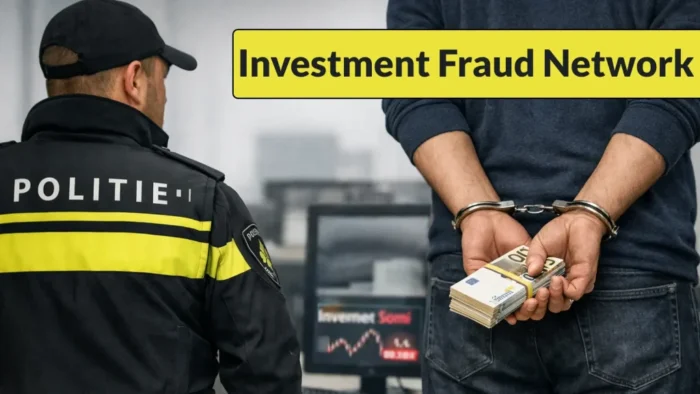
Dutch police have disrupted an international investment fraud network that allegedly operated about 20 call centres, employed more than 700 people and collected over €100 million per month from victims in several countries.
According to the Dutch police investigation, authorities arrested suspects in Poland, Cyprus, Belgium and Greece during operations in May and July 2026. Investigators also worked with commercial service providers to take important parts of the organization’s digital infrastructure offline.

Access content across the globe at the highest speed rate.
70% of our readers choose Private Internet Access
70% of our readers choose ExpressVPN

Browse the web from multiple devices with industry-standard security protocols.

Faster dedicated servers for specific actions (currently at summer discounts)
The network allegedly operated like a professional international business. Callers posed as financial advisers, built relationships with potential investors and directed them to convincing online platforms that displayed fabricated profits.
Investment Fraud Operation at a Glance
| Case detail | Information reported by police |
|---|---|
| Estimated criminal proceeds | More than €100 million per month across several countries |
| Call centres | About 20 offices in multiple countries |
| Workforce | More than 700 suspected participants |
| Operating period | Active since at least 2021 |
| Dutch reports linked to network | About 550 |
| Belgian reports | About 200 |
| Losses reported in the Netherlands | Almost €25 million |
| Estimated global victims | Possibly tens of thousands |
Suspects Arrested Across Several Countries
Police identified a 46-year-old man with Israeli and Polish nationality as a suspected key figure in the organization. Polish authorities arrested him at an airport on May 26 while he was travelling from Dubai. He was later surrendered to the Netherlands and placed in pretrial detention.
Further arrests followed on July 7. Authorities detained two Dutch nationals, aged 45 and 34, and a 34-year-old Belgian national in Cyprus. Belgian police arrested another 25-year-old suspect in Belgium on the same day. Police arrested a 44-year-old Dutch national in Athens on July 10.
Dutch authorities said further arrests remain possible. Belgian police also arrested five suspected call-centre workers connected to the organization. Investigators have not publicly identified every country where the call centres operated.
How the Fake Investment Scheme Worked
The suspected fraud started with online advertisements, telephone calls or digital messages offering investment opportunities. Callers presented themselves as professional financial advisers or account managers.
Victims often started with a relatively small payment. The fake trading platform then displayed an immediate profit, encouraging the victim to believe that the investment was performing well.
In reality, police say the organization did not invest the money. The platform’s account balances and returns were fabricated, while the victim’s payments, often made in cryptocurrency, went to the alleged fraud network.
- A victim encountered an online advertisement or received an unsolicited approach.
- A caller presented an apparently attractive investment opportunity.
- The victim deposited a small initial amount.
- A fake dashboard displayed rapid profits.
- The caller encouraged the victim to transfer larger amounts.
- Withdrawal requests triggered delays, additional fees or further demands for money.
- The callers eventually stopped communicating or introduced a supposed recovery service.
Call Centres Gave the Fraud an Industrial Structure
The organization allegedly divided its workforce across about 20 offices, with one central office directing the others. Individual teams targeted victims in particular countries and communicated in languages familiar to those targets.
Employees reportedly used pseudonyms and technical measures to hide their identities and locations. The scale resembles the call-centre model described in Europol’s Internet Organised Crime Threat Assessment, which identifies online investment fraud as a significant threat to adults across Europe.
Regular contact helped callers create a sense of trust. Some victims communicated with the supposed advisers almost daily for several months, making the relationship feel more like a legitimate financial service than an unsolicited sales approach.
Police Followed Financial and Digital Evidence
Investigators analysed financial transactions, IP addresses and other digital traces to identify suspects and locate parts of the network. Police also secured equipment that provided further information about the organization’s structure.
The Dutch police operation included cooperation with Belgian authorities and Europol. Information about suspects was shared with additional countries so that local authorities could consider prosecution.
Authorities also contacted companies that hosted or supported the network’s digital systems. Those companies helped remove important infrastructure from the internet, limiting the organization’s ability to contact victims and operate its fake investment platforms.
Cross-border coordination remains essential because callers, servers, payment accounts, companies and victims may all be located in different countries. The international structure described in the Europol cybercrime assessment can make investigations, asset tracing and victim compensation more difficult.
Financial Losses May Extend Beyond Reported Cases
Police have linked around 550 reports from Dutch victims to the organization. Those victims lost almost €25 million in total, and most lost more than €10,000 each. Belgian authorities recorded about 200 reports.
Investigators believe the network may have targeted tens of thousands of people worldwide. The actual total remains unknown because many victims do not immediately recognize the fraud or feel embarrassed about reporting it.
An AFM study on the hidden scale of investment fraud found that victims can suffer serious financial and emotional harm. Underreporting also makes it harder for authorities to measure the full size of the problem.
Warning Signs of Investment Fraud
A polished website, professional caller or realistic trading dashboard does not prove that an investment provider is legitimate. Criminal organizations can copy company information, create false reviews and display fabricated account balances.
The Dutch Fraudehelpdesk investment fraud guidance warns that scammers use different types of complex investment offers to attract victims. Consumers should independently investigate both the provider and the product.
- An unexpected call or message about an investment opportunity
- Promises of high or dependable returns with little risk
- Pressure to make an immediate decision
- Requests to pay with cryptocurrency
- A small first investment that appears to generate quick profits
- Instructions to install remote-access software
- Additional taxes or fees required before a withdrawal
- A caller who discourages contact with a bank, regulator or family member
- A recovery company that contacts a previous fraud victim without being asked
How to Check an Investment Company
Investors should verify a company through the official register of the financial regulator in their country. They should search for warnings, confirm contact details independently and check whether the named company has permission to offer the advertised service.
Criminals may impersonate a real licensed business. A valid company name or registration number is therefore not enough. Consumers should contact the genuine company through details obtained from its official website or a regulator’s register.
The AFM investment fraud report defines the crime as misleading investors through false information, deceptive return promises or nonexistent investment products for financial gain.
| Claim from seller | Independent check |
|---|---|
| The company holds a licence | Search the relevant regulator’s official register |
| The investment has guaranteed returns | Ask how returns are generated and what losses are possible |
| The offer expires immediately | Stop the conversation and take time to investigate |
| The dashboard proves the money exists | Remember that criminals can fabricate balances and transactions |
| A fee will unlock the withdrawal | Do not send more money and contact the payment provider |
What Victims Should Do Immediately
Anyone who has transferred money should stop making further payments, even if the caller promises that one final fee will release the investment. Sending additional money usually increases the loss.
Victims should contact their bank, card provider or cryptocurrency service as soon as possible. A provider may be able to flag an account, trace a transfer or preserve information for investigators, although recovery cannot be guaranteed.
- End contact with the suspected fraudsters.
- Do not pay withdrawal charges, taxes or recovery fees.
- Contact the bank or payment provider immediately.
- Preserve emails, messages, telephone numbers and call records.
- Save transaction details, wallet addresses and payment receipts.
- Capture screenshots of the website and investment dashboard.
- Report the case to local police and the relevant financial regulator.
- Change passwords if account details or remote access were shared.
Victims should also remain alert for recovery fraud. Criminals may contact people who have already lost money and claim that they can retrieve it for an advance payment. The Fraudehelpdesk accepts reports and provides guidance about suspicious investment approaches in the Netherlands.
Investigation and Asset Tracing Continue
Dutch police are continuing the financial investigation to determine whether authorities can freeze or seize assets connected to the suspected organization. Taking infrastructure offline can prevent further harm, but it does not automatically return money to victims.
The case demonstrates how cyber-enabled fraud can reach an industrial scale without relying on malware. The operation allegedly combined online advertising, fake trading systems, concealed digital infrastructure and sustained human manipulation.
Consumers can reduce their exposure by distrusting unsolicited investment approaches, checking providers independently and refusing to act under pressure. Fast reporting can also help banks and investigators trace payments before criminals move the funds through additional accounts.
FAQ
Dutch police estimate that the organization collected more than €100 million per month across several countries. This is an estimated monthly figure, not a confirmed total loss.
Investigators identified about 20 call centres in multiple countries, with more than 700 suspected participants posing as financial advisers and account managers.
The platforms displayed fabricated balances and profits after victims made an initial payment. Callers then used those supposed returns to persuade victims to transfer larger amounts.
Investors should search the relevant financial regulator’s official register, review public warnings and contact the company through independently obtained details. A company name or registration number alone is not sufficient.
The victim should stop sending money and contact the bank, card provider or cryptocurrency service immediately. Messages, receipts, transaction records and website screenshots should be preserved for investigators.
Recovery fraud occurs when criminals approach previous fraud victims and promise to recover their money in exchange for an advance fee. Victims should not pay and should report the contact to authorities.


Read our disclosure page to find out how can you help VPNCentral sustain the editorial team Read more


Improve this guide



User forum
0 messages