
ClickFix Fake CAPTCHA Attacks Compromise Enterprises with PowerShell Execution


 3 min. read
  Published on
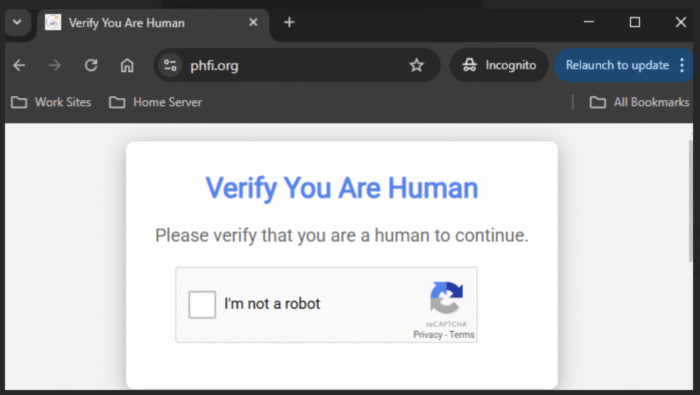
ClickFix attacks trick users into pasting malicious PowerShell commands via fake CAPTCHA prompts. Victims encounter deceptive Chrome or Word error screens demanding Win+R execution to “fix” issues. Single clicks lead to enterprise-wide Latrodectus and Supper malware infections.
Cert.pl discovered the campaign after a large Polish organization breach. Compromised sites serve JavaScript that copies obfuscated PowerShell to clipboards. Users paste into Run dialog believing they resolve browser errors. Attackers bypass all automated protections.

Access content across the globe at the highest speed rate.
70% of our readers choose Private Internet Access
70% of our readers choose ExpressVPN

Browse the web from multiple devices with industry-standard security protocols.

Faster dedicated servers for specific actions (currently at summer discounts)
The infection chain moves fast post-execution. PowerShell downloads droppers establishing network footholds. Secondary payloads enable lateral movement, data exfiltration, and ransomware staging. Robust behavioral monitoring required to stop automation.
Attack Vector Details
Social engineering demands active user participation.
- Compromised legitimate websites serve fake CAPTCHAs
- Clipboard injection writes PowerShell via document.execCommand(‘copy’)
- Win+R dialog instructions demand manual paste/execution
- Dropper downloads from remote C2 infrastructure
- Automated lateral movement targets enterprise assets
No file downloads trigger browser warnings. User action bypasses all protections.
Primary Malware Payloads
Established families deliver enterprise impact.
| Malware | Capabilities | Evasion Techniques |
|---|---|---|
| Latrodectus | Data exfiltration, C2 | NTDLL unhooking, sandbox detection |
| Supper | Lateral movement, proxying | Process injection, living-off-land |
Latrodectus variant refuses rundll32.exe execution. Checks VM/sandbox fingerprints before activating.
DLL Side-Loading Execution
Classic evasion hides malicious code.
%APPDATA%\Intel\
├── igfxSDK.exe (legitimate)
└── wtsapi32.dll (malicious)
Trusted Intel binary loads rogue DLL automatically. Basic EDR solutions miss side-loading entirely.
Infection Chain Timeline
Rapid automation follows initial compromise.
T+0s: PowerShell execution
T+2s: Dropper download complete
T+15s: DLL side-loading active
T+45s: NTDLL hooks removed
T+90s: Lateral scanning begins
Cert.pl emphasizes behavioral monitoring as only reliable defense.
Enterprise Compromise Impact
Single endpoint rapidly becomes network pivot.
- Traffic proxying maps internal infrastructure
- Credential harvesting targets domain admin
- Ransomware staging identifies encryption targets
- Persistence establishment survives reboots
- Data exfiltration precedes destructive payloads
Polish organization suffered complete domain compromise from one initial vector.
Technical Indicators
Deploy immediate hunting rules.
PowerShell Patterns:
Win+R dialog + clipboard paste
Obfuscated command execution
Remote payload download
%APPDATA%\Intel creation
igfxSDK.exe + wtsapi32.dll pairing
Network Indicators:
- Latrodectus/Supper C2 domains
- PowerShell traffic to uncommon IPs
- Beaconing from multiple endpoints
Detection Engineering
Purpose-built rules catch ClickFix execution.
YARA Rule (PowerShell):
rule ClickFix_PowerShell_Dropper {
    strings:
        $ps1 = "powershell.exe -w hidden -enc" ascii
        $run = "Win+R" ascii wide
    condition:
        any of them
}
Sysmon Event ID 1 (Process Creation):
Image: powershell.exe
CommandLine: *-enc* | *-w hidden*
ParentImage: explorer.exe
Prevention Framework
Layered controls block attack progression.
Browser Hardening:
- Disable JavaScript on untrusted sites
- uBlock Origin CAPTCHA blocking lists
- NoScript enterprise deployment
Endpoint Controls:
- Constrained PowerShell execution
- Win+R dialog monitoring
- Clipboard content inspection
- %APPDATA%\Intel directory protection
User Training:
- Never execute browser “fix” instructions
- Report Win+R demands immediately
- Verify errors through IT support
Enterprise Response Playbook
Immediate containment stops spread.
1. Isolate affected endpoint
2. Kill igfxSDK.exe + wtsapi32.dll
3. Block Latrodectus C2 IOCs
4. Hunt domain-wide via EDR
5. Reset all domain credentials
6. Reimage from trusted backups
Global Campaign Scope
ClickFix operates across multiple threat actors.
| Campaign | Final Payload | Notable Tactic |
|---|---|---|
| Polish Enterprise | Latrodectus | DLL side-loading |
| ClearFake | Lumma Stealer | WordPress compromise |
| Amatera | Info stealer | Microsoft App-V |
Microsoft tracks ClickFix evolution since 2024. Technique replaced fake browser updates entirely.
FAQ
Fake CAPTCHA prompts on compromised legitimate websites.
PowerShell copied to clipboard, pasted into Win+R dialog.
Latrodectus and Supper with enterprise compromise capabilities.
DLL side-loading via legitimate igfxSDK.exe.
User-executed PowerShell evades all browser/download protections.
Block Win+R PowerShell execution enterprise-wide.


Read our disclosure page to find out how can you help VPNCentral sustain the editorial team Read more


Improve this guide




User forum
0 messages