
Exposed LLM Endpoints Create Major Security Risks for AI Infrastructure


 3 min. read
  Published on
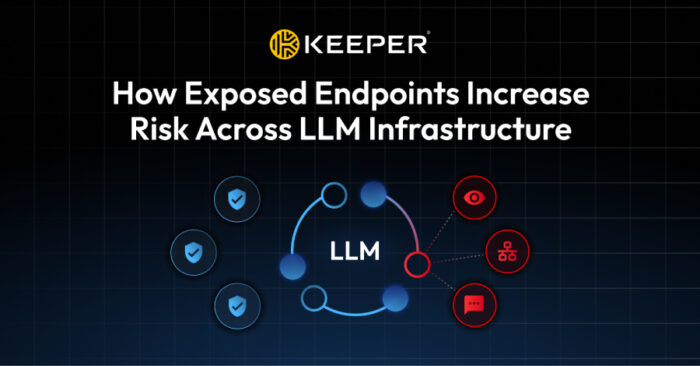
Exposed endpoints in Large Language Model (LLM) setups pose serious risks to organizations. These interfaces connect models to databases, tools, and cloud services but often lack proper security. Attackers exploit them to steal data, run malicious code, or move laterally across networks.
LLM endpoints act as security boundaries. They handle inference APIs, model updates, and plugin calls. Teams build them fast for testing, then forget monitoring. This leaves broad permissions and static tokens vulnerable.

Access content across the globe at the highest speed rate.
70% of our readers choose Private Internet Access
70% of our readers choose ExpressVPN

Browse the web from multiple devices with industry-standard security protocols.

Faster dedicated servers for specific actions (currently at summer discounts)
Non-Human Identities (NHIs) like API keys worsen the problem. LLMs need constant access to work. Over-permissioned NHIs let attackers inherit full system control once endpoints leak.
Common Exposure Patterns
Public APIs skip auth during development. Static tokens sit in repos unrotated. Internal endpoints reach via VPN flaws. Test services turn permanent.
Cloud gateways misfire and expose services. Teams assume “internal equals safe.” These small choices create big attack surfaces over time.
One breach lets attackers prompt data dumps. Tool calls execute privileged actions. Indirect injections hit via tainted inputs.
NHI Risks in LLMs
Service accounts grab excessive rights for speed. Secrets sprawl across configs. Static creds last forever once leaked. Identity explosion hides oversight gaps.
Compromised endpoints hand attackers trusted access. They query databases or cloud buckets freely. Automation amplifies damage without human notice.
Zero-trust fixes this. Verify all access always. Limit privileges tightly.
Risk Reduction Strategies
Least privilege enforcement cuts endpoint damage. Grant only needed rights.
Just-in-Time access activates privileges briefly then revokes.
Session monitoring spots misuse fast. Log all privileged actions.
Auto secret rotation kills leaked tokens quick. Short-lived creds limit windows.
Drop static credentials where possible. Use dynamic auth instead.
These steps fit LLM automation. Models run nonstop so access must stay controlled.
Endpoint Security Comparison
| Risk Factor | Traditional API | LLM Endpoint | Mitigation |
|---|---|---|---|
| Permissions | Single function | Multi-system | Least privilege |
| Credential Type | Short-lived | Static NHI | JIT + rotation |
| Attack Impact | Limited scope | Lateral movement | Zero trust |
| Monitoring | Basic logs | Full session | Record + alert |
| Exposure Path | Firewall | Cloud/VPN | Continuous verify |
Endpoint privilege management shifts focus. Limit blast radius after breach. Tools like Keeper enforce zero-trust on NHIs automatically.
FAQ
Inference APIs, model managers, plugin interfaces, admin dashboards. Any model access point.
Built for speed. Skip auth in tests. Left running unmonitored with broad rights.
Broad permissions plus automation. Attackers inherit trusted access to databases/tools.
Malicious prompts make LLMs summarize sensitive data they access.
Zero-trust: verify always, least privilege, JIT access, auto-rotate secrets.


Read our disclosure page to find out how can you help VPNCentral sustain the editorial team Read more


Improve this guide


User forum
0 messages