
FCC moves to block new foreign-made consumer routers from the U.S. market


 5 min. read
  Published on
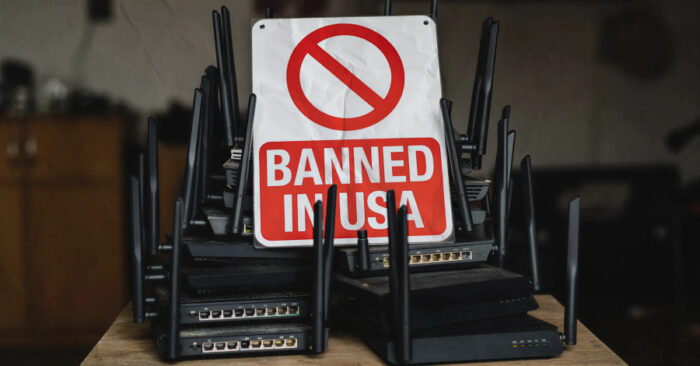
The FCC has moved to block new foreign-made consumer routers from entering the U.S. market after adding them to its Covered List. The agency said the action followed a national security determination from an Executive Branch interagency body, which found that routers produced in foreign countries pose unacceptable risks to U.S. national security and to the safety of U.S. persons.
This is not a recall, and it does not shut off routers that people already own. The FCC said previously authorized router models can still be sold, imported, marketed, and used. The restriction applies to new device models that would otherwise need fresh FCC equipment authorization before entering the U.S. market.

Access content across the globe at the highest speed rate.
70% of our readers choose Private Internet Access
70% of our readers choose ExpressVPN

Browse the web from multiple devices with industry-standard security protocols.

Faster dedicated servers for specific actions (currently at summer discounts)
The policy is broad. The FCC’s Covered List update says it now includes “routers produced in a foreign country,” unless they receive Conditional Approval from the Department of War or the Department of Homeland Security. The agency’s guidance says producers must submit detailed ownership, manufacturing, software, firmware, and onshoring information to seek that approval.
Why the FCC says foreign-made routers are a security risk
The FCC said the interagency determination found two main risks. First, foreign-produced routers create a supply chain vulnerability that could disrupt the U.S. economy, critical infrastructure, and national defense. Second, they create a severe cybersecurity risk that could be used to disrupt critical infrastructure and directly harm U.S. persons.
The agency also pointed to recent attacks involving routers. In its public notice, the FCC said malicious actors had exploited security gaps in foreign-made routers to attack American households, disrupt networks, enable espionage, and facilitate intellectual property theft. It specifically referenced the Volt, Flax, and Salt Typhoon campaigns as part of the background for the move.
The definition here is narrower than “all networking gear.” The FCC guidance says the affected category covers consumer-grade routers that are primarily intended for residential use and can be installed by the customer. That means home and small residential-style router products sit at the center of the rule.
What changes now for router makers and buyers
For manufacturers, the biggest change is that new foreign-made router models can no longer receive FCC authorization unless they first win Conditional Approval. The FCC says that approval process can last up to 18 months and requires major disclosures about corporate structure, foreign ownership, supply chains, software origins, and a U.S. manufacturing or onshoring plan.
For consumers, the short-term impact is smaller than the headlines suggest. Existing routers stay legal to use, and previously approved models can still remain on store shelves. But the rule could reshape future product launches because many leading router brands rely on manufacturing outside the United States. Reuters reported that Chinese manufacturers currently hold about 60% of the U.S. home router market.
The market effect could spread beyond Chinese brands. Reuters, AP, and other outlets noted that even U.S.-based router brands often manufacture abroad, which means the rule may hit a wide range of future products unless companies move production, win Conditional Approval, or redesign their supply chains.
What the FCC action does and does not do
| Topic | What the rule does |
|---|---|
| Existing routers in homes | Not affected |
| Previously approved models in stores | Not affected |
| New foreign-made router models | Blocked from new FCC authorization unless approved |
| Covered category | Consumer-grade residential routers |
| Exception path | Conditional Approval from DoW or DHS |
Why this story matters beyond routers
The FCC’s move shows how cybersecurity policy and industrial policy are now blending together. The conditional approval guidance does not just ask whether a router is secure today. It also asks where it is designed, where it is assembled, where its software and firmware come from, and what the producer’s U.S. onshoring plan looks like.
That gives this action a much wider significance than a normal product security advisory. It creates pressure on router makers to prove that their hardware, software, and supply chains align with U.S. national security goals before they can launch new models in the country.
It also leaves open questions. The FCC has made the basic rule clear, but the market still needs to see which router makers can win Conditional Approval, how strict the Department of War and DHS will be in practice, and whether domestic manufacturing can scale quickly enough to avoid supply shortages or higher prices. Those commercial effects remain uncertain.
Key takeaways
- The FCC did not ban routers people already own.
- The action targets new foreign-made consumer router models.
- Router makers can still apply for Conditional Approval.
- The policy ties security review to supply chain and manufacturing location.
- The biggest long-term effect may be on future product availability and pricing.
FAQ
The FCC blocked new FCC equipment authorizations for consumer-grade routers produced in foreign countries, unless those routers receive Conditional Approval from the Department of War or DHS.
Yes. The FCC said the action does not affect previously purchased routers. Consumers can continue using devices they already lawfully acquired.
Yes. The FCC said previously authorized router models can still be sold, imported, or marketed. The restriction applies to new device models that need fresh authorization.
No. The Covered List language applies to routers produced in a foreign country, not just products from one country or one company. That means the impact can reach many brands that manufacture abroad.


Read our disclosure page to find out how can you help VPNCentral sustain the editorial team Read more


Improve this guide




User forum
0 messages