
Anthropic sues U.S. government over ‘supply chain risk’ label on Claude


 5 min. read
  Published on
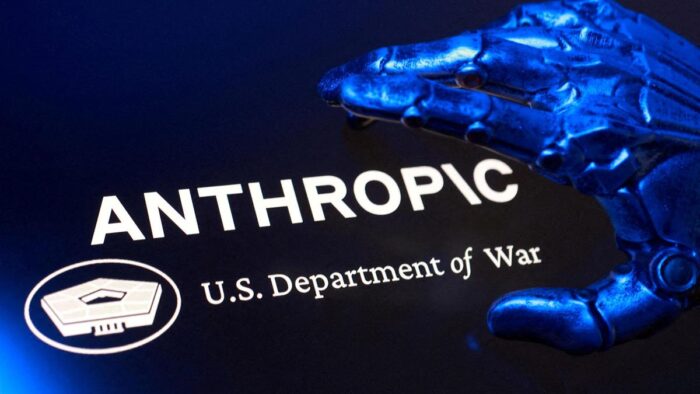
Anthropic has sued the U.S. government after the Pentagon labeled the company a “supply chain risk,” escalating a high-stakes fight over how far the military can push AI companies to loosen usage restrictions. Reuters reported that Anthropic filed suit in federal court in California on March 9, 2026, arguing the designation is unlawful and violates its free speech and due process rights.
At the center of the dispute is Claude, Anthropic’s AI assistant. Reuters reported that the Pentagon moved against Anthropic after the company refused to remove guardrails that block the use of its AI for fully autonomous weapons and domestic surveillance.
Anthropic’s public statements make its position clear. On February 27, the company said, “No amount of intimidation or punishment from the Department of War will change our position on mass domestic surveillance or fully autonomous weapons. We will challenge any supply chain risk designation in court.”
A second Anthropic statement, published on March 5 by CEO Dario Amodei, said the company had received a letter on March 4 confirming the designation. That statement also argued the action has a narrow legal scope under 10 U.S.C. § 3252 and should apply only to Department of War contract work, not to every commercial use of Claude.
The lawsuit shows Anthropic wants the court to do more than register a protest. The complaint asks for declaratory and injunctive relief, and the court filing says the March 3 letter informed Anthropic that the Department had determined the use of its products in covered systems presents a supply chain risk.
Reuters also reported that Anthropic filed a second case tied to a broader supply-chain-risk process that could potentially affect civilian government use as well, though the ultimate scope remains unclear pending further review.
Why Anthropic sued
Anthropic says the government punished it for protected speech and for holding the line on two policy red lines: fully autonomous weapons and mass domestic surveillance. Reuters reported that Anthropic told the court the designation threatens major business damage, including possible multibillion-dollar losses in 2026 revenue.
The company also says it was still in talks with the Pentagon when the formal notice arrived. Anthropic’s March 5 statement said discussions were underway about whether the company could continue serving the Department while preserving those two safeguards.
That timing matters because it turns the story from a policy disagreement into a retaliation claim. Anthropic is effectively arguing that the government did not just reject its terms. It punished the company after negotiations broke down. That is an inference from the lawsuit and Anthropic’s public timeline.
What the government has said
Reuters reported that the Pentagon declined to comment on the litigation itself. But Reuters also reported that the Pentagon’s position is that U.S. law, not a private company, should determine how the country defends itself, and that the military needs flexibility to use AI for any lawful use.
That response gets to the core legal and political question here. Can an AI lab impose non-negotiable usage limits when it sells tools to the national security state, or can the government override those limits once it decides national defense interests come first? Reuters described the case as a test of how much control AI companies can keep over the use of their systems.
What the designation appears to mean right now
Anthropic has argued publicly that the designation does not block the vast majority of its customers. In its February 27 statement, the company said a supply chain risk designation under 10 U.S.C. § 3252 can only extend to the use of Claude as part of Department of War contracts, not to unrelated commercial work.
Amodei repeated that narrower interpretation on March 5, saying the letter’s practical effect applies to customers using Claude directly as part of contracts with the Department of War.
Reuters, however, reported that the situation may not stop there. The news agency said Anthropic’s second lawsuit challenges a broader route that could lead to restrictions across the civilian government too, depending on what the government does next.
Key details at a glance
| Item | Detail |
|---|---|
| Plaintiff | Anthropic |
| Main issue | Pentagon “supply chain risk” designation |
| Core dispute | Claude guardrails on autonomous weapons and domestic surveillance |
| Main legal claims reported by Reuters | Free speech and due process violations |
| First public Anthropic challenge | February 27, 2026 |
| Formal letter confirmed by Anthropic | March 4, 2026 |
| California lawsuit filed | March 9, 2026 |
| Broader potential impact | Could extend beyond Defense Department use, depending on further government action |
Why this case matters beyond Anthropic
This case could shape how future AI contracts get written across Washington. If the government wins cleanly, defense agencies may gain more leverage to demand fewer guardrails from AI vendors. If Anthropic wins, AI companies may gain stronger backing for refusing certain military and surveillance uses. That is an inference based on the claims in the lawsuits and Reuters’ description of the broader stakes.
The case also lands at a moment when major AI firms are racing to secure government business. Reuters reported that the Defense Department signed agreements worth up to $200 million each with major AI labs over the past year, including Anthropic, OpenAI, and Google.
FAQ
Yes. Reuters reported on March 9, 2026 that Anthropic filed suit in federal court in California, and it also reported a second legal action tied to a broader supply-chain-risk process.
Reuters reported that the designation followed Anthropic’s refusal to remove safeguards against fully autonomous weapons and domestic surveillance.
The company wants the designation undone and wants the court to block federal agencies from enforcing it. The complaint seeks declaratory and injunctive relief.
Not clearly. Anthropic says the relevant law has a narrow scope tied to Department of War contract work, while Reuters reported that a second legal track could affect the broader civilian government depending on what happens next.


Read our disclosure page to find out how can you help VPNCentral sustain the editorial team Read more


Improve this guide
User forum
0 messages