
Can Someone Track You Through Your IP Address? The Real Privacy and Security Risks


 17 min. read
  Published on
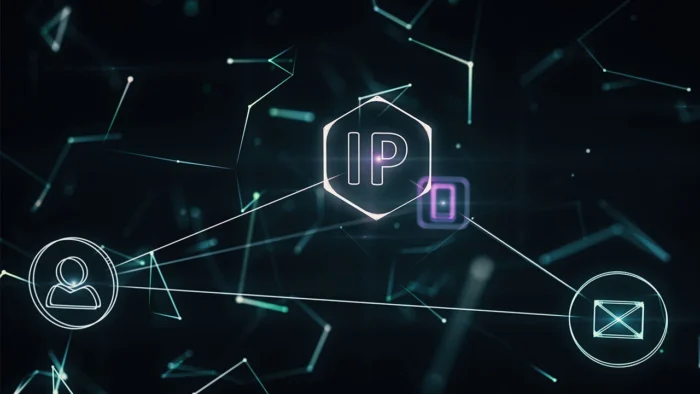
An IP address can reveal your internet provider and an approximate location, but it normally cannot show a stranger your exact home address, name, phone number, or identity. Simply knowing an IP address also does not give someone immediate access to a computer, phone, or home network.
However, an IP address is not completely harmless. Websites can use it to estimate location, security systems can compare it with previous logins, and attackers can scan it for exposed services. In gaming and other peer-to-peer environments, someone may also target an address with a denial-of-service attack.

Access content across the globe at the highest speed rate.
🔥 Save 81% + 2 bonus months! 🔥
70% of our readers choose Private Internet Access
70% of our readers choose ExpressVPN
2
Browse the web from multiple devices with industry-standard security protocols.
🔥 Save 73%! 🔥

Faster dedicated servers for specific actions (currently at summer discounts)
🔥 Save 69%! 🔥
Most people do not need to hide their IP address at all times. Strong router settings, updated software, unique passwords, multi-factor authentication, and careful control over remote access usually provide more meaningful protection. A VPN can still help when someone wants to conceal their public address, encrypt traffic on an untrusted network, or change their apparent location.
What is an IP address?
An Internet Protocol address is a numerical label used to route data between devices and networks. When someone opens a website, the connection needs an address so the website can send the requested information back to the correct destination.
The address acts more like a temporary delivery point than a permanent personal identity. It tells internet infrastructure where traffic should go, but it does not automatically identify the individual using the connection.
The Cloudflare Internet Protocol guide describes an IP address as an identifier assigned to a device or domain connected to the internet. Routers use these addresses to move packets of information between networks.
IPv4 and IPv6 addresses
Most internet connections use IPv4, IPv6, or both. IPv4 addresses contain four groups of numbers separated by periods. IPv6 addresses use a much longer combination of letters and numbers separated by colons.
| Protocol | Example | Main difference |
|---|---|---|
| IPv4 | 203.0.113.25 | Uses a 32-bit address and has a limited address supply |
| IPv6 | 2001:db8:85a3::8a2e:370:7334 | Uses a 128-bit address and provides far more possible addresses |
IPv6 became necessary because the internet outgrew the available supply of IPv4 addresses. The two formats look different, but both help networks identify destinations and deliver traffic.
The technical explanation from Cloudflare’s IP overview also explains how Internet Protocol divides data into packets and sends them through interconnected networks.
Public and private IP addresses are different
A public IP address represents a connection on the wider internet. An internet service provider assigns it to a router, modem, mobile connection, or business gateway. Websites normally see this address unless the user connects through a VPN, proxy, or privacy relay.
A private IP address identifies a device inside a home, office, school, or other local network. A router may assign separate private addresses to a laptop, phone, printer, television, security camera, and game console.
| Feature | Public IP address | Private IP address |
|---|---|---|
| Used on | The public internet | A local network |
| Usually assigned by | Internet or mobile provider | Router or network administrator |
| Visible to websites | Usually yes | No |
| Can be shared | Yes | Private addresses can repeat on separate networks |
| Common purpose | Routing internet traffic | Connecting local devices and services |
The Internet Engineering Task Force reserved several IPv4 ranges for local networks. These private ranges appear in RFC 1918 and cannot travel directly across the public internet.
Common private IPv4 ranges
- 10.0.0.0 to 10.255.255.255
- 172.16.0.0 to 172.31.255.255
- 192.168.0.0 to 192.168.255.255
Many home routers use addresses such as 192.168.0.1 or 192.168.1.1. Connected devices then receive other addresses from the same local range.
Private addresses are not secret, and they are not automatically safer because they contain the word “private.” Their main distinction comes from routing. As defined by the private address standard, public internet routers do not treat them as globally reachable destinations.
Is an IP address unique to one person?
An IP address does not necessarily correspond to one person, one device, or even one household. Several devices in a home normally share the same public IPv4 address through a router.
Mobile providers and some broadband networks may use carrier-grade network address translation. This system allows hundreds or thousands of customers to share a smaller collection of public IPv4 addresses.
Public Wi-Fi creates another example. Everyone using the same café, hotel, airport, or stadium network may appear to websites through one public address or a small group of addresses.
Dynamic IP addresses can change
Most residential customers receive dynamic public IP addresses. The provider assigns an address from an available pool and may replace it later.
The address could change after a router reconnects, after a lease expires, during maintenance, or when the provider reorganises its network. Restarting the router does not guarantee a new address because the provider may assign the same one again.
Businesses, servers, security systems, and remote workers sometimes use static IP addresses that remain consistent. Providers may charge extra for them because they make hosting, firewall rules, and remote access easier to manage.
Can an IP address reveal your exact location?
An IP address can often reveal a country, region, city, and internet provider. It usually cannot reveal an exact house, flat, room, or GPS position.
Geolocation databases estimate where an address operates by using provider records, network routing, registration data, measurements, and other technical signals. The result may point to the provider’s office or network hub rather than the customer’s actual location.
Accuracy also varies by connection type. Fixed broadband may produce a reasonable city estimate, while mobile data, satellite internet, corporate networks, VPNs, and shared gateways can place the user far from the reported location.
Why websites use IP geolocation
IP geolocation supports many ordinary online functions. A website can use it to select a language, show local news, calculate tax, display prices in the correct currency, or direct a customer to a regional store.
- Showing regionally available streaming content
- Displaying nearby shops or delivery options
- Applying country-specific legal notices
- Detecting an unusual account login
- Blocking traffic from restricted regions
- Choosing a nearby server for faster performance
Google states that it may use an IP address to estimate a general location, measure advertising performance, and improve ad relevance. Its advertising privacy information also describes several other technologies involved in ad delivery.
Does your IP address cause targeted advertising?
An IP address can contribute to advertising and analytics, but it rarely explains highly specific targeted ads by itself. Advertising platforms normally combine several signals.
- Browser cookies
- Search and viewing history
- Account activity
- Advertising identifiers
- App usage
- Device characteristics
- Approximate IP-based location
- Interactions with previous advertisements
Someone who searches for a product while signed into an account may later see related advertising on another device. Shared accounts, tracking pixels, cookies, and advertising profiles can create this connection without relying only on the public IP address.
Google’s advertising technology policy confirms that an IP address represents one possible signal among cookies, browser storage, app identifiers, and account-related information.
Can someone find your name from your IP address?
A random internet user cannot normally enter an IP address into a public tool and retrieve the subscriber’s name, phone number, email address, or billing address.
The internet provider may have records showing which customer used an address at a particular time. It does not normally release that information to members of the public.
Police, courts, and authorised government bodies may obtain subscriber information through legal procedures that vary by country. Even then, an address may lead only to the person who pays for the connection, not necessarily the individual who performed a specific online action.
Can someone hack you with your IP address?
Knowing an IP address alone does not allow someone to open files, view a screen, activate a camera, steal passwords, or control a device.
An attacker needs another weakness. This could include an exposed remote access service, an unpatched router, a vulnerable camera, weak credentials, incorrect port forwarding, or malicious software already installed on a device.
Automated scanners regularly check internet addresses for open ports and known vulnerabilities. Most home routers block unsolicited incoming connections by default, which reduces the risk to devices behind them.
Realistic risks associated with an exposed IP address
| Risk | What may happen | How to reduce it |
|---|---|---|
| Port scanning | Automated tools check for exposed services | Remove unnecessary port forwarding and update the router |
| DDoS attack | Traffic floods the connection and causes disruption | Reconnect, contact the provider, or use platform protection |
| Approximate location profiling | A service estimates the country or city | Use a VPN when location privacy matters |
| Account security checks | A service flags an unfamiliar address | Use multi-factor authentication and review alerts |
| Network targeting | An attacker looks for outdated internet-facing equipment | Install updates and disable unused remote services |
IP addresses and DDoS attacks
A denial-of-service attack floods a connection or service with more traffic than it can handle. Distributed denial-of-service attacks use many systems to generate the traffic.
Home users may encounter this risk in competitive gaming, voice chat, livestreaming, or peer-to-peer applications that expose participants’ addresses. The attack may cause high latency, disconnections, or a temporary loss of internet service.
Changing the address may stop an attack against the old destination, but customers cannot always force this change. The internet provider may need to assign a new address, block hostile traffic, or provide other assistance.
How to protect a home network
Hiding an IP address cannot compensate for an outdated or poorly configured router. Home network security starts with the equipment that connects every device to the internet.
- Change the router’s default administrator password.
- Use WPA2 or WPA3 Wi-Fi encryption.
- Install router firmware updates.
- Turn off remote administration unless it is required.
- Remove unnecessary port-forwarding rules.
- Disable unused services and guest networks.
- Use unique passwords for connected devices.
- Replace routers that no longer receive security updates.
The US Federal Trade Commission recommends changing default router credentials, enabling encryption, installing updates, and checking connected devices. Its home Wi-Fi security guidance focuses on these practical controls rather than regularly changing a public IP address.
Be careful with port forwarding and remote management
Port forwarding directs incoming internet traffic to a particular device or service inside the network. People may use it for game servers, security cameras, remote desktop tools, or self-hosted applications.
Every open service creates a potential entry point. Users should expose only what they need, require strong authentication, install updates, and restrict access where possible.
Remote router management can also expose the administration panel to the internet. The FTC router security recommendations advise users to review remote management and other settings that could allow outside access.
Should you hide your IP address?
Most people do not need to conceal their public IP address during every normal browsing session. HTTPS already encrypts the content exchanged with properly configured websites, although websites can still see the source address needed for the connection.
Hiding the address can make sense when someone wants to reduce IP-based profiling, conceal an approximate location, avoid exposing a home address during peer-to-peer activity, or use an untrusted network.
The decision depends on the threat being addressed. A VPN helps with some forms of network and location privacy, but it does not remove cookies, secure compromised accounts, block every tracker, or repair vulnerable devices.
Does a VPN hide your IP address?
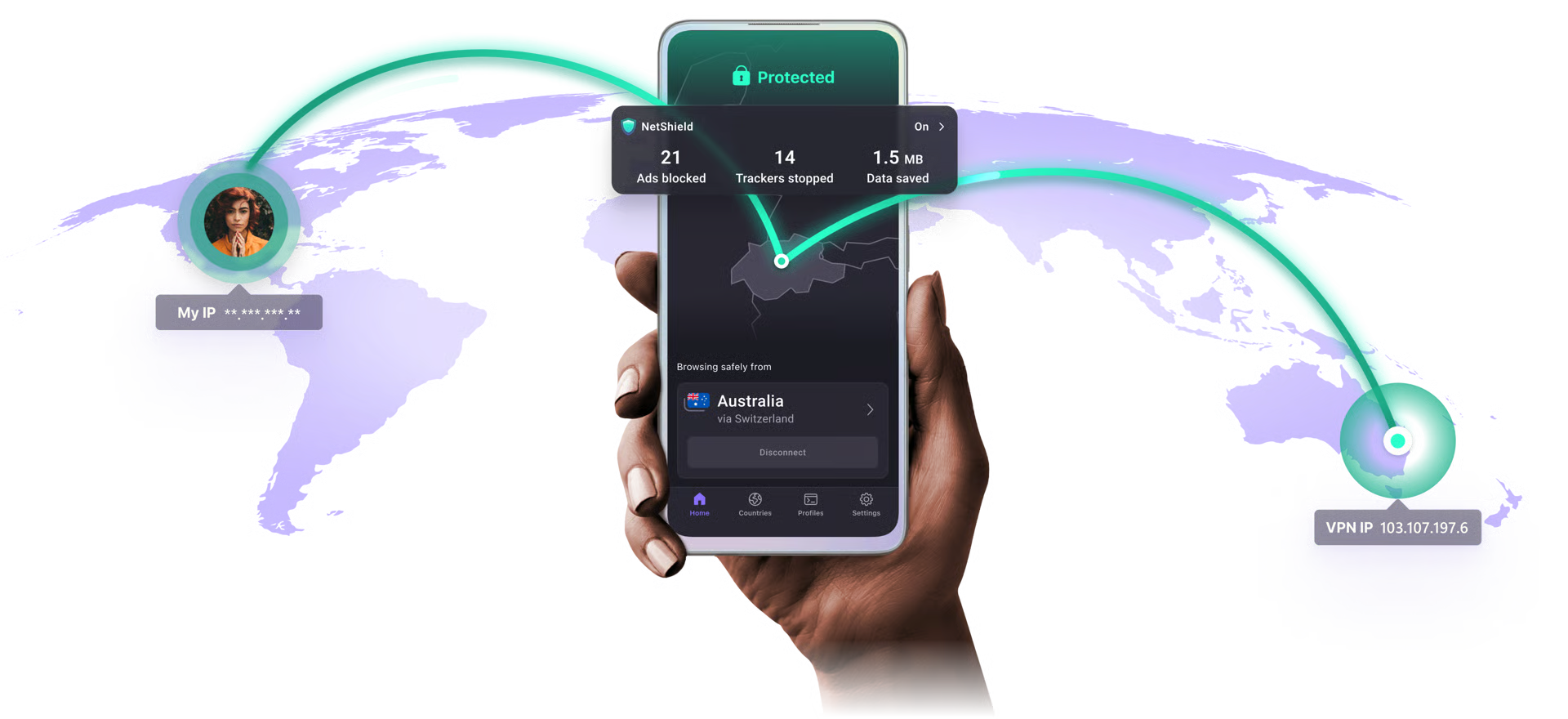
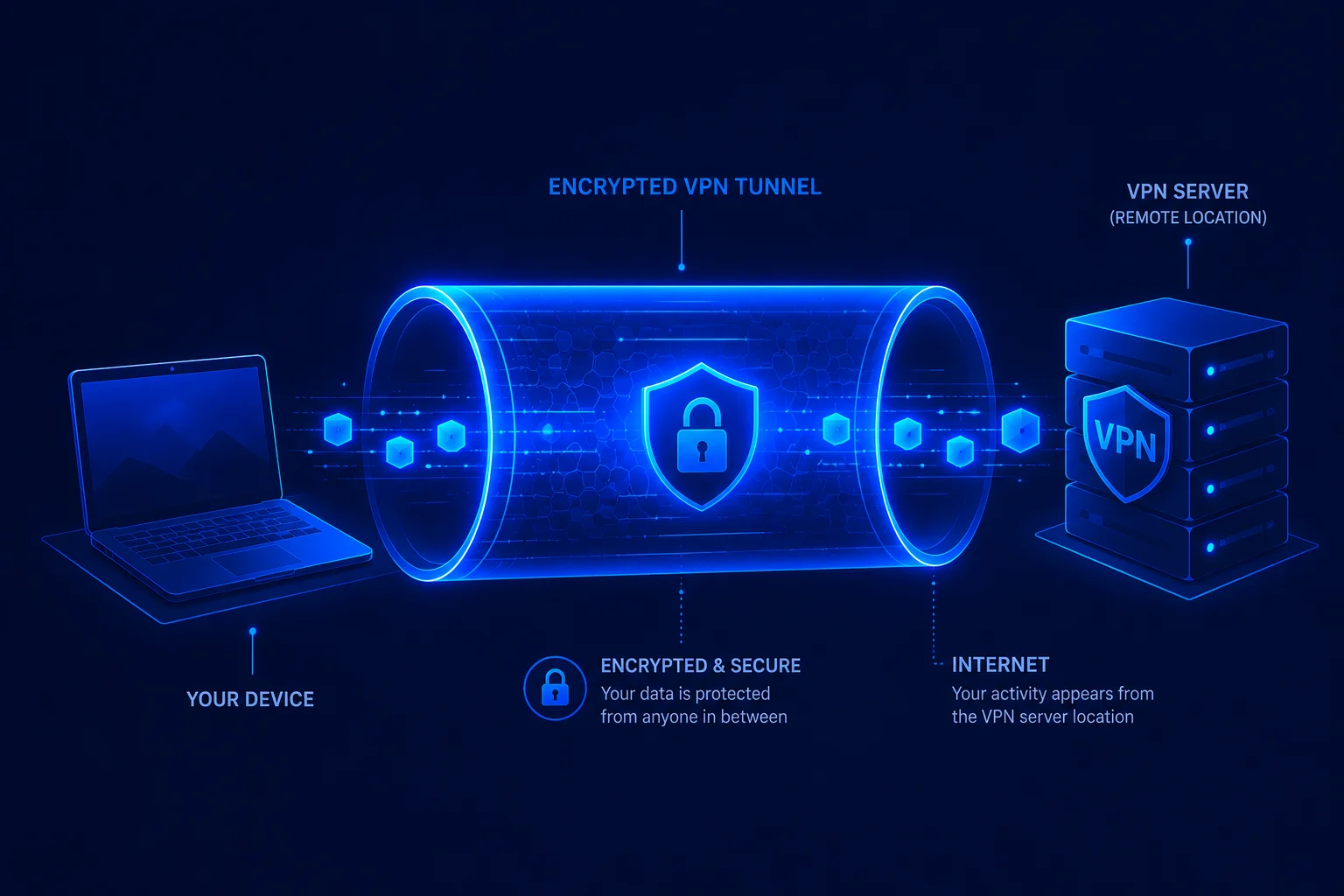
A VPN creates an encrypted connection between a device and the VPN provider’s server. Websites then see the server’s public IP address instead of the user’s normal public address.
This can conceal the user’s internet provider and approximate IP-based location from the destination website. The VPN provider, however, becomes part of the connection and may have access to account, connection, or activity data depending on its technology and policies.
Mozilla explains that a VPN masks an address and encrypts network activity through a remote server. Its VPN technical overview describes how websites receive the VPN server’s address and location.
What a VPN can and cannot do
| A VPN can | A VPN cannot automatically |
|---|---|
| Replace the public IP address seen by websites | Prevent identification after signing into an account |
| Encrypt traffic between the device and VPN server | Remove malware from a device |
| Reduce IP-based location tracking | Delete existing cookies |
| Protect traffic on an untrusted local network | Stop every browser fingerprinting technique |
| Change the apparent country or region | Guarantee complete anonymity |
A trustworthy provider should explain what it records, how long it retains information, who operates its servers, and whether independent audits support its claims.
The updated Mozilla VPN explanation confirms that masking an IP address forms only part of VPN protection. Encryption between the device and VPN server provides the other central function.
Are proxies the same as VPNs?
A proxy routes traffic from a browser or application through another server. The destination then sees the proxy’s address instead of the user’s address.
Unlike a full-device VPN, a simple proxy may cover only one browser or application. It may also lack strong encryption, leak DNS requests, or leave other device traffic outside the connection.
Proxies can help with basic location changes or network routing. Users handling sensitive information should confirm whether the service encrypts traffic and which applications it protects.
How to find your public IP address
The quickest method is to open a browser and search for “What is my IP?” The displayed result normally represents the public IPv4 or IPv6 address visible to that service.
- Connect the device to the internet.
- Open a browser.
- Search for “What is my IP?”
- Record the displayed address.
Devices connected to the same home router will often display the same public IPv4 address. A phone using mobile data may show a different address from the same phone connected to Wi-Fi.
How to find your private IP address on Windows
Windows displays the local address in the properties for the active Wi-Fi or Ethernet connection.
- Open Settings.
- Select Network & internet.
- Select Wi-Fi or Ethernet.
- Open the properties for the active connection.
- Find the address beside IPv4 address.
Microsoft provides these steps in its Windows network settings guide. The page also shows how DHCP automatically assigns addresses on compatible networks.
Use Command Prompt on Windows
- Open Start.
- Search for Command Prompt.
- Enter
ipconfig. - Find the active network adapter.
- Look beside IPv4 Address.
The Default Gateway entry usually identifies the router’s local IP address. Users may need this address to open the router’s configuration page.
The Microsoft networking documentation also explains how to view connection status, change DHCP settings, and review DNS configuration.
How to find your private IP address on a Mac
- Open the Apple menu.
- Select System Settings.
- Click Wi-Fi.
- Select Details beside the connected network.
- View the IP address and router information.
Apple’s Mac Wi-Fi settings guide confirms that the network details page displays the current IP address, router address, and TCP/IP controls.
The address shown in these settings is the Mac’s private address on the local network. To find the public address, use a browser-based IP checker.
Private Wi-Fi addresses are not IP addresses
Apple devices may also show a setting called Private Wi-Fi Address. This feature changes or randomises the device’s media access control address, also known as a MAC address.
A MAC address identifies a network interface on the local network. It is different from both the public IP address and the private IP address.
The distinction matters because changing a private Wi-Fi address does not necessarily change the public address visible to websites. Apple’s Wi-Fi configuration documentation lists the IP, router, and private address controls separately.
Do you need to change your IP address regularly?
Most people do not need to change their public address on a schedule. Dynamic addresses may change automatically, and a stable address is not automatically a security problem.
Changing it does not remove tracking cookies, sign out of accounts, reset advertising profiles, patch a router, or stop malware. Those risks require different controls.
A change may help after a targeted DDoS attack, an incorrect blocklist entry, a network conflict, or a connection problem. Users should contact their provider when restarting the router does not resolve the issue.
Is IP geolocation helpful?
IP geolocation supports security, localisation, performance, fraud prevention, and regulatory compliance. It allows a website to make a reasonable regional decision without requesting precise GPS access.
A bank may compare the general location of a login with previous activity. A retailer may show local delivery choices. A website may send visitors to a nearby data centre to reduce loading times.
Problems arise when organisations treat an IP address as proof of identity or precise location. Shared networks, mobile carriers, VPNs, corporate gateways, and inaccurate databases can produce false conclusions.
What should you do if someone knows your IP address?
Do not panic. Websites, online services, game servers, video calls, and many communication platforms routinely receive IP addresses as part of normal internet operation.
- Check the router for unknown port-forwarding rules.
- Install available router and device updates.
- Change default or weak administration passwords.
- Turn off remote management when you do not need it.
- Enable multi-factor authentication on important accounts.
- Contact the provider during an active DDoS attack.
- Use a VPN when peer-to-peer exposure creates a concern.
Someone who claims to know a precise address, password, or personal identity may have obtained information from another source. Review account activity, data breach notifications, social profiles, and messages rather than assuming the IP address revealed everything.
IP address privacy verdict
An IP address is necessary for internet communication. It can reveal useful information about a connection, including the provider and an approximate location, but it does not function like a public record of someone’s identity or exact home address.
The realistic risks include automated scanning, rough profiling, exposed network services, and denial-of-service attacks. Strong router settings and updated devices provide better everyday protection than repeatedly restarting a router or trying to keep an address completely secret.
A VPN can hide the public address seen by websites and encrypt traffic to the VPN server. It remains an optional privacy tool rather than a complete security solution. Users should choose it for a specific purpose and understand the limits of the protection it provides.
FAQ
An IP address may reveal an approximate country, region, or city, but it normally cannot reveal an exact home address. Mobile networks, VPNs, shared connections, and inaccurate databases can make the estimate less precise.
An IP address alone does not give someone access to a device. An attacker would also need an exposed service, vulnerable router, weak password, incorrect port-forwarding rule, or another security flaw.
Not necessarily. Several devices in one home normally share a public IPv4 address, and mobile or broadband providers may place many customers behind the same address. Dynamic addresses can also move between customers.
A VPN replaces the public address visible to websites with the VPN server’s address. It also encrypts traffic between the device and VPN server, but it does not prevent identification through account logins, cookies, browser fingerprints, or personal information.
Most users do not need to change their IP address regularly. Changing it does not remove malware, delete cookies, secure accounts, or fix weak router settings. Updates, strong passwords, and multi-factor authentication provide more useful protection.
Yes. Websites and advertising services may use cookies, account activity, advertising identifiers, browser fingerprints, app data, and other signals. Hiding an IP address reduces one form of tracking but does not stop every method.


Read our disclosure page to find out how can you help VPNCentral sustain the editorial team Read more


Improve this guide

User forum
0 messages