
CISA Urges Fortinet Customers to Harden Devices After FortiBleed Credential Exposure


 7 min. read
  Published on
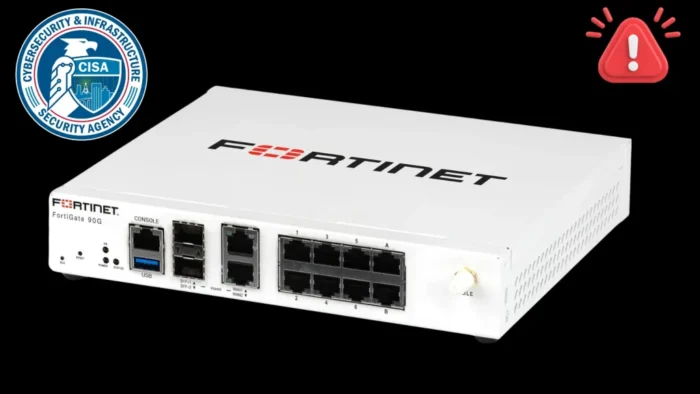
CISA has urged organizations using Fortinet devices to harden their systems after reports of a large credential exposure campaign known as FortiBleed. The agency said the activity involves leaked credentials associated with approximately 74,000 Fortinet devices, according to its Fortinet security alert.
The warning focuses on FortiGate firewalls and SSL VPN gateways exposed to the public internet. If attackers have valid credentials, they can bypass many traditional perimeter controls without exploiting a new software bug.

Access content across the globe at the highest speed rate.
🔥 Save 81% + 2 bonus months! 🔥
70% of our readers choose Private Internet Access
70% of our readers choose ExpressVPN
2
Browse the web from multiple devices with industry-standard security protocols.
🔥 Save 73%! 🔥

Faster dedicated servers for specific actions (currently at summer discounts)
🔥 Save 69%! 🔥
The campaign highlights a major weakness in edge security: stolen passwords remain dangerous long after a device receives patches. CISA is telling organizations to reset credentials, terminate active sessions, review logs, and restrict access to Fortinet management interfaces.
FortiBleed exposed credentials at global scale
Security researchers have described FortiBleed as a large-scale credential compromise campaign affecting internet-facing Fortinet infrastructure. SOCRadar said its updated dataset includes 86,644 confirmed working credentials across 194 countries, although the count has changed as researchers continue to track the campaign.
Arctic Wolf reported that attackers extracted configuration files from internet-facing FortiGate devices and cracked stored credential hashes, resulting in verified administrator credentials for tens of thousands of devices.
The activity does not appear to rely on one newly disclosed Fortinet CVE. Instead, researchers describe a credential-focused campaign that combines exposed devices, older leaked credentials, configuration access, and weak or outdated password storage.
| Item | Details |
|---|---|
| Campaign name | FortiBleed |
| Affected products | Fortinet FortiGate firewalls and SSL VPN gateways |
| CISA-reported exposure | Approximately 74,000 Fortinet devices |
| SOCRadar updated count | 86,644 confirmed working credentials across 194 countries |
| Main risk | Unauthorized access using valid credentials |
| Primary defensive action | Reset credentials, enforce MFA, restrict management access, and review logs |
Why leaked Fortinet credentials are dangerous
FortiGate appliances often sit at the edge of enterprise networks. They handle VPN access, firewall rules, administrative access, and routing between trusted and untrusted environments.
If attackers gain valid administrator or VPN credentials, they may not need malware at first. They can log in like a normal user, inspect configuration data, create persistence, move laterally, or prepare follow-on attacks.
That makes FortiBleed especially serious for organizations that keep management interfaces exposed to the internet or rely on passwords without phishing-resistant multi-factor authentication.
Password hashing is part of the FortiBleed concern
Fortinet introduced PBKDF2-based administrator password hashing in FortiOS 7.2.11, 7.4.8, and 7.6.1. A Fortinet technical note says older versions used SHA256 for administrator password storage.
The upgrade process matters. Fortinet says administrator passwords from older firmware remain stored as SHA256 hashes until each matching administrator logs in successfully after the upgrade.
That means an organization may run a newer FortiOS version but still have some older SHA256 password hashes stored in the configuration. Administrators need to verify that every admin account has moved to PBKDF2.
- FortiOS 7.2.11, 7.4.8, and 7.6.1 introduced PBKDF2 for administrator passwords.
- Older administrator password hashes may remain until the administrator logs in after upgrade.
- Admins can update remaining accounts manually to enforce PBKDF2 storage.
- Exposed configuration data can become more dangerous when weak or older hashes remain present.
- Credential rotation remains necessary even after firmware updates.
CISA says organizations should act now
The CISA advisory recommends immediate defensive steps for organizations that use affected Fortinet devices. The agency specifically calls for terminating active VPN sessions, resetting credentials, enabling MFA, and reviewing logs for suspicious activity.
Administrators should also remove unauthorized or unnecessary accounts. If attackers created a backdoor admin account, a password reset alone will not remove their access.
Log review should include FortiGate administrator activity, SSL VPN access records, firewall events, domain controller logs, and authentication events from identity providers. Suspicious logins from unusual countries, new accounts, unexpected configuration changes, and repeated failed logins deserve priority review.
Management interfaces should not face the internet
Fortinet’s system administrator best practices recommend secure administrator access, trusted hosts, limited access methods, and strong account controls. Those controls reduce the chance that stolen credentials will turn into full device compromise.
Organizations should restrict Fortinet administration to trusted internal networks, VPN-protected management networks, or dedicated jump hosts. Publicly exposed admin panels give attackers a direct place to test stolen passwords.
Security teams should also check whether external scans can reach management ports. Reducing exposure often prevents credential attacks before they reach the login screen.
| Action | Why it matters |
|---|---|
| Reset Fortinet admin and VPN passwords | Stops attackers from reusing leaked or cracked credentials |
| Terminate active SSL VPN and admin sessions | Removes sessions that may already be authenticated |
| Enable phishing-resistant MFA | Reduces the value of exposed passwords |
| Restrict admin interfaces | Prevents internet-wide credential testing against management portals |
| Review logs and configuration changes | Finds signs of unauthorized access, persistence, or lateral movement |
| Verify PBKDF2 password storage | Ensures administrator hashes use Fortinet’s newer password protection |
SOCRadar and Arctic Wolf describe an active campaign
SOCRadar’s FortiBleed report says attackers built a verified database of working credentials from internet-facing Fortinet devices. It also says the attackers used automation to scan, validate credentials, and organize victim data by country and other attributes.
Arctic Wolf’s analysis warned that many organizations may still have older administrator password hashes in FortiGate configuration files, even after upgrading firmware, unless each administrator logged in or had their password changed after the upgrade.
That point is important for incident response. A device may look patched but still require credential cleanup, account review, and configuration validation.
How administrators can verify stronger password storage
The Fortinet PBKDF2 guidance says PBKDF2-hashed administrator passwords show a PB2 prefix, while older SHA256 hashes show an SH2 prefix. Administrators should review local admin accounts and update any account that still uses the older format.
Fortinet’s administrator hardening guidance also supports a broader cleanup: limit trusted hosts, use secure protocols, reduce unnecessary access methods, and follow least-privilege principles for administrative accounts.
For large environments, these checks should happen across every Fortinet appliance, not only the most visible VPN gateways. Attackers often target neglected edge devices because they lag behind central patching and monitoring processes.
- Identify every Fortinet device exposed to the internet.
- Terminate active SSL VPN and administrator sessions.
- Reset all local administrator, VPN, LDAP, and related service credentials.
- Enable MFA on all remote access and administrative logins.
- Check administrator password hashes and enforce PBKDF2 where supported.
- Remove unused, unknown, or unauthorized accounts.
- Restrict administrative access to trusted hosts or internal management networks.
- Review logs for unusual logins, new users, and configuration changes.
- Patch FortiOS and related Fortinet products to supported fixed versions.
- Monitor for lateral movement from VPN-connected systems.
FortiBleed is a reminder that credentials are perimeter risk
FortiBleed shows that network edge devices remain a high-value target for attackers. A firewall or VPN gateway can become an entry point when credentials leak, password hashes remain weak, or management interfaces stay exposed.
Organizations should not treat Fortinet hardening as a one-time password reset. They should combine credential rotation, MFA, configuration review, patching, log analysis, and external attack surface reduction.
The most urgent step is to assume exposed credentials may still work until proven otherwise. For Fortinet customers, that means rotating passwords, closing unnecessary public access, and validating every administrator account before attackers use the same credentials again.
FAQ
FortiBleed is the name used for a large credential exposure campaign involving Fortinet FortiGate firewalls and SSL VPN gateways. Researchers say attackers collected or validated credentials for tens of thousands of internet-facing Fortinet devices.
CISA did not tie the FortiBleed activity to one specific new CVE. The main risk involves leaked or cracked credentials, exposed Fortinet devices, and weak or outdated credential storage.
CISA cited approximately 74,000 Fortinet devices associated with leaked credentials. SOCRadar later listed 86,644 confirmed working credentials across 194 countries as it continued tracking the campaign.
Administrators should terminate active VPN and admin sessions, reset Fortinet credentials, enable MFA, restrict management access, review logs, remove unauthorized accounts, and verify that administrator passwords use PBKDF2 where supported.
PBKDF2 provides stronger password hash protection than the older SHA256-based storage used in earlier FortiOS versions. Fortinet says administrators may need to log in or have their passwords manually changed after upgrades to convert older hashes to PBKDF2.


Read our disclosure page to find out how can you help VPNCentral sustain the editorial team Read more


Improve this guide


User forum
0 messages