
Cruciferra Crypter Uses Vulnerable Drivers and Process Ghosting to Hide Malware


 12 min. read
  Published on
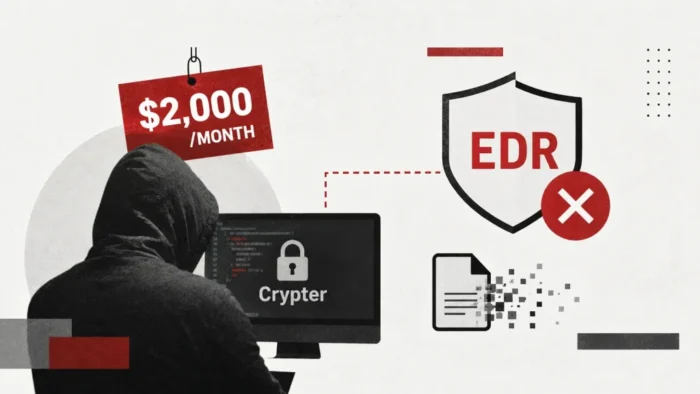
A commercial cybercrime service called Cruciferra is helping attackers conceal remote access trojans and information stealers from Windows security tools. The crypter combines payload encryption, endpoint defense tampering, privilege elevation, persistence, and memory-based execution techniques.
Cruciferra has been advertised on underground forums since fall 2025. Its seller offers subscription tiers costing between $450 and $2,000 per month, with more expensive packages providing additional evasion features.

Access content across the globe at the highest speed rate.
🔥 Save 81% + 2 bonus months! 🔥
70% of our readers choose Private Internet Access
70% of our readers choose ExpressVPN
2
Browse the web from multiple devices with industry-standard security protocols.
🔥 Save 73%! 🔥

Faster dedicated servers for specific actions (currently at summer discounts)
🔥 Save 69%! 🔥
Proofpoint identified the service in dozens of email campaigns conducted by several unrelated threat actors. The Cruciferra technical analysis links it to attacks delivering AsyncRAT, XWorm, Remcos, Formbook, XLoader, Agent Tesla, zgRAT, and other commodity malware.
What Is the Cruciferra Crypter?
A crypter encrypts or transforms malicious software to make it harder for security products to identify. It does not necessarily provide the final spying, credential theft, or remote access capabilities itself.
Instead, Cruciferra protects another malicious program selected by its customer. The service can embed that payload inside the crypter, load it from another file in the delivery archive, or download it from a staging server.
Proofpoint describes Cruciferra as an umbrella name covering a collection of related crypters. Researchers concentrated on the version they encountered most frequently during active campaigns.
| Cruciferra detail | Finding |
|---|---|
| First advertised | Fall 2025 |
| Subscription price | $450 to $2,000 per month |
| Development environment | Mono |
| Observed distribution | Primarily email-based campaigns |
| Campaign volume | Several hundred to thousands of messages |
| Development status | Active, with production and apparent testing variants |
| Primary purpose | Concealing and executing RATs, stealers, and other malware |
Cruciferra Spreads Through Phishing Emails
Observed campaigns commonly begin with phishing messages containing links, PDF documents, compressed archives, or virtual hard disk files. The attackers use recognizable organizations and urgent subjects to persuade recipients to open the downloads.
Some archives contain a legitimate executable beside a malicious DLL. When the recipient launches the executable, Windows loads the nearby DLL through DLL side-loading, allowing Cruciferra to begin running.
Attackers may also use shortcut files and PowerShell commands to start the infection chain. The exact delivery method varies because different cybercrime groups can purchase and configure the service.
Tax-Themed Attacks Delivered AsyncRAT
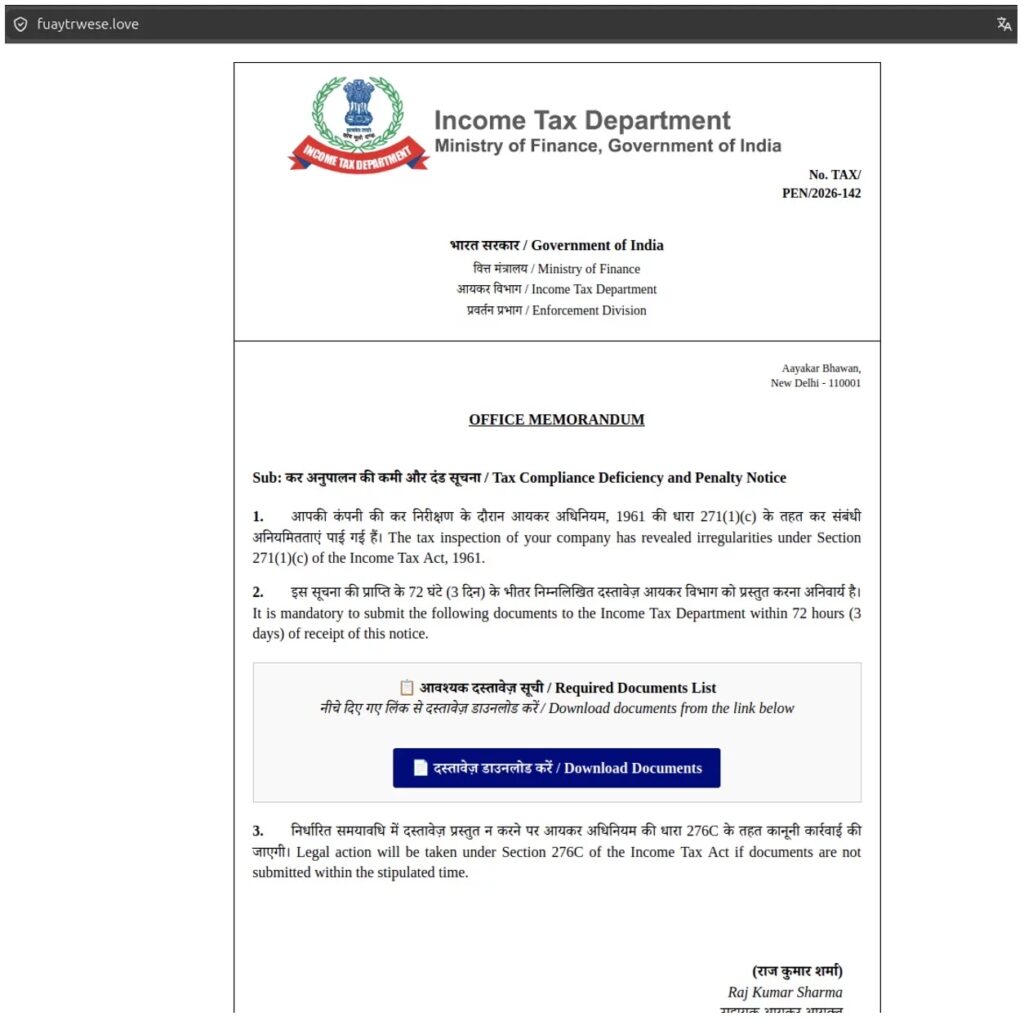
Between late April and early June 2026, Proofpoint observed four campaigns attributed to TA4922, a suspected Chinese-speaking cybercrime actor. Each campaign contained up to 250 messages.
The emails impersonated the Government of India or Income Tax Department and warned recipients about tax violations, penalties, or compliance problems. Links led to fake tax portals hosting ZIP archives.
Opening the downloaded archive and launching its executable started Cruciferra through DLL side-loading. The crypter then deployed AsyncRAT, giving the attackers remote access to the infected Windows computer.
Other Campaigns Used SSA and Hotel Complaint Lures
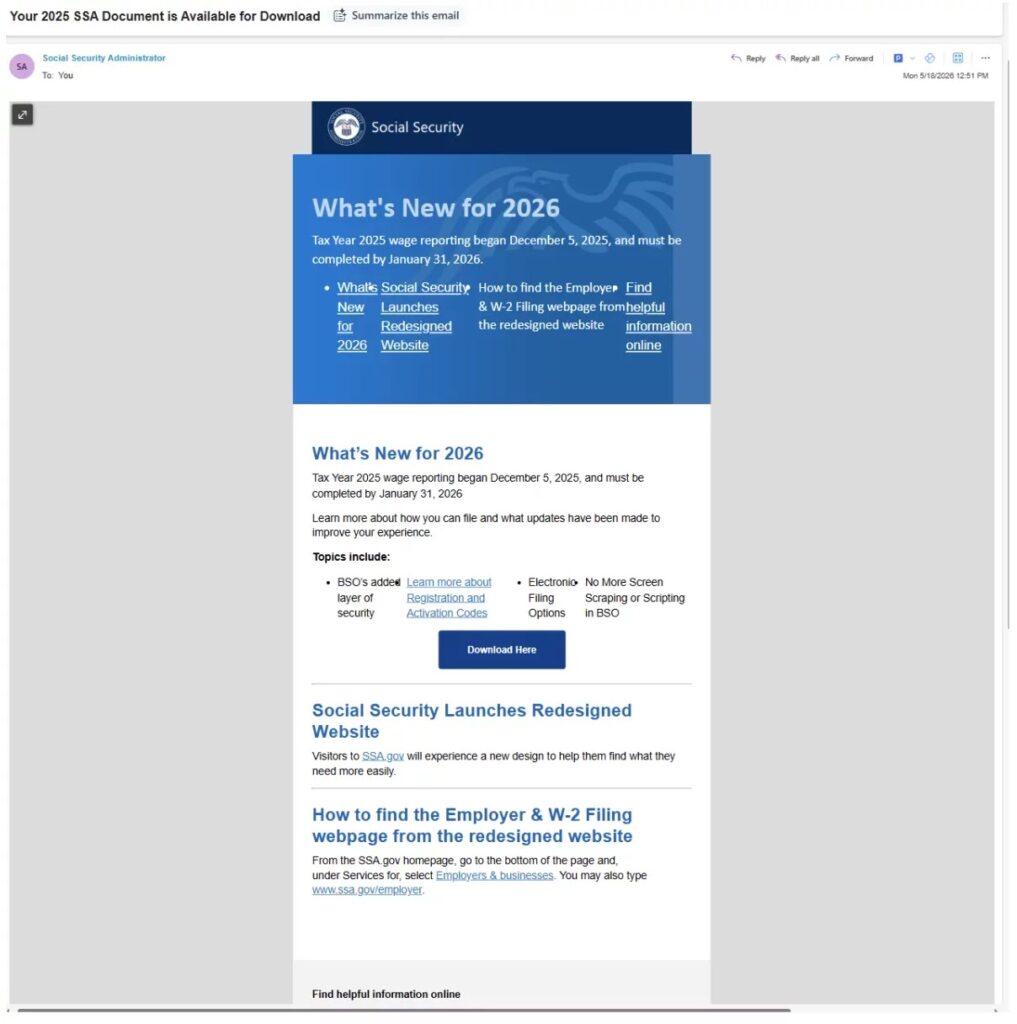
Another campaign impersonated the US Social Security Administration. Messages referred to tax documents and deadlines before directing recipients to download malicious virtual hard disk files.
Proofpoint connected this activity with Cruciferra packages that delivered XWorm. XWorm can provide remote control, data theft, command execution, and other post-infection capabilities.
A June 2026 campaign targeted hospitality and travel organizations with complaints involving guests and bed bugs. Shortcut files and PowerShell eventually downloaded Cruciferra, which deployed zgRAT.
Which Malware Families Use Cruciferra?
Cruciferra does not lock its customers to one final payload. Threat actors can use the crypter to protect different malware families depending on their campaign and intended victims.
| Malware family | General capability |
|---|---|
| Agent Tesla | Credential and information theft |
| AsyncRAT and DCRAT | Remote access and system control |
| DarkCloud Stealer | Browser, account, and system-data theft |
| Formbook and XLoader | Credential theft, data collection, and malware downloading |
| PhantomStealer | Information theft |
| Remcos | Remote access and surveillance |
| Snake Keylogger | Keystroke and credential collection |
| ValleyRAT | Remote access and follow-on malware delivery |
| XWorm | Remote control and information theft |
| zgRAT | Remote access and system-data collection |
Cruciferra Checks for Analysis Systems
Before releasing its payload, Cruciferra examines the environment for evidence of sandboxes, debuggers, and virtual machines. Malware researchers commonly use these controlled systems to observe suspicious files safely.
Cruciferra also includes decoy DLL exports that lead automated tools toward harmless code. This can waste analysis time and make a malicious library appear less suspicious during a quick inspection.
Proofpoint found production builds alongside apparent testing samples containing debugging and experimental features. New builds appeared in malware repositories frequently, sometimes only minutes apart.
BYOVD Attacks Can Terminate Security Processes
One of Cruciferra’s more dangerous options uses Bring Your Own Vulnerable Driver, commonly shortened to BYOVD. This technique abuses legitimate but vulnerable kernel drivers that still carry trusted digital signatures.
After gaining elevated privileges, malware can load one of these drivers and exploit its low-level access. Cruciferra can then send commands through the driver to terminate selected endpoint security processes.
This does not guarantee that every EDR platform will stop working. The result depends on administrator access, whether Windows permits the driver to load, the driver’s vulnerability, and the security product’s protections.
Microsoft’s recommended vulnerable driver blocklist aims to prevent known dangerous drivers from loading. Microsoft updates the operating system’s blocklist through regular Windows servicing.
Cruciferra Uses Several Vulnerable Drivers
Proofpoint identified eight drivers packaged with Cruciferra samples for potential BYOVD activity. Different builds may contain different selections from this collection.
| Driver | SHA-256 |
|---|---|
| Core64.sys | 17aae57cf6255c7eb169bf62ea67376d9708976eb7831f8cdd0ea38bdcb37dc4 |
| GoFlyDrv.sys | 2fdfdd13a0c548bb68c9d5aa8599a9265d4659da3e237fe7a42ac6ac06b9a06a |
| HwOs2Ec.sys | c4e93449453cf67c5d5605bb8f425207a738a242fdb432d720acc32faa74926c |
| LnvMSRIO.sys | c5b1e9aafc8f2b4ab05effc00fd43f3114b9ef1d592a086c952793ac4e299809 |
| MemoryInformer.sys | 7887e919555fb5948c217556ba149392a72982b1bc427d3db779db9dcbf09ee8 |
| NTIOLibX64.sys | 09bedbf7a41e0f8dabe4f41d331db58373ce15b2e9204540873a1884f38bdde1 |
| ProcessMonitorDriver.sys | 5b4f59236a9b950bcd5191b35d19125f60cfb9e1a1e1aa2e4f914b6745dde9df |
| selfprot.sys | c46e907886e2158cbc453e767183aecf07887b5ac8848f19684451883d69f5f0 |
Microsoft also provides an attack surface reduction rule designed to stop applications from writing exploited vulnerable signed drivers to disk. The rule does not stop a driver that already exists on the computer from loading.
The Microsoft Defender ASR rule reference recommends combining that rule with the vulnerable driver blocklist or an App Control policy for broader protection.
Indirect System Calls Help Bypass Monitoring Hooks
Endpoint products often monitor sensitive Windows functions by placing hooks inside system libraries. These hooks allow defensive software to inspect suspicious memory operations and process activity.
Cruciferra reads a clean copy of ntdll.dll and collects pointers to selected system-call stubs. It can then call lower-level Windows functions while avoiding some hooks placed by EDR or sandbox products.
The crypter uses this method with functions related to memory protection, section creation, registry access, file handling, and memory mapping. Security tools can still detect associated behavior through other telemetry and kernel-level monitoring.
IAT Repair Removes Another Monitoring Layer
Cruciferra also repairs the Import Address Table, or IAT. Windows programs use this table to locate functions imported from other libraries.
Security and analysis tools can modify IAT entries to monitor calls. Cruciferra attempts to identify those changes and restore the original function addresses.
Proofpoint noted that IAT hooking represents an older monitoring approach, making Cruciferra’s dedicated repair capability unusual. Its inclusion shows that the developers support several overlapping evasion methods.
Cruciferra Seeks Administrator Privileges
The crypter checks whether it already has administrator privileges. If not, it can attempt to bypass User Account Control through a Windows COM elevation mechanism.
Administrator access increases the malware’s ability to change security settings, load vulnerable drivers, interfere with other processes, and establish system persistence.
Cruciferra creates persistence through a Windows Run registry key using the value name “putty.” This causes the malware to start again when the user signs in after a reboot.
Windows Notifications Can Be Suppressed
Cruciferra modifies registry settings related to toast notifications, classic notification balloons, and file information tips. These changes can make suspicious activity less visible to the user.
Suppressing notification interfaces may prevent some Windows Defender, SmartScreen, or Security Center messages from appearing normally. It does not necessarily disable the underlying security feature.
Security teams should therefore monitor registry modifications affecting Windows notifications, especially when they occur near unexpected archive execution, PowerShell activity, or driver installation.
More Than 90 Encryption Variations Protect Payloads
Proofpoint found that Cruciferra supports more than 90 encryption and decryption routines. Many combine selected components from established cryptographic algorithms rather than implementing one complete standard algorithm.
One build might combine a key-scheduling method from one design with operations taken from another cipher or pseudorandom number generator. This produces substantial variation between packed samples.
The same malware payload can therefore appear different across campaigns. This reduces the reliability of static signatures that depend on matching fixed byte sequences.
Process Ghosting Removes the Backing File
Cruciferra uses a modified form of Process Ghosting to execute its final payload. It creates a temporary file, marks it for deletion, writes the payload, and creates an executable image section from that file.
Windows deletes the file after the relevant handle closes, but the mapped image section remains available in memory. Cruciferra maps this section into a suspended legitimate process, redirects execution, and resumes the process.
The payload can continue running even though its backing file no longer exists in a normal scannable state. Memory, process, registry, driver, network, and event-log artifacts may still reveal the infection.
Additional Hooks Attempt to Hide the Ghosted Image
Cruciferra adds two anti-monitoring changes to its Process Ghosting implementation. One targets ZwQueryVirtualMemory, a function security tools can use to examine a process’s memory regions.
The crypter attempts to return sanitized information when a defensive tool checks the ghosted memory. This may conceal evidence that the backing file has been deleted or does not match the running image.
Cruciferra also interferes with NtManageHotPatch, which Windows can use when validating loaded image sections against files on disk. Disrupting this function may make the ghosted payload harder to inspect.
How Organizations Can Detect Cruciferra
Defenders should combine email filtering, endpoint behavior monitoring, PowerShell logging, driver controls, and memory analysis. Hash or domain blocking alone may miss newly generated Cruciferra builds.
- Investigate unexpected ZIP, RAR, and VHD downloads delivered through email.
- Detect legitimate executables loading unusual DLLs from the same archive or directory.
- Monitor PowerShell launched through shortcut files or compressed attachments.
- Alert when unknown processes attempt to install or communicate with kernel drivers.
- Monitor attempts to terminate endpoint security processes.
- Detect suspicious changes to Windows notification registry values.
- Review new Run-key entries, including entries using misleading names.
- Look for suspended processes followed by unusual memory-section mapping.
- Correlate network connections with archive execution and DLL side-loading.
- Use memory scanning alongside conventional file scanning.
Security teams should apply current Windows updates and verify that the Microsoft vulnerable driver blocklist is enforced. Microsoft notes that the blocklist cannot cover every vulnerable driver and may require additional App Control policies.
Organizations using Microsoft Defender can consider the rule for blocking abused vulnerable signed drivers. Administrators should test security policies for compatibility before enforcing them across production systems.
Selected Cruciferra Indicators of Compromise
The following indicators come from Proofpoint’s investigation. URLs and domains have been defanged to prevent accidental connections. Defenders should use them with behavioral evidence because threat actors can replace infrastructure quickly.
| Type | Indicator | Description |
|---|---|---|
| URL | hxxp://hsahyteiows[.]gu[.]cc | TA4922 AsyncRAT payload URL, first seen April 28, 2026 |
| URL | hxxp://yicoweytcbtw[.]gu[.]cc | TA4922 AsyncRAT payload URL, first seen April 28, 2026 |
| URL | hxxp://nciyeyrawoe[.]gu[.]cc | TA4922 AsyncRAT payload URL, first seen April 28, 2026 |
| URL | hxxp://lasiduutfe[.]gu[.]cc | TA4922 AsyncRAT payload URL, first seen April 28, 2026 |
| SHA-256 | 3c181f642e24c28602a87be7f195e2f3d1ffa30b37e20f5121d99f88b22ab80e | Tax-Number52563.zip delivering AsyncRAT |
| SHA-256 | 66dbe675480dc229e5b3ab8ad74207f73486e64e57805074f784bb2e01bcb865 | Tax-Number809863.zip delivering AsyncRAT |
| SHA-256 | a6fb779be35592fb0ff624a8f8e12ab3cafe7bcfc312cd98263814db7fb01e02 | Tax-Number119863.zip delivering AsyncRAT |
| SHA-256 | 59ad96dd3b4d5f10a5c53bbd465446e52dc7701a4ac633632f762bf1336d3347 | Tax-Number101863.zip delivering AsyncRAT |
| SHA-256 | 6dbd6f9f2fa636c16ac4fa81418b68a604424861b9650dd9c4f2b0ba6f67d6ac | Tax-Number33863.zip delivering AsyncRAT |
| Domain | gatuso[.]duckdns[.]org | XWorm command-and-control server |
| SHA-256 | 3f31aee0948d16f8d64bf6bec69a4331099993e502b11bfc56b2c0112024489d | photo295825092412.zip delivering zgRAT |
| Domain | 0zbqnac1t4dv2t2wuodv1m[.]com | zgRAT command-and-control server |
| IP address and port | 89[.]34[.]90[.]99:56001 | zgRAT command-and-control server |
The latest Proofpoint threat report contains the complete published indicator list, including additional payload URLs and first-seen dates.
FAQ
Cruciferra is a subscription cybercrime service that encrypts, disguises, and executes other malware. Threat actors use it to conceal remote access trojans and information stealers from security tools.
Proofpoint found Cruciferra subscription tiers ranging from $450 to $2,000 per month. More expensive packages reportedly include additional features.
Cruciferra can use vulnerable signed drivers to terminate selected security processes after obtaining sufficient privileges. Its success depends on the driver, Windows configuration, and protections used by the EDR platform.
Process Ghosting creates an executable image from a temporary file marked for deletion. The file disappears from disk while its mapped image continues running inside another process.
Observed payloads include AsyncRAT, DCRAT, XWorm, Remcos, Agent Tesla, Formbook, XLoader, zgRAT, DarkCloud Stealer, PhantomStealer, Snake Keylogger, and ValleyRAT.
Organizations should filter suspicious archives, monitor DLL side-loading and PowerShell, block vulnerable drivers, enforce least privilege, inspect process memory, and investigate attempts to disable endpoint security tools.


Read our disclosure page to find out how can you help VPNCentral sustain the editorial team Read more


Improve this guide


User forum
0 messages