
Indian Bank warns customers about fake LPG payment and KYC scams targeting banking details


 5 min. read
  Published on
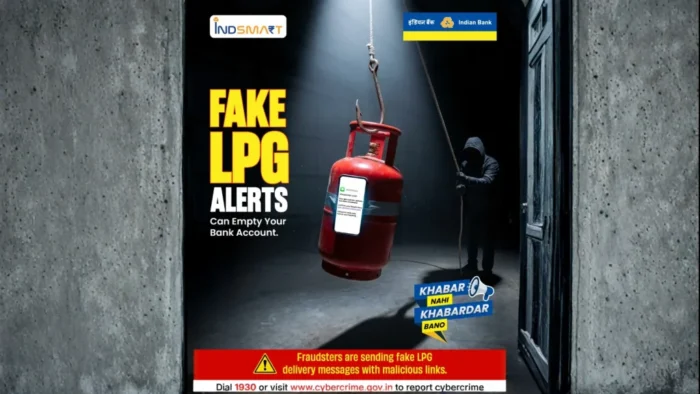
Indian Bank has warned customers about fake LPG payment and KYC update messages that try to steal banking information. The scam usually starts with an urgent SMS, WhatsApp message, or call claiming your gas connection will stop unless you pay immediately or update KYC.
The message often pretends to come from Indane, Bharat Gas, HP Gas, or a local gas agency. It pushes people to tap a link, visit a fake booking page, or download an Android APK file that can compromise the phone and expose passwords, OTPs, and banking data.

Access content across the globe at the highest speed rate.
70% of our readers choose Private Internet Access
70% of our readers choose ExpressVPN

Browse the web from multiple devices with industry-standard security protocols.

Faster dedicated servers for specific actions (currently at summer discounts)
This warning matters because the fraud is not limited to one channel. Reports linked to the scam mention phishing links, fake LPG websites, suspicious calls from people posing as gas agency staff, and complaints reaching the national cybercrime helpline 1930.
How the LPG scam works
Scammers create panic first. They send messages such as “your LPG KYC is pending” or “immediate payment required to continue connection” so people act fast without checking the sender. Delhi Police said fraudsters have used shortage rumours and urgency around gas booking to trap residents through links and calls.
Once a victim clicks, the next step usually leads to a fake site that asks for personal and financial details. In some cases, victims are told to verify Aadhaar, enter bank credentials, share OTPs, or complete a UPI payment to avoid disconnection.
The more dangerous version involves APK files sent over messaging apps. Delhi Police specifically warned people not to open or download APK files because they can install malicious apps and give attackers access to sensitive information on the device.
What victims are usually asked to do
- Click a payment or KYC link sent over SMS or WhatsApp
- Enter bank details, card details, UPI information, or Aadhaar data on a fake site
- Share an OTP during a call from a fake gas agency or fake bank representative
- Download an APK file for “verification,” “booking,” or “delivery confirmation”
- Make a rushed payment to avoid LPG disconnection
Why this scam is spreading now
Recent public warnings show that criminals are tying the scam to current LPG-related concerns and booking demand. That gives the messages more emotional force and raises the chances that someone clicks before thinking.
Indian Bank’s awareness material says fake LPG payment and KYC update messages with malicious links are circulating to trick customers and steal banking details. The bank’s broader cyber-awareness push also tells users not to respond to suspicious payment requests, links, calls, or popups that ask for sensitive information.
The danger is not only account fraud. A compromised phone can expose saved passwords, installed banking apps, and personal data, which can lead to more fraud later. That makes this scam both a direct financial risk and a longer-term security problem.
Quick risk table
| Scam trigger | What the victim sees | Main risk |
|---|---|---|
| Fake LPG KYC alert | “Update now or connection will stop” | Stolen personal and banking details |
| Fake payment link | “Pay now to avoid disruption” | UPI and card fraud |
| Fake caller posing as gas staff | “Verify account immediately” | OTP theft and account takeover |
| APK file over WhatsApp | “Install app to confirm booking” | Malware, device compromise, data theft |
How to stay safe
Do not trust LPG payment or KYC messages that arrive through unknown links, forwarded messages, or unverified calls. If the message creates urgency, that is a reason to slow down, not a reason to act faster.
Always verify through official channels only. Delhi Police advised citizens to verify information through official gas agency channels, while the national cybercrime portal says cyber financial fraud should be reported immediately through 1930 or cybercrime.gov.in.
If you already clicked a suspicious link or shared sensitive details, act immediately. Change passwords, contact your bank, block affected payment instruments if needed, and report the incident at once so authorities have a better chance of stopping the fraud.
Safety checklist
- Use only the official app, website, or customer care channel of your LPG provider
- Never share OTP, UPI PIN, CVV, or internet banking credentials
- Never install APK files sent through WhatsApp, SMS, Telegram, or unknown sources
- Double-check website names before entering any details
- Report financial fraud immediately on 1930
- File an online complaint at cybercrime.gov.in
FAQ
No. Public warnings tied to this scam say users should verify only through official channels and avoid unsolicited links or files.
Disconnect from sensitive apps, contact your bank, change important passwords from a safe device, and report the incident immediately. Delhi Police warned that APK files can compromise a phone and expose banking details and OTPs.
You can report cyber financial fraud immediately by calling 1930 or using the National Cyber Crime Reporting Portal.
Do not click links or download files from LPG payment or KYC messages unless you started the process yourself on an official app or website.


Read our disclosure page to find out how can you help VPNCentral sustain the editorial team Read more


Improve this guide
User forum
0 messages