
Iran’s internet blackout passes 10 days as traffic remains near 1% of normal


 4 min. read
  Published on
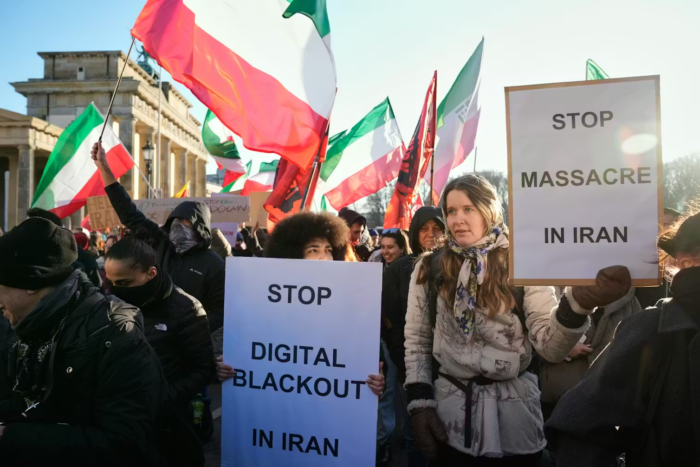
Iran’s internet blackout has now stretched beyond 10 days, with network monitoring groups and Cloudflare Radar data showing that traffic remains at or near 1% of ordinary levels. In practical terms, that means most people in Iran still cannot reliably reach the global internet, even as limited domestic services appear to remain available.
The disruption began around February 28 and has shown little sign of meaningful recovery since then. NetBlocks said the outage had passed 216 hours by March 9 and reached 240 hours by March 10, placing it among the most severe government-imposed nationwide internet shutdowns on record.
Cloudflare Radar’s Iran traffic page shows a traffic anomaly starting on February 28, and its live traffic view for the country indicates continued abnormal conditions across the past week. Reuters and AP had already documented a nationwide internet blackout in Iran earlier this year during internal unrest, which gives important context for how authorities have used connectivity restrictions before.
Human Rights Watch says the current shutdown is more than a technical issue. The group warned on March 6 that Iran’s authorities should immediately end the internet shutdown and communications restrictions because they place civilians at greater risk by cutting access to information and emergency communication.
The blackout also carries a serious economic cost. Reporting in late January cited Iran’s communications minister as saying restricted access was causing about 5 trillion tomans in direct daily losses, or roughly $35.7 million per day. Separate reporting also said online sales had fallen sharply during the broader 2026 restrictions.
What the data shows
| Metric | Latest reported level | Source |
|---|---|---|
| Internet connectivity in Iran | About 1% of ordinary levels | NetBlocks |
| Blackout duration by March 9 | 216 hours | NetBlocks |
| Blackout duration by March 10 | 240 hours | NetBlocks coverage index |
| Traffic anomaly start visible on Radar | February 28, 2026 | Cloudflare Radar |
Why this matters
- Families outside Iran have struggled to contact relatives inside the country.
- Journalists and rights groups have warned that blackouts make it harder to verify events on the ground.
- Businesses that depend on payments, messaging, advertising, and cloud tools face immediate losses when outside connectivity collapses.
- The shutdown reinforces fears that Iran is moving further toward a tightly controlled domestic-only network model.
A blackout with deeper implications
Iran has a long history of restricting connectivity during moments of crisis, but the scale and duration of the 2026 shutdowns have drawn unusual global attention. AP described the current phase as the third time Iran has shut itself off from the outside world, while rights groups and internet freedom observers say the country’s National Information Network makes it easier for authorities to keep essential state-approved services running even while blocking broad external access.
That matters because a near-total blackout does not only silence social platforms. It can also affect banking, work platforms, cloud services, app authentication, and ordinary cross-border contact. Even workarounds such as VPNs become far less useful when the underlying internet connection itself has collapsed.
For now, the main verified fact remains simple: Iran is still largely disconnected from the global internet, and the outage has lasted long enough to rank among the worst shutdowns ever tracked by internet monitors. Until traffic returns at scale, the country remains in a state of digital isolation with human, economic, and political consequences that continue to grow.
FAQ
It passed 10 days by March 10, 2026, according to NetBlocks tracking.
Recent monitoring put connectivity at about 1% of ordinary levels, which points to a near-total national blackout.
Internet monitoring groups and rights organizations have treated it as a state-imposed shutdown, not a routine infrastructure outage.
They say it blocks access to information, limits emergency communication, and makes it harder to document harm to civilians.


Read our disclosure page to find out how can you help VPNCentral sustain the editorial team Read more


Improve this guide



User forum
0 messages