
Refund fraud is becoming an underground service business, not just an abuse problem


 6 min. read
  Published on

Refund fraud has grown beyond isolated return scams. Researchers now describe it as a structured underground market where people sell refund “methods,” paid tutorials, and done-for-you services that target the return and dispute systems of major retailers and payment platforms. Flare said its review of fraud-focused communities found sellers openly packaging this knowledge like a digital product, which lowers the barrier for newcomers and helps scale abuse.
The core trick is simple. Fraudsters do not always need malware or deep technical skill. Instead, they learn how customer service workflows, delivery claims, chargebacks, and refund rules operate, then turn that process knowledge into repeatable fraud. That lets them target retailers and payment firms through policy abuse rather than code exploits.
That shift matters because returns already sit at the center of online retail competition. The National Retail Federation said total returns for the retail industry were projected to reach $890 billion in 2024, and 76% of consumers consider free returns a key factor in deciding where to shop. That creates pressure on merchants to keep returns easy, even as abuse grows.
The fraud bill is already huge. Appriss Retail said fraudulent returns and claims cost retailers $103 billion in 2024, with 15.14% of returns deemed fraudulent. In parallel, fraud losses often spill far beyond the initial refund. A 2025 LexisNexis study, cited by Ecommerce Times, said U.S. merchants lose an average of $4.61 for every $1 of fraud once operations, labor, and other follow-on costs are counted.
What Flare found in underground communities
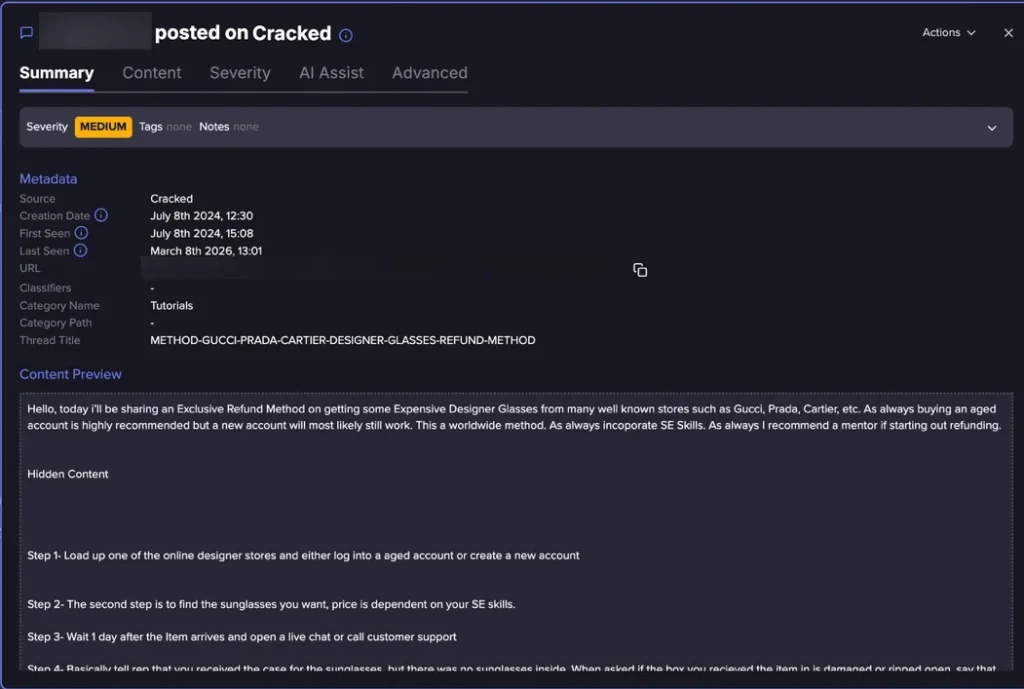
Flare said it started with a very broad search around “refund” and eventually narrowed the dataset using terms such as “method” and “tutorial.” From there, the company sampled 3,686 posts to understand how refund fraud gets marketed and operationalized. According to the report, only about 1,639 of those messages were unique, which suggests sellers frequently repost the same ads across multiple communities to widen their reach.
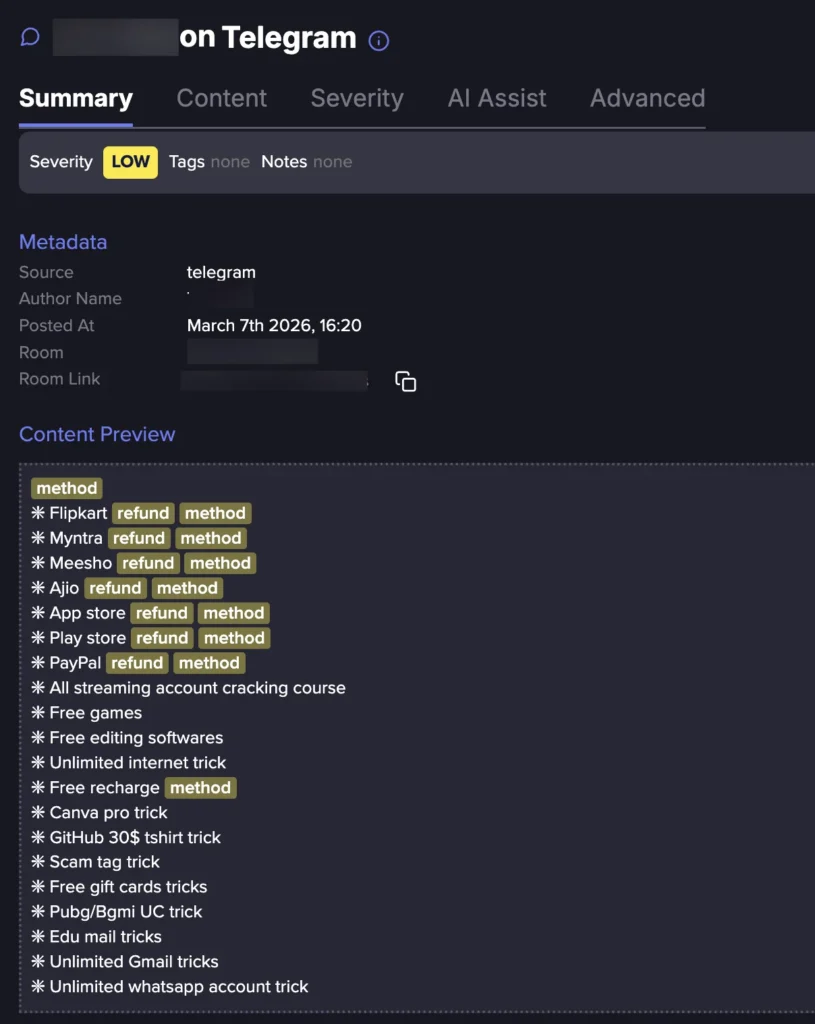
The posts reportedly advertised refund methods, refund tutorials, step-by-step guides, and operator services. Tutorial pricing commonly sat between $50 and $300, while some vendors offered to handle the fraud on behalf of customers in exchange for 30% to 50% of the refunded value. That business model looks a lot like fraud-as-a-service, except the product is process abuse rather than malware or ransomware.
How refund fraud usually works
The techniques are not new, but the packaging is. Common patterns include:
- Refund without return, where the buyer keeps the item and still gets money back
- Chargeback abuse, where a legitimate transaction gets disputed as fraudulent
- Goods swapping, where a different or lower-value item gets returned
- Empty-box returns, where the package goes back without the real product inside
- Policy manipulation, where the fraudster learns which claims trigger quick resolutions
These methods depend heavily on social engineering, timing, and a good grasp of how support agents and payment teams process claims. Flare’s write-up says the underground ads align closely with these known patterns.
Why major brands keep showing up
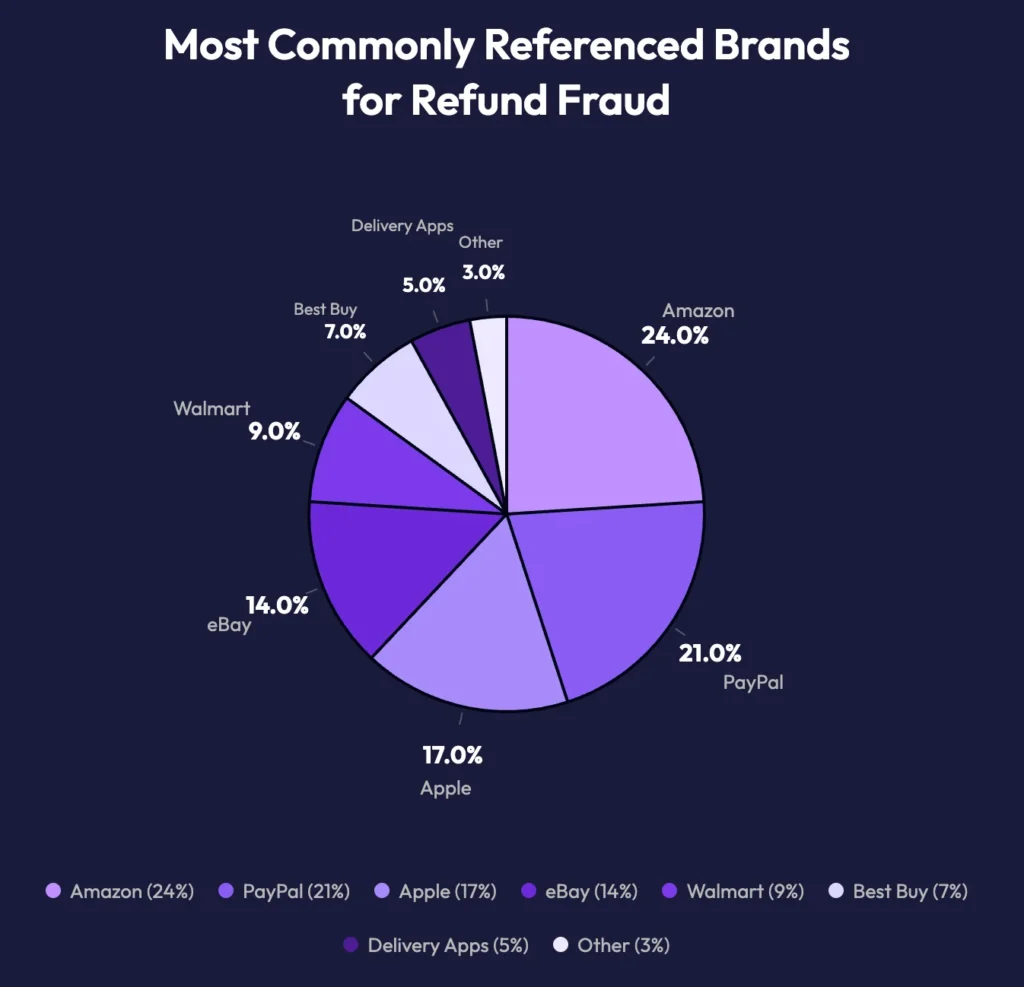
Flare said the most commonly referenced brands in its dataset included Amazon, PayPal, Apple, eBay, Walmart, Best Buy, delivery platforms, and digital payment services. Those names make sense because they combine high transaction volume with consumer-friendly policies and large refund pipelines. Fraud can blend into normal activity more easily when platforms process huge numbers of purchases and claims every day.
This does not mean those brands are uniquely weak. It means they operate at the scale and convenience level that fraudsters want. Fast resolution, flexible return windows, and customer-first support all improve the shopping experience for legitimate buyers, but they also create more room for abuse if detection and case review do not keep pace. That is an inference based on the return-policy data and the fraud-loss research.
Key numbers at a glance
| Metric | Figure | Source |
|---|---|---|
| Projected retail returns in 2024 | $890 billion | NRF |
| Consumers who consider free returns a key shopping factor | 76% | NRF |
| Fraudulent returns and claims in 2024 | $103 billion | Appriss Retail |
| Share of returns deemed fraudulent | 15.14% | Appriss Retail |
| Average merchant cost per $1 of fraud | $4.61 | LexisNexis study cited by Ecommerce Times |
| Flare sample size | 3,686 posts | Flare |
| Unique messages in that sample | About 1,639 | Flare |
| Typical tutorial pricing | $50 to $300 | Flare |
| Commission for done-for-you refund services | 30% to 50% | Flare |
Why this trend is dangerous
Refund fraud looks less technical than malware or credential theft, but the business impact can still be severe. The underground market makes entry easier for people who may not see themselves as cybercriminals in the traditional sense. A buyer can purchase a playbook, follow a script, and exploit a company’s returns or dispute workflow without ever writing code or compromising infrastructure.
That lowers the skill threshold and broadens the pool of offenders. It also gives experienced fraud actors a way to scale by selling training, templates, or full-service operations instead of running every case personally. The result is a market that behaves more like an online service economy than a one-off scam scene.
What businesses should focus on
- Track repeat claim patterns across accounts, addresses, devices, and payment instruments
- Separate fast customer-service resolution from high-risk refund escalation paths
- Monitor underground chatter for branded refund methods and tutorials
- Tighten inspections for empty-box, goods-swapping, and non-delivery claims
- Measure the full cost of fraud, not just the refunded amount
Those steps follow directly from the fraud patterns Flare described and the broader merchant-cost data.
FAQ
It is the abuse of refund, return, replacement, or chargeback systems to get money, goods, or credit without a legitimate claim.
Because consumer-friendly returns remain a major shopping factor, while underground communities now sell ready-made methods, tutorials, and services that make abuse easier to repeat at scale.
Appriss Retail said fraudulent returns and claims cost retailers $103 billion in 2024.
Usually it looks more like social engineering and business-process abuse, though some cases can overlap with account takeover or payment fraud.
Because they process huge volumes, offer customer-friendly policies, and can generate higher payouts when fraud succeeds. This is an inference drawn from the brands named in Flare’s analysis and the broader returns data.


Read our disclosure page to find out how can you help VPNCentral sustain the editorial team Read more


Improve this guide




User forum
0 messages