
Trivy GitHub Actions compromised again as attackers hijack 75 tags to steal CI/CD secrets


 5 min. read
  Published on
Trivy has suffered a second supply chain incident in March, this time through its GitHub Actions ecosystem. Security researchers say an attacker force-pushed 75 out of 76 version tags in aquasecurity/trivy-action, causing workflows pinned to version tags to pull malicious code that steals secrets from CI/CD runners.
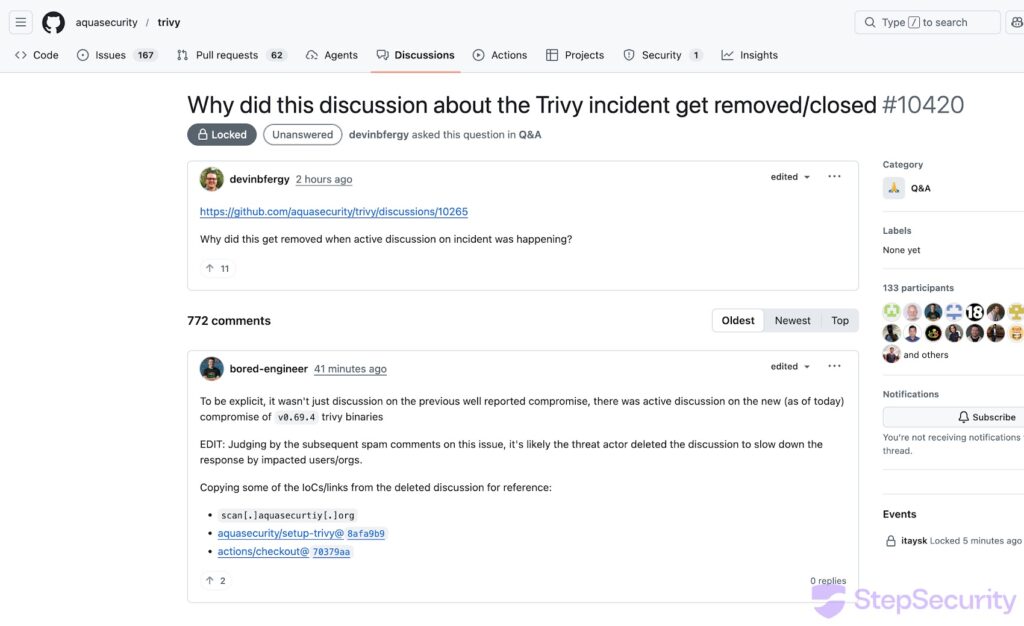
The compromise did not stop with one repo. Researchers also found that aquasecurity/setup-trivy was compromised, and only v0.2.6 appears to be clean after incident response. For the Trivy scanner itself, the malicious v0.69.4 release was removed, and Homebrew rolled back to v0.69.3.
This is serious because GitHub Actions tags look stable, but they are not truly immutable. Once an attacker rewrites a tag, any workflow that references that tag can silently begin executing malicious code without any change in the workflow file. Socket says more than 10,000 GitHub workflow files reference the affected Trivy action, which gives this incident a potentially wide blast radius.
What happened in the Trivy GitHub Actions breach
Socket says the attacker used valid credentials with write access and force-updated 75 existing tags in aquasecurity/trivy-action. The action still ran the legitimate Trivy scan, but only after the malicious payload executed first, which made the compromise harder to spot in normal CI output.
Socket also says the attack did not require a GitHub platform exploit. The attacker appears to have used compromised credentials left over from the earlier March breach involving Trivy’s ecosystem, then used that access to rewrite tags directly.
StepSecurity separately documented the same second incident and confirmed that the rogue v0.69.4 Trivy release was removed, while setup-trivy tags were deleted during response efforts and replaced with a clean v0.2.6 release.
Why this attack is more dangerous than it looks
The delivery method matters as much as the malware. GitHub resolves an action tag like aquasecurity/[email protected] to whatever commit that tag points to at runtime. If the tag moves, the workflow follows it automatically. That means teams that thought they had pinned a stable version were still exposed.
Socket says the malicious payload targeted runner process memory, environment variables, SSH keys, cloud credentials, Kubernetes service account tokens, Git and Docker configs, and other secrets commonly found in build pipelines. StepSecurity’s analysis of the broader Trivy incident also showed malicious activity tied to credential theft and follow-on compromise.
What the malware tried to steal
| Target | Why it matters |
|---|---|
| Environment variables | Often contain API keys, tokens, and secrets |
| SSH keys | Can open access to source repos and servers |
| Cloud credentials | Can expose AWS, GCP, and Azure environments |
| Kubernetes tokens | Can expose clusters and workloads |
| Git and Docker configs | Can reveal registry and source control access |
| Wallet and crypto-related files | Can expose financial assets |
These behaviors come from Socket’s incident write-up and the sample text you shared.
Safe versions and what users should move to
Researchers and maintainers have pointed users toward clean versions after the compromise. Based on the incident reporting and rollback activity, the currently safe references are:
trivyv0.69.3trivy-actionv0.35.0setup-trivyv0.2.6
Socket says v0.35.0 appears to be the only unaffected tag in trivy-action. StepSecurity says setup-trivy only retained v0.2.6 as a clean tag, and Homebrew rolled Trivy back to v0.69.3.
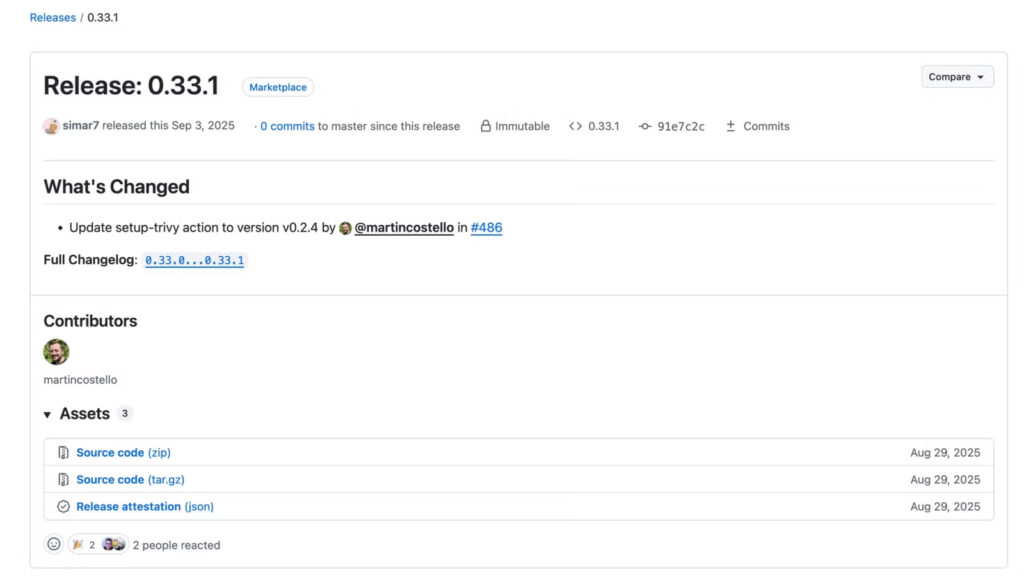
Safe versions at a glance
| Component | Safe version |
|---|---|
| trivy | 0.69.3 |
| trivy-action | 0.35.0 |
| setup-trivy | 0.2.6 |
Why pinning to tags failed
GitHub has long recommended pinning actions to full commit SHAs rather than version tags. Socket’s analysis shows exactly why. The attacker rewrote tags to malicious commits while preserving metadata that made the changes look legitimate at first glance.
That is the key lesson from this attack. A version tag feels stable, but it is only a movable pointer. A full commit SHA gives a much stronger integrity guarantee. This is not a theoretical risk anymore. The Trivy incident shows how easily tag trust can collapse once a repo credential is compromised.
What teams should do right now
Anyone who used Trivy in GitHub Actions during the affected window should assume CI/CD secrets may have been exposed. Aqua’s earlier incident discussion shows the project was already dealing with a March compromise involving stolen credentials, and Socket says the second wave likely grew from incomplete containment of that earlier breach.
Immediate response steps
- Rotate all CI/CD secrets, tokens, SSH keys, and cloud credentials
- Replace tag-based GitHub Action references with full commit SHAs
- Move to
trivy0.69.3,trivy-action0.35.0, andsetup-trivy0.2.6 - Check for outbound traffic or logs tied to the attacker infrastructure described by researchers
- Review GitHub accounts and repos for suspicious activity, especially fallback exfiltration behavior
- Audit past workflow runs that used affected Trivy actions
FAQ
The second March incident hit aquasecurity/trivy-action, aquasecurity/setup-trivy, and the Trivy release flow. Researchers say 75 of 76 trivy-action tags were force-pushed to malicious commits.
Yes. Socket says the attacker rewrote existing version tags so workflows pinned to those tags automatically fetched malicious code.
Socket says [email protected] appears to be the only unaffected version tag.
StepSecurity says all setup-trivy tags were deleted except v0.2.6, which points to a clean commit.


Read our disclosure page to find out how can you help VPNCentral sustain the editorial team Read more


Improve this guide

User forum
0 messages