
OpenAI Daybreak Aims to Find, Fix, and Verify Software Vulnerabilities Faster


 6 min. read
  Published on
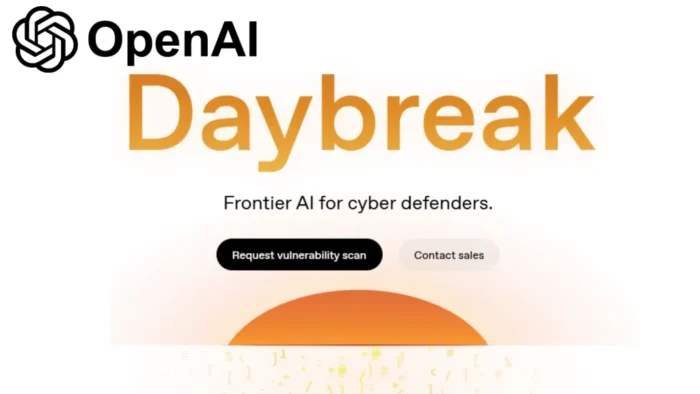
OpenAI has introduced Daybreak, a cybersecurity initiative designed to help defenders find software vulnerabilities earlier, generate safer fixes, and verify remediation inside existing development workflows.
The company describes Daybreak as part of a wider push to make software resilient by design. Instead of treating security as a late-stage review or emergency patching process, OpenAI wants AI-assisted defense to become part of how code gets built, tested, and maintained.

Access content across the globe at the highest speed rate.
70% of our readers choose Private Internet Access
70% of our readers choose ExpressVPN

Browse the web from multiple devices with industry-standard security protocols.

Faster dedicated servers for specific actions (currently at summer discounts)
Daybreak combines OpenAI’s frontier models with Codex Security, giving authorized security teams a way to analyze repositories, prioritize high-impact flaws, generate patches, test fixes, and send evidence back to internal tracking systems.
What OpenAI Daybreak is designed to do
Daybreak focuses on the security work that often slows down engineering teams. That includes secure code review, threat modeling, dependency risk analysis, vulnerability triage, patch validation, detection support, and remediation guidance.
OpenAI says the goal is to help defenders move from discovery to remediation faster. In practice, that means reducing manual analysis time, helping teams understand unfamiliar codebases, and giving developers more actionable security fixes.
The company is positioning Daybreak as a defensive toolset for organizations, not as a general-purpose hacking platform. Access levels, model behavior, verification, and monitoring all depend on the user’s authorization and workflow.
| Capability | How Daybreak supports defenders |
|---|---|
| Vulnerability discovery | Helps identify risky code paths, insecure patterns, and subtle flaws across repositories. |
| Threat prioritization | Helps teams focus on realistic attack paths and high-impact issues first. |
| Patch generation | Can generate and test fixes inside repositories with scoped access and review. |
| Fix verification | Returns audit-ready evidence to help teams confirm remediation. |
| Security workflow support | Supports code review, vulnerability triage, detection engineering, malware analysis, and patch validation. |
Codex Security sits at the center of the workflow
OpenAI says Daybreak deploys frontier cyber intelligence inside Codex Security. Codex acts as the agentic harness that lets models work with code, reason across larger repositories, and support security tasks inside controlled environments.
This matters because traditional vulnerability scanners often produce long lists of findings without enough context. Security teams still need to determine whether each issue is exploitable, whether it affects production, and how developers should fix it safely.
With Daybreak, OpenAI wants AI models to help with that reasoning layer. The system can help teams understand root causes, validate severity, review potential patches, and create remediation evidence for audits or internal reporting.
OpenAI is using access tiers for cyber workflows
OpenAI is dividing cyber capabilities into different access levels. The default GPT-5.5 model keeps standard safeguards for general development and knowledge work. GPT-5.5 with Trusted Access for Cyber gives verified defenders more precise behavior for authorized security tasks.
The most permissive tier, GPT-5.5-Cyber, is in limited preview for specialized workflows such as authorized red teaming, penetration testing, and controlled validation. OpenAI says this tier comes with stronger verification and account-level controls.
The company says GPT-5.5 with Trusted Access for Cyber remains the right starting point for most defenders. GPT-5.5-Cyber is meant for narrower cases where approved teams need more permissive behavior in controlled environments.
| Access level | Intended use |
|---|---|
| GPT-5.5 | General-purpose development, knowledge work, and standard safeguarded tasks. |
| GPT-5.5 with Trusted Access for Cyber | Verified defensive workflows such as secure code review, vulnerability triage, malware analysis, detection engineering, and patch validation. |
| GPT-5.5-Cyber | Limited-preview access for specialized authorized red teaming, penetration testing, and controlled validation. |
Why Daybreak matters for security teams
Security teams often face large backlogs of unpatched vulnerabilities. Some findings come from scanners, some come from audits, and others come from researchers or incident response work. The hard part is turning those findings into safe, tested fixes.
Daybreak targets that gap. OpenAI says its models can help defenders prioritize the threats that matter, generate and test patches, and verify every fix through audit-ready evidence.
That approach could help companies reduce the time between vulnerability discovery and remediation. It could also make security review more useful to developers by connecting findings directly to code changes and tests.
- Security teams can spend less time sorting low-context findings.
- Developers can receive clearer patch suggestions.
- Organizations can track proof of remediation more easily.
- Defenders can use AI inside authorized security workflows with tighter access controls.
OpenAI is pairing cyber capability with safeguards
Daybreak arrives as AI models become more useful for both defenders and attackers. OpenAI says the same capabilities that help security teams find and fix vulnerabilities can also create misuse risks when placed in the wrong hands.
To manage that risk, OpenAI is using identity checks, trusted access, phishing-resistant account security, monitoring, approved-use scoping, and model behavior differences between tiers.
OpenAI says safeguards continue to block malicious requests such as credential theft, stealth, persistence, malware deployment, or exploitation of third-party systems. The company is also working with government, national security, and commercial cybersecurity leaders as it expands access.
Major security firms are involved
OpenAI lists several major security and infrastructure companies as part of the Daybreak ecosystem, including Cloudflare, Cisco, CrowdStrike, Palo Alto Networks, Oracle, Zscaler, Akamai, and Fortinet.
The company says this partner approach can help create a security flywheel. Vulnerability researchers can identify and validate issues, software supply chain tools can stop risky code earlier, and network security providers can deploy mitigations while full fixes roll out.
That model could make AI-assisted cyber defense more useful beyond a single repository. If integrated properly, it can connect code review, detection engineering, patch validation, incident response, and network-level defense.
What comes next
OpenAI says it plans to deploy more cyber-capable models iteratively in the coming weeks. The company is also continuing its Trusted Access for Cyber program, which lets verified defenders request access to enhanced cybersecurity workflows.
For now, Daybreak looks like a major signal that OpenAI wants cybersecurity to become one of the clearest enterprise uses for advanced AI. Its success will depend on how well it balances speed, accuracy, access control, and safe deployment.
If it works as described, Daybreak could help organizations move from reactive patching to continuous, AI-assisted vulnerability management. That shift would matter most for teams that already understand their environments but need faster ways to prioritize, fix, and prove remediation.
FAQ
OpenAI Daybreak is a cybersecurity initiative designed to help defenders find vulnerabilities earlier, generate safer patches, and verify fixes inside software development workflows.
Daybreak can help generate and test patches inside repositories, but OpenAI describes the workflow as controlled and reviewed. It focuses on helping authorized defenders prioritize, patch, and verify remediation rather than removing human oversight.
Codex Security is the environment where OpenAI says frontier cyber intelligence can support secure code review, threat modeling, patch validation, dependency risk analysis, and remediation workflows.
OpenAI says GPT-5.5-Cyber is in limited preview for specialized authorized workflows, including red teaming, penetration testing, and controlled validation. It includes stronger verification and account-level controls.
Trusted Access for Cyber is meant to give verified defenders stronger cyber capabilities while restricting requests that could enable real-world harm, such as credential theft, stealth, persistence, malware deployment, or unauthorized exploitation.


Read our disclosure page to find out how can you help VPNCentral sustain the editorial team Read more


Improve this guide


User forum
0 messages