
Threat Actor Malware Platform Exposed by Unlocked PHP Installation Page


 8 min. read
  Published on
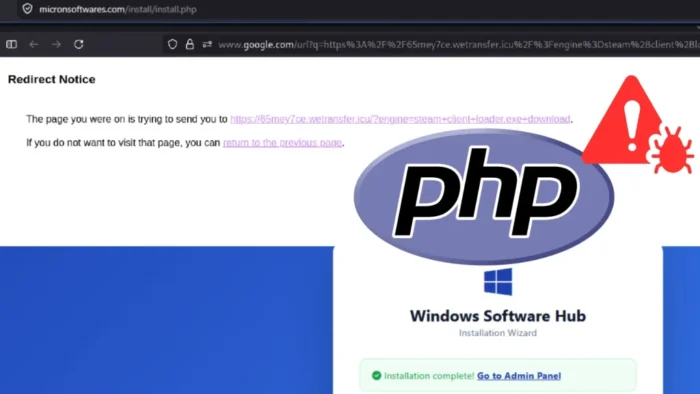
A live malware distribution platform was exposed after a security researcher found that its PHP installation page was still open on a production server. The exposed installer allowed the application setup process to run again and briefly gave the researcher administrative access to the threat actor’s backend.
The incident was documented by researcher Ardi Jonias Fortuna in a Potato.id investigation. What first looked like a fake software download domain turned out to be a working malware delivery system with an admin panel, download management features, visitor tracking, redirect logic, and hosted payloads.

Access content across the globe at the highest speed rate.
🔥 Save 81% + 2 bonus months! 🔥
70% of our readers choose Private Internet Access
70% of our readers choose ExpressVPN
2
Browse the web from multiple devices with industry-standard security protocols.
🔥 Save 73%! 🔥

Faster dedicated servers for specific actions (currently at summer discounts)
🔥 Save 69%! 🔥
The finding shows that even threat actors make basic deployment mistakes. In this case, a forgotten `/install/install.php` endpoint created an unintended path into the platform’s control panel.
Researcher Found an Exposed PHP Installer During IOC Review
The investigation began with an indicator of compromise shared on X. The researcher checked the suspicious domain, confirmed that it was still active, and then used web enumeration to look for exposed paths.
Directory brute forcing revealed several sensitive endpoints, including `/admin/login.php`, `/config/database.php`, and `/install/install.php`. The last path was the most important because the installer still worked even though the application had already been deployed.
That kind of exposure matches a common web application deployment risk. The OWASP Web Security Testing Guide warns that unreferenced pages can expose powerful functionality, including admin pages or application features that should not be reachable by unauthenticated users.
| Finding | Why it mattered |
|---|---|
| /admin/login.php | Confirmed that the site had an administrative interface |
| /config/database.php | Suggested sensitive configuration paths were exposed or discoverable |
| /install/install.php | Allowed the installer workflow to run on an active production system |
| Server-side PHP session | Allowed a previously issued session to remain valid after backend recovery |
| Dynamic download pages | Let the same infrastructure serve different fake download lures |
The Installer Allowed the Application to Be Reinitialized
According to the Cyberpress report, the researcher tested whether the installer had any guardrails to prevent reinstallation. It did not.
The researcher configured a controlled MySQL instance and supplied the installer with database connection details. The application accepted the new connection, created a database schema, and prompted the creation of an administrator account.
At that point, the researcher had credentials created through the application’s own setup flow. The access did not come from a stolen password or a cracked login. It came from a production installer that should have been removed, locked, or disabled after deployment.
Dashboard Access Returned After a 500 Error
The first login attempt did not fully work. The dashboard returned a 500 Internal Server Error, likely because the application and backend database were no longer in a consistent state.
After the threat actor restored the backend, the researcher refreshed the previous tab and the dashboard loaded. The session remained valid because the PHP application appeared to store session state server-side and did not force reauthentication after the backend was restored.
That points to a second weakness: poor session lifecycle control. OWASP’s Session Management Cheat Sheet recommends strong session management, including careful handling of session identifiers and invalidation during important account or state changes.
Inside the Malware Distribution Backend
The admin dashboard revealed a simple but functional malware distribution platform. The interface contained Russian-language panels for managing keywords, settings, visitors, and downloads, though the report does not establish firm attribution to any specific group.
The platform used a PHP front end, a MySQL backend, and file storage for malware payloads. It generated download pages dynamically based on URL parameters, which allowed the same backend to support different fake software download themes.
Victims were not always sent directly to the final malware host. The campaign used redirect chains, including intermediary pages, before sending users to the final download destination. The GBHackers write-up says the final delivery flow led users to compressed archives containing executable malware.
| Platform component | Observed role |
|---|---|
| PHP admin panel | Managed settings, visitors, downloads, and campaign elements |
| MySQL database | Stored application data and supported the dashboard workflow |
| File storage | Hosted payloads used in fake software download flows |
| Dynamic pages | Generated different download pages from URL parameters |
| Redirect chain | Moved users through intermediary pages before final payload delivery |
Fake Download Sites Remain a Common Malware Delivery Method
The exposed platform fits a familiar malware delivery pattern. Attackers create fake download pages, push users through ads, search results, social posts, or redirectors, and then deliver a malicious archive or executable that looks like a legitimate installer.
In this case, the reported payload was tied to fake download infrastructure and one SHA256 hash. SOCRadar’s IOC Radar entry also lists the same SHA256 hash and flags it as malware stealer activity first seen on June 11, 2026.
The important defensive lesson is not only the specific domain or file hash. The bigger pattern is that fake download portals often rely on multiple small infrastructure pieces, including redirectors, disposable domains, hosted payload files, and dashboards used to update campaigns quickly.
Indicators of Compromise
| Type | Indicator | Context |
|---|---|---|
| Domain | micronsoftwares[.]com | Malware delivery infrastructure reported in the investigation |
| Domain | wetransfer[.]icu | Domain associated with the reported malware campaign |
| SHA256 | 7b03fb383a5ce784a3cb9b0f8a76a84e984d14e553de5d98faff3d07d9793085 | Reported payload.exe sample |
Security teams should keep the domains defanged when sharing them in tickets, reports, or chat tools. Re-fang indicators only inside controlled threat intelligence platforms, sandbox environments, SIEM queries, or other safe analysis workflows.
Why the Exposed Installer Was So Serious
An installation page should never remain publicly accessible after deployment unless it has strict controls and a safe reinitialization process. In this incident, the installer lacked a check to detect that the application had already been configured.
The OWASP guidance on unreferenced files explains that hidden or unlinked application pages can expose sensitive information or powerful functions to anyone who finds them. That is exactly the kind of deployment failure that made this malware platform reachable.
The session issue also mattered. The OWASP session guidance highlights the need to protect and manage session identifiers throughout the session lifecycle. The researcher’s session remained valid even after the threat actor restored the backend, which allowed access to return without a fresh login.
What Defenders Can Learn From the Incident
The case gives defenders a rare look at how a low-cost malware platform can operate. It also shows that threat actor infrastructure may contain the same basic security mistakes that defenders find in legitimate but poorly maintained web applications.
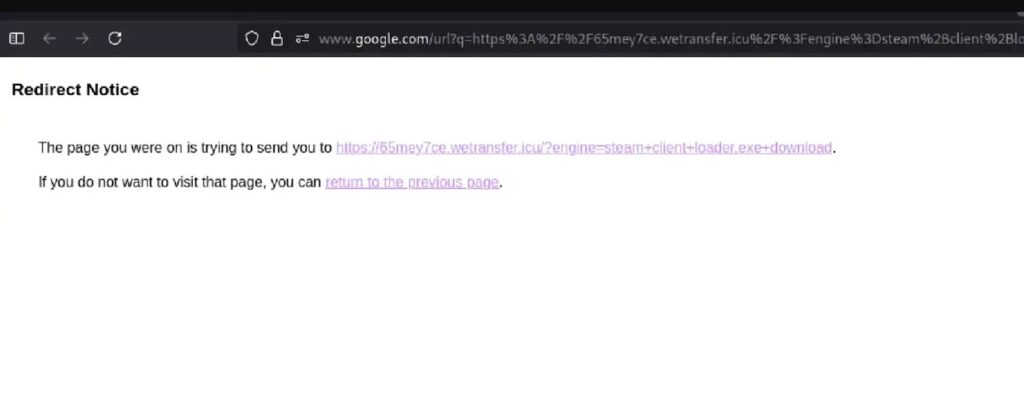
The Cyberpress coverage says the dashboard showed panels for keywords, visitors, downloads, and payload configurations. The GBHackers report also notes that the infrastructure continued distributing malware after the installation flaw was fixed.
Organizations should treat fake download domains as part of a broader campaign, not as isolated IOCs. When one payload hash appears, defenders should also hunt for related redirectors, download page patterns, suspicious archive downloads, and browser history entries that show users were routed through intermediary pages.
- Block the listed domains and hash where policy allows.
- Search proxy, DNS, and EDR logs for fake software download activity.
- Review browser downloads for compressed archives followed by executable launches.
- Hunt for users who reached Google Colab-style redirect pages before malware delivery.
- Inspect endpoints for recent downloads tied to fake software names.
- Warn users not to install software from unknown download pages.
- Use allowlisted software portals for common tools such as browsers, meeting apps, and utilities.
For web application owners, the defensive message is direct: remove installers, restrict admin paths, invalidate sessions after sensitive state changes, and test production deployments for leftover setup files. The SOCRadar IOC listing gives defenders another reference point for the reported hash and related threat intelligence context.
FAQ
A security researcher found that a live malware distribution platform still had its PHP installation page exposed. The installer allowed the setup process to run again, which led to the creation of a new administrator account and brief access to the threat actor’s dashboard.
The exposed endpoint was /install/install.php. The researcher also found other sensitive paths, including /admin/login.php and /config/database.php, during web enumeration.
The platform generated fake software download pages, tracked visitors, managed download campaigns, and routed victims through redirect chains to payload pages that served compressed archives containing executable malware.
The reported indicators include micronsoftwares[.]com, wetransfer[.]icu, and SHA256 hash 7b03fb383a5ce784a3cb9b0f8a76a84e984d14e553de5d98faff3d07d9793085 for payload.exe.
Organizations should block known malicious domains and hashes, monitor DNS and proxy logs for fake software download activity, restrict software installation sources, inspect suspicious archive downloads, and train users to avoid unofficial download pages.


Read our disclosure page to find out how can you help VPNCentral sustain the editorial team Read more


Improve this guide


User forum
0 messages