
SpaceX and Starlink X Accounts Reportedly Reposted a Fake Crypto Promotion


 9 min. read
  Published on
The official SpaceX and Starlink accounts on X reportedly reposted content promoting an unauthorized cryptocurrency before the posts disappeared.
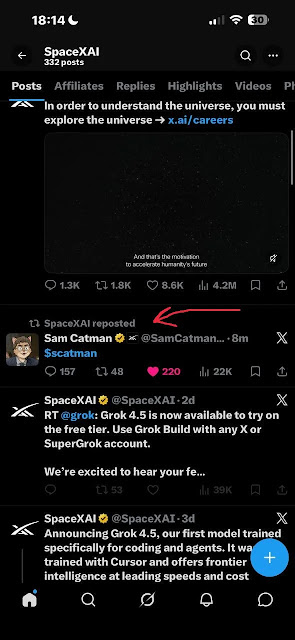
Circulating screenshots appear to show both accounts amplifying a token promotion from an account using SpaceX-related branding. However, SpaceX, Starlink, and X have not publicly confirmed that attackers compromised either account.

Access content across the globe at the highest speed rate.
🔥 Save 81% + 2 bonus months! 🔥
70% of our readers choose Private Internet Access
70% of our readers choose ExpressVPN
2
Browse the web from multiple devices with industry-standard security protocols.
🔥 Save 73%! 🔥

Faster dedicated servers for specific actions (currently at summer discounts)
🔥 Save 69%! 🔥
The available evidence also does not independently establish how the posts appeared, how many people bought the token, or whether its creators removed liquidity in a rug pull. Users should treat every SpaceX-branded cryptocurrency promotion as suspicious unless the company confirms it through several official channels.
What reportedly appeared on the SpaceX and Starlink accounts?
Online reports claim that an account calling itself “Sam Catman” promoted a newly launched cryptocurrency while displaying branding that suggested a connection to SpaceX and artificial intelligence projects.
Screenshots then appeared to show the official SpaceX account on X and Starlink account reposting the promotion.
The posts reportedly appeared among normal company updates, which could have made the promotion look legitimate to followers. Both brands have large audiences, and a repost from an official account can quickly create trust around an unknown project.
| Reported detail | Current status |
|---|---|
| SpaceX reposted a cryptocurrency promotion | Shown in circulating screenshots but not officially confirmed |
| Starlink reposted the same promotion | Shown in circulating screenshots but not officially confirmed |
| The accounts were compromised | No public confirmation from SpaceX, Starlink, or X |
| The token ended in a rug pull | Claimed in online reports but not independently established |
| Investor losses | No verified total available |
| Method of account access | Unknown |
Screenshots do not prove how the posts appeared
Screenshots can document what users saw at a particular moment, but they do not explain how the activity occurred.
An attacker may gain direct control of an account, abuse an authorized third-party application, obtain access to a social media management tool, or compromise an employee with publishing permissions.
X also notes that unexpected posts and other unapproved account behavior can indicate a compromised account. However, its compromised account guidance says third-party application bugs can sometimes cause unexpected activity.
- Stolen account credentials
- Phishing against an employee or contractor
- A compromised email account used for recovery
- Access through an unauthorized third-party application
- A breached social media management platform
- Misuse by someone who already had publishing access
- A platform or application error
The cryptocurrency did not have a verified SpaceX connection
Scammers frequently create tokens that use the names of major companies, public figures, products, and technology projects without permission.
A company logo, verified-looking badge, branded account name, or repost does not prove that the company created or endorsed a cryptocurrency. Token creators can also copy official images and language within minutes.
Neither the official SpaceX profile nor the official Starlink profile should serve as the only source for a financial decision, especially when a post promotes a newly created digital asset.
How fake branded tokens attract buyers
A typical token scam begins with a new cryptocurrency that has little history, limited liquidity, and a small number of wallets controlling most of the supply.
Promoters then use trusted names, social media engagement, urgent language, and claims of insider access to attract buyers. A repost from a major account can cause the price and trading volume to rise quickly.
Early holders may sell into that demand or withdraw liquidity, causing the token’s value to collapse. Buyers who entered after the promotional surge can lose most or all of their investment.
- Scammers create a token using a recognizable brand or public figure.
- They publish promotional posts and a contract address.
- Fake accounts, bots, or compromised profiles amplify the message.
- Buyers rush to purchase before checking the project.
- The token price rises because of limited liquidity and sudden demand.
- Insiders sell their holdings or remove available liquidity.
- The token price collapses, leaving later buyers with losses.
What a rug pull means
A rug pull occurs when token creators or insiders abandon a cryptocurrency project after attracting buyers and extracting value from it.
Some operators remove liquidity from a decentralized exchange. Others sell a large allocation of tokens, block holders from selling, change contract settings, or direct users to a malicious wallet-draining website.
A rapid price decline alone does not prove a rug pull. Investigators normally examine the token contract, liquidity pool, creator wallets, supply distribution, and transaction history before reaching that conclusion.
| Possible warning sign | Why it matters |
|---|---|
| Anonymous or newly created team | Operators can disappear without accountability |
| Large insider token allocation | A few wallets may control the market |
| Unlocked liquidity | Creators may remove funds from the trading pool |
| No independent audit | Dangerous contract functions may remain hidden |
| Urgent social media promotion | Pressure discourages proper research |
| Brand endorsement without confirmation | Scammers often impersonate trusted organizations |
| Restrictions on selling | Buyers may enter but remain unable to exit |
Official reposts can create false confidence
Users often assume that content shared by an official company account has passed an internal review. That assumption gives attackers a powerful advantage when they gain access to a popular profile or connected publishing tool.
Verification badges also confirm control of an account under the platform’s current rules, but they do not guarantee that every new post represents a legitimate business announcement.
A deleted post should not restore confidence automatically. Attackers can complete a short promotional campaign before a company notices the activity and secures the account.
No verified investor loss total is available
The initial report says buyers lost money after the token’s liquidity disappeared. However, it does not provide a verified contract address, blockchain analysis, transaction list, or independently confirmed loss calculation.
Without those details, readers cannot reliably determine how many wallets bought the asset, how much money insiders removed, or whether every reported transaction involved a genuine victim.
The distinction matters because cryptocurrency scams often generate exaggerated claims in both directions. Promoters may invent trading activity to attract buyers, while later reports may overstate losses without tracing the relevant wallets.
SpaceX and Starlink have not confirmed a breach
Neither company had issued a public incident report explaining whether an account takeover occurred, how long unauthorized access lasted, or which systems attackers may have reached.
X also had not published a statement identifying the cause of the reported reposts. The lack of an announcement does not prove that no incident occurred, but it limits what can responsibly be stated as fact.
Until an official investigation provides more information, the incident should remain described as a reported or suspected compromise rather than a confirmed breach.
How organizations should respond to unauthorized posts
Companies that detect unexpected activity should secure the social media account and every connected system immediately.
Changing the X password may not remove access through a compromised email account, third-party application, social media platform, or active login session.
X recommends changing the password, securing the linked email account, revoking unknown third-party applications, and enabling two-factor authentication in its account recovery instructions.
- Remove unauthorized posts and reposts.
- Change the account password to a unique value.
- Secure the email address connected to the account.
- Revoke unrecognized third-party application access.
- Sign out active sessions where possible.
- Enable phishing-resistant multifactor authentication.
- Review publishing tools and employee permissions.
- Preserve access logs for investigation.
- Publish a clear warning through official channels.
How users can avoid fake SpaceX cryptocurrency scams
Users should not buy a token because a major account reposted it. They should confirm any financial announcement through the company’s website, official newsroom, regulatory filings, and several established news organizations.
A legitimate project should provide a clear legal entity, technical documentation, risk disclosures, named leadership, and independently verifiable contract information.
Users should also avoid connecting a cryptocurrency wallet to a site reached through an unexpected social media post. A fake claim page can request malicious permissions that allow attackers to drain existing assets.
- Do not act on an urgent token announcement immediately.
- Check whether the company published the news on its official website.
- Search for confirmation from established independent sources.
- Verify the token contract through a trusted blockchain explorer.
- Review the largest token holders and liquidity controls.
- Do not connect a wallet to an unfamiliar website.
- Never share a wallet recovery phrase or private key.
- Use a separate low-value wallet when testing unfamiliar applications.
What buyers should do after interacting with the token
Anyone who purchased the reported token should preserve transaction records, wallet addresses, the contract address, screenshots, and links to the promotional posts.
Users who only bought or sold a token do not necessarily need to abandon their wallet. However, those who connected to an unknown site or approved a contract should inspect and revoke unnecessary token permissions.
A user who exposed a recovery phrase or private key should move remaining assets to a newly created wallet from a clean device. Changing a wallet password does not protect funds when an attacker knows the underlying recovery phrase.
- Save the transaction hash and contract address.
- Take screenshots of the promotion and website.
- Revoke suspicious smart-contract approvals.
- Move assets when a private key or recovery phrase was exposed.
- Contact the exchange used to fund the purchase.
- Report the account and malicious website to the platform.
- File a report with the appropriate fraud authority.
- Ignore services promising guaranteed fund recovery.
High-profile accounts remain valuable targets
Attackers target major corporate profiles because one unauthorized post can reach millions of people before security teams respond.
SpaceX and Starlink also have a close public association with Elon Musk, whose name and image have appeared in cryptocurrency scams for years. That familiarity can make a false promotion seem plausible to users who only scan the post quickly.
The reported incident reinforces a basic rule for cryptocurrency buyers. Social media visibility and recognizable branding do not replace independent verification.
FAQ
No public statement from SpaceX, Starlink, or X had confirmed a compromise at publication time. Circulating screenshots reportedly showed unauthorized-looking reposts, but they do not establish how the activity occurred.
There is no verified evidence that SpaceX or Starlink created or endorsed the reported token. Users should consider SpaceX-branded coins unauthorized unless the company confirms them through several official channels.
Online reports described the token as a rug pull, but no independently verified contract analysis or loss calculation was available. Confirming a rug pull requires examining blockchain transactions, liquidity, insider holdings, and contract controls.
Yes. Attackers who gain publishing access to a verified account or its connected tools can post or repost fraudulent content until the owner detects and stops the activity.
Users should revoke suspicious smart-contract approvals and inspect their wallet for unauthorized transactions. Anyone who exposed a private key or recovery phrase should move remaining assets to a new wallet created on a clean device.


Read our disclosure page to find out how can you help VPNCentral sustain the editorial team Read more


Improve this guide

User forum
0 messages