
VPN Not Changing Location: 12 Proven Fixes


 6 min. read
  Updated on
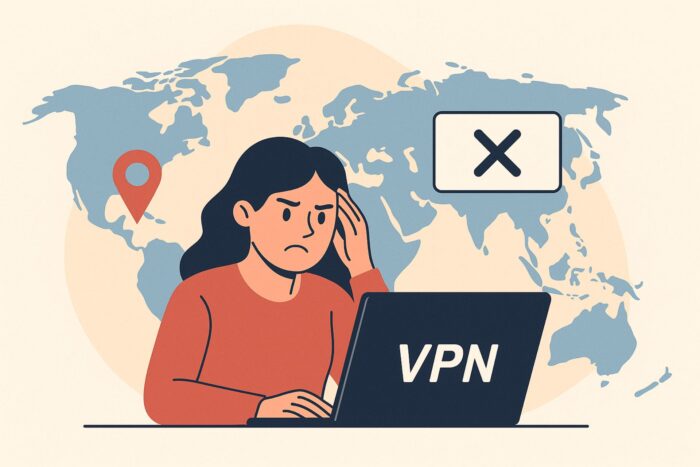
You changed servers, but websites still know where you are. That happens because devices and browsers use more than your IP to find location. Use the steps below to stop leaks and match the VPN region.
Table of contents
- Before you start
- How to fix a VPN not changing your location
- 1) Revoke browser and site geolocation permissions
- 2) Block WebRTC from leaking your real IP
- 3) Clear cookies, cache, and logged-in sessions
- 4) Flush and pin DNS to the VPN
- 5) Turn off split tunneling for target apps
- 6) Align your device time zone with the VPN region
- 7) On phones, restrict GPS location for the app
- 8) Disable Wi-Fi and Bluetooth scanning
- 9) Switch server, city, or protocol
- 10) Turn on the kill switch and reconnect
- 11) Disable IPv6 if your VPN doesn’t support it
- 12) Reinstall or update the VPN app
- What reveals your location vs how to fix it
- Tips
- FAQs
- Conclusion
Before you start
- Confirm the VPN shows “Connected” to the intended country.
- Disconnect and reconnect to refresh the tunnel.
- Test another server in the same region to rule out a bad exit IP.
- Note your current public IP for comparison after fixes.
- Keep your VPN app updated to the latest version.
How to fix a VPN not changing your location
1) Revoke browser and site geolocation permissions
Websites can request precise location that bypasses your IP. Open your browser settings, block location for problem sites, and remove past permissions. On desktops, prefer “Ask” or “Blocked” and deny prompts.
2) Block WebRTC from leaking your real IP
WebRTC can expose your IP even with a VPN. Disable it in settings where possible or use a reputable blocker, then verify with a WebRTC leak test tool.
3) Clear cookies, cache, and logged-in sessions
Sites remember you with cookies and account sessions. Sign out, clear site data, and try in a fresh profile or private window. Log in again only after testing.
4) Flush and pin DNS to the VPN
If your system queries non-VPN DNS, sites may infer location. Flush your DNS cache, then ensure your adapter uses the VPN’s DNS or a trusted resolver. Mobile users can follow a guide on fixing DNS leaks on Android to keep queries inside the tunnel.
5) Turn off split tunneling for target apps
If the browser or app bypasses the tunnel, it will reveal your actual location. Disable split tunneling or add the app to the “protected” list so all traffic routes through the VPN.
6) Align your device time zone with the VPN region
Some sites fingerprint time zone. Change your system time zone to match the server region and restart the browser before testing again.
7) On phones, restrict GPS location for the app
VPNs change IP, not GPS. For the target app, set location permission to “Deny” or “While using” and retest. If you truly need a different GPS, see if your VPN supports it — otherwise, remember that a VPN does not hide your phone’s location without extra tools.
8) Disable Wi-Fi and Bluetooth scanning
Phones can use nearby networks to estimate location. Turn off Wi-Fi and Bluetooth scanning, then rely on the VPN and the app’s permissions to reduce precise lookups. This also reduces what a Wi-Fi owner can see while you use a VPN.
9) Switch server, city, or protocol
Some exit IPs get tagged or cached by services. Try another city in the same country or change the VPN protocol to refresh routing and egress behavior. If you’re unsure why the region matters, see why VPN server location is important.
10) Turn on the kill switch and reconnect
A kill switch prevents short drops that reveal your real IP. Enable it, disconnect, reconnect, and test during and after reconnection.
11) Disable IPv6 if your VPN doesn’t support it
Unrouted IPv6 can leak outside the tunnel. Turn off IPv6 on the adapter or enable “block IPv6” in your VPN app if available.
12) Reinstall or update the VPN app
Corrupt installs or outdated apps break DNS or permissions. Update or reinstall the app, sign in again, and reapply your settings. If your client shows VPN connected but not working, follow troubleshooting tailored to that issue.
What reveals your location vs how to fix it
| Signal revealing location | Where it shows up | Fix you should apply |
|---|---|---|
| Browser geolocation (Wi-Fi, cell) | Google, maps, checkouts | Revoke location, disable scanning, adjust app permissions |
| WebRTC IP leak | Browsers with real IP exposed | Disable WebRTC, confirm with a leak test |
| DNS leak | Regioned websites, CDNs | Flush cache, force VPN DNS, use Android DNS fix if mobile |
| Cookies and sessions | Any logged-in site | Sign out, clear data, retest in fresh profile |
| Time-zone mismatch | Fingerprinting sites | Match device time zone to VPN region |
| GPS on mobile | Apps that require GPS | Deny location or use app GPS override |
| Split tunneling | Specific apps | Disable split tunneling or include the app |
| Provider blocklists | Streaming and tickets | Change server, city, or protocol |
Tips
Test after each change so you know what worked.
Keep a “known good” region you trust for quick retries.
Document your setup so teammates can reproduce fixes fast.
For step-by-step guidance on how to change your VPN location, check a dedicated tutorial.
FAQs
Google can use Wi-Fi and device signals in addition to IP. Revoke location permissions and clear account data tied to previous regions.
No. A VPN changes your IP. Use app permission controls or a GPS override feature where supported.
You should ensure your DNS queries go through the VPN. Flushing or setting VPN DNS often resolves mismatches.
Incognito removes local history but keeps network visibility. Use it with the steps above, not as a replacement.
Conclusion
A VPN hides your IP, but apps and sites use many other signals. When you cut off those signals, your apparent location will match the VPN region consistently. Use this checklist every time you switch countries, and keep your VPN updated to reduce leaks. If the connection still fails altogether, try fixes for a VPN not working on mobile data to get back online securely. If your VPN refuses to connect at all, you might be running into VPN Error 809, a common issue on Windows that requires specific fixes.


Read our disclosure page to find out how can you help VPNCentral sustain the editorial team Read more


Improve this guide



User forum
0 messages