
India to Ban Hikvision, TP-Link CCTV Sales From April 1 Under New Security Rules


 4 min. read
  Published on
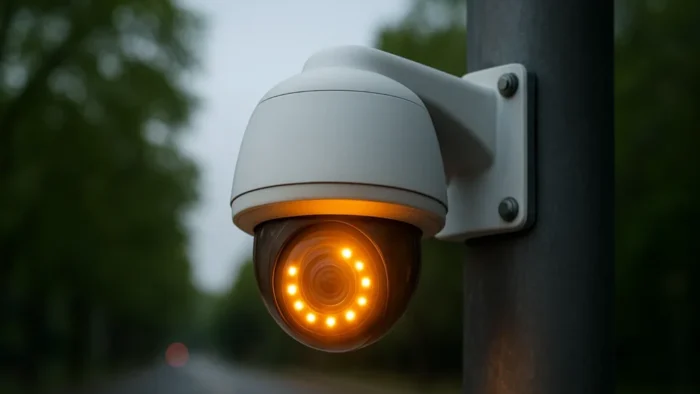
India will effectively block the sale of internet-connected CCTV cameras from companies like Hikvision, Dahua, and TP-Link starting April 1, 2026. The move comes as new mandatory certification rules take effect, making government approval a requirement before any surveillance product can be sold.
The decision is driven by national security concerns. Authorities want tighter control over devices that collect sensitive data and monitor critical infrastructure such as public spaces, offices, and transport hubs.

Access content across the globe at the highest speed rate.
70% of our readers choose Private Internet Access
70% of our readers choose ExpressVPN

Browse the web from multiple devices with industry-standard security protocols.

Faster dedicated servers for specific actions (currently at summer discounts)
Under the new framework, any CCTV device that fails to meet certification standards will not be allowed in the Indian market. Reports indicate that products linked to Chinese-origin chipsets are already being denied approval, effectively pushing these brands out.
What the new CCTV rules actually mean
The changes come under the Ministry of Electronics and Information Technology’s Essential Requirements norms introduced in 2024. These rules now become fully enforceable from April 1.
Manufacturers must pass strict testing under the Standardisation Testing and Quality Certification system before selling any connected surveillance device in India.
Key requirements include:
- Mandatory disclosure of component origin, including System-on-Chip (SoC)
- Security testing in certified labs to detect vulnerabilities
- Protection against unauthorized remote access
- Compliance with secure communication protocols like HTTPS and TLS
- Standardized patch management and firmware controls
Without this certification, products cannot be imported, distributed, or sold in India.
More than 500 CCTV models have already been approved under this system, showing the scale of enforcement.
Why India is targeting CCTV hardware
CCTV systems are no longer simple recording devices. They are connected systems that transmit and store large volumes of sensitive data.
Officials have raised concerns about risks such as:
- Unauthorized remote access to cameras
- Data transmission to foreign servers
- Potential surveillance vulnerabilities in critical locations
These concerns have pushed the government to tighten rules around hardware and software supply chains.
The new policy aligns with broader efforts to reduce dependency on foreign technology in sensitive sectors.
How the Indian CCTV market is changing
The impact of these rules has already reshaped the market even before full enforcement.
Chinese brands previously held around one-third of India’s CCTV market. That share has now dropped sharply as companies struggle to meet certification requirements or shift supply chains.
Domestic manufacturers have moved quickly to fill the gap.
Current market landscape
| Segment | Key Players | Market Position |
|---|---|---|
| Domestic brands | CP Plus, Qubo, Prama, Matrix, Sparsh | Over 80% market share |
| Global brands | Bosch, Honeywell | Premium segment |
| Chinese brands | Hikvision, Dahua, TP-Link | Declining / restricted |
Indian companies have reworked their supply chains by:
- Switching to Taiwanese chipsets
- Building localized firmware
- Aligning with certification standards
As a result, domestic players now dominate the market with more than 80% share as of early 2026.
Price impact and supply shift
The transition away from Chinese hardware has increased production costs.
Industry estimates suggest:
- 15% to 20% price increase in mid-range and high-end CCTV systems
- Higher costs due to alternative components and testing compliance
- Short-term supply constraints as vendors adjust
Consumers and businesses may see higher upfront costs, especially for large surveillance deployments.
However, the shift is also expected to create long-term stability through secure and locally controlled supply chains.
What happens to existing CCTV users
The new rules do not ban existing devices already installed in homes or businesses.
However, users may face issues over time:
- Limited or no software updates
- Potential app or cloud service disruptions
- Difficulty in repairs or replacements
This could gradually push users toward certified alternatives from Indian or approved global brands.
Industry reaction and concerns
Cybersecurity experts and domestic manufacturers have largely welcomed the move. They see it as a necessary step to strengthen data protection and reduce external risks.
At the same time, some concerns remain:
- Reliability of rapidly scaled domestic solutions
- Higher costs for businesses and public infrastructure
- Criticism from international stakeholders over trade restrictions
Despite this, the government appears committed to enforcing stricter rules for connected devices.
Key takeaways
- India will block non-certified CCTV devices from April 1, 2026
- Hikvision, Dahua, and TP-Link are among the affected companies
- Certification under STQC is now mandatory for all connected cameras
- Domestic brands now control over 80% of the market
- Prices are expected to rise due to supply chain changes
FAQ
No. The government is enforcing strict certification rules. Devices that fail to meet them cannot be sold.
To reduce cybersecurity risks and prevent unauthorized access to sensitive surveillance data.
No. Existing devices will continue to work, but future updates and support may become limited.
Yes. Prices may rise by 15% to 20% due to new compliance and supply chain changes.
Indian brands like CP Plus, Qubo, Prama, Matrix, and Sparsh are leading the shift.


Read our disclosure page to find out how can you help VPNCentral sustain the editorial team Read more


Improve this guide




User forum
0 messages