
TeamPCP backdoored LiteLLM on PyPI after the Trivy compromise


 5 min. read
  Published on

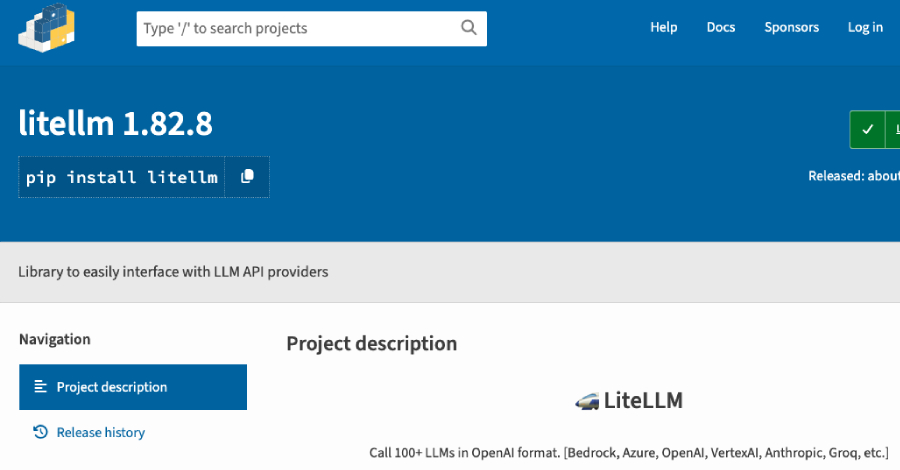
LiteLLM was hit by the growing TeamPCP supply chain campaign on March 24, 2026, when attackers published two malicious PyPI versions, 1.82.7 and 1.82.8. Berri AI, which maintains LiteLLM, confirmed the compromise and said it traced back to a compromised Trivy security scan dependency in its CI/CD path.
The incident matters because the malicious packages did not just break builds. Security researchers say they contained a credential harvester, Kubernetes-focused lateral movement logic, and persistence mechanisms designed to survive beyond the initial install. Endor Labs said the payload targeted SSH keys, cloud credentials, Kubernetes secrets, cryptocurrency wallets, and .env files.

Access content across the globe at the highest speed rate.
70% of our readers choose Private Internet Access
70% of our readers choose ExpressVPN

Browse the web from multiple devices with industry-standard security protocols.

Faster dedicated servers for specific actions (currently at summer discounts)
Anyone who installed and ran those compromised versions should assume secrets were exposed. Berri AI told users to rotate all credentials present as environment variables or config files on any system where LiteLLM 1.82.7 or 1.82.8 was installed.
What the malicious LiteLLM packages did
Endor Labs described the attack as a three-stage payload. It said the malware first harvested credentials, then attempted Kubernetes lateral movement by deploying privileged pods, and finally installed a persistent backdoor that polled attacker infrastructure for follow-on payloads.
Wiz reported that the two malicious LiteLLM versions used different execution methods. According to Wiz, version 1.82.7 ran the payload when litellm.proxy.proxy_server was imported or when litellm --proxy was used, while version 1.82.8 added a more dangerous .pth-based launcher that executed automatically whenever Python started.
That .pth detail matters because it widened the blast radius. Berri AI’s GitHub issue says litellm_init.pth ran automatically at Python interpreter startup, which meant the attacker did not need the victim to import LiteLLM directly after installation.
LiteLLM compromise at a glance
| Item | Confirmed details |
|---|---|
| Affected package | LiteLLM on PyPI |
| Malicious versions | 1.82.7 and 1.82.8 |
| First public detection | March 24, 2026 |
| Confirmed by maintainer | Yes, Berri AI confirmed compromise |
| Likely initial source | Compromised Trivy scan dependency in CI/CD |
| Most dangerous mechanism | .pth auto-execution in version 1.82.8 |
Why version 1.82.8 was worse
Version 1.82.8 appears to have been the more dangerous of the two releases. Berri AI issue reports and Wiz’s analysis both say the wheel contained a malicious litellm_init.pth file placed at the wheel root, causing code to run automatically on Python startup.
Wiz says the .pth launcher spawned a child Python process in the background, which made the behavior stealthier and less tied to normal LiteLLM execution. That means environments with Python installed, including developer workstations, CI runners, and production containers, could trigger the payload in broader circumstances than users might expect.
By contrast, 1.82.7 appears to have relied on code injected into litellm/proxy/proxy_server.py, which still made it dangerous but somewhat more tied to module import or proxy-specific execution paths.
How this connects to the wider TeamPCP campaign
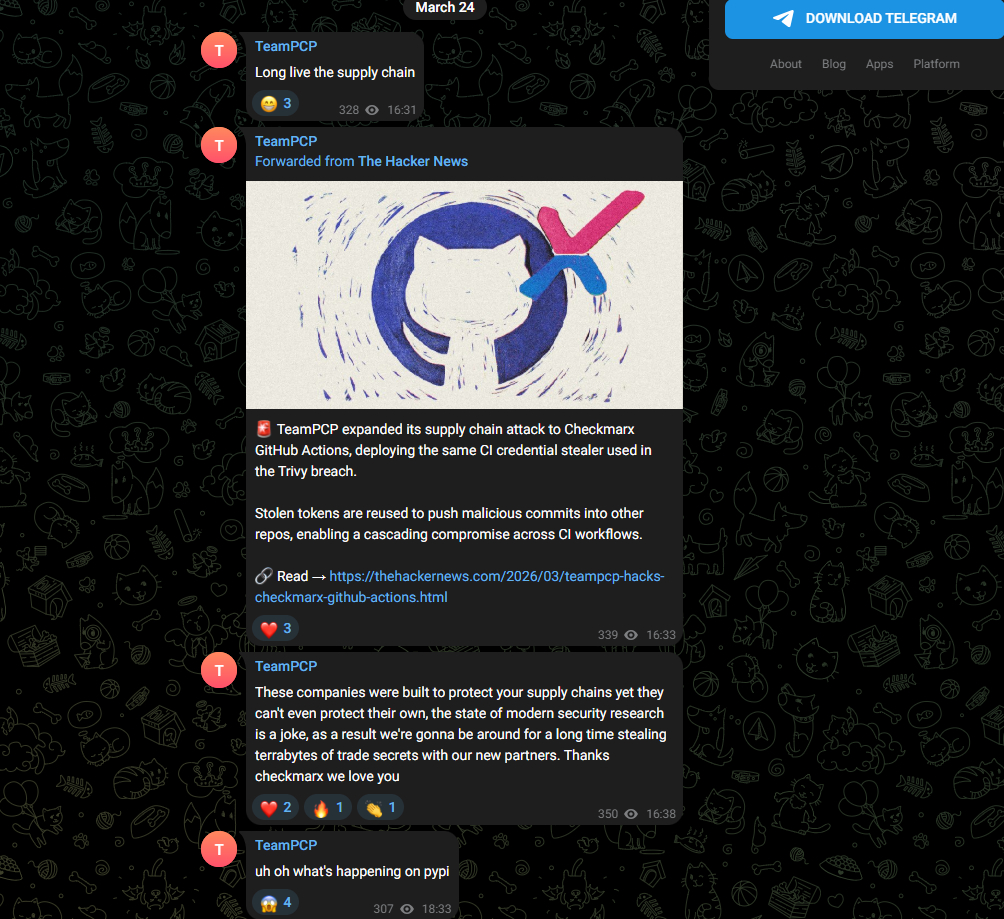
The LiteLLM incident did not happen in isolation. Endor Labs and Wiz both frame it as a follow-on attack tied to TeamPCP’s earlier compromises involving Trivy and other supply chain components. In that sense, LiteLLM looks like a pivot target chosen because upstream CI/CD exposure yielded fresh credentials for the next stage.
That pattern matches the public statement from Endor Labs, which warned that the campaign was likely still expanding. Its researchers said TeamPCP had shown a consistent pattern where one compromised environment yielded credentials that unlocked the next target.
Wiz made the same broader point in stronger terms, saying the compromise reflected an ecosystem-wide cascade where one breach fed the next. That framing fits what defenders have already seen across Trivy, KICS, and other TeamPCP-linked incidents.
What teams should check immediately
- Whether any environment installed LiteLLM 1.82.7 or 1.82.8
- Whether
litellm_init.pthexists insite-packages - Outbound traffic to
models.litellm.cloudorcheckmarx.zone - Unusual privileged pods in Kubernetes clusters
- Unexpected systemd persistence such as
sysmon.service
What Berri AI and defenders say to do now
Berri AI says compromised packages 1.82.7 and 1.82.8 were removed, maintainer accounts were rotated, and no new LiteLLM releases would ship until the release chain had been reviewed. It also said LiteLLM proxy Docker image users were not impacted because dependencies were pinned in requirements.txt.
The response for exposed users is more urgent. Berri AI says anyone who had those versions installed should rotate all credentials that were present as environment variables or config files on the affected system. PyPI-related advisories and third-party vendor reports echo that same guidance.
Security teams should also isolate affected hosts, check Kubernetes clusters for rogue pods, remove persistence, and audit CI/CD workflows that used Trivy or KICS during the compromise windows. Those steps appear consistently across vendor guidance and fit the malware behavior reported by Endor Labs and Wiz.
FAQ
The confirmed malicious PyPI versions were 1.82.7 and 1.82.8. Berri AI said both were deleted after the compromise was discovered.
Yes. Berri AI said the compromise came from a Trivy security scan dependency, and multiple security vendors linked the incident to the wider TeamPCP campaign.
Because it included a malicious .pth file that executed automatically on Python startup, not just when LiteLLM code was imported.
Isolate affected systems, remove the malicious package, inspect for persistence, and rotate every credential that the environment could access. Berri AI specifically said to rotate all credentials present as environment variables or config files.


Read our disclosure page to find out how can you help VPNCentral sustain the editorial team Read more


Improve this guide

User forum
0 messages