
MLTBackdoor Malware Uses ClickFix Lures to Gain Access to Windows Systems


 9 min. read
  Published on
Security researchers have uncovered a new Windows backdoor called MLTBackdoor that spreads through a multi-stage ClickFix infection chain and gives attackers a foothold on infected machines.
The malware was identified in May 2026 by Zscaler ThreatLabz, which says MLTBackdoor is likely used by a ransomware-related threat actor. According to the Zscaler ThreatLabz analysis, the backdoor can download and upload files, list directories, delete files, rename items, create folders, and load Beacon Object Files to expand its capabilities.

Access content across the globe at the highest speed rate.
🔥 Save 81% + 2 bonus months! 🔥
70% of our readers choose Private Internet Access
70% of our readers choose ExpressVPN
2
Browse the web from multiple devices with industry-standard security protocols.
🔥 Save 73%! 🔥

Faster dedicated servers for specific actions (currently at summer discounts)
🔥 Save 69%! 🔥
The attack begins with a ClickFix lure on an automotive-related web page. The victim is tricked into copying and running a command, which starts the full infection chain and eventually loads MLTBackdoor on the system.
MLTBackdoor starts with a ClickFix social engineering trick
ClickFix attacks rely on the user doing the execution for the attacker. A fake error, fake CAPTCHA, or fake fix prompt tells the user to copy and paste a command into Windows Run, Command Prompt, or PowerShell.
This technique is now documented by MITRE ATT&CK as Malicious Copy and Paste, tracked as T1204.004. MITRE says attackers use this method to convince users to run malicious code directly in a command or scripting interpreter.
That social engineering step helps attackers bypass some browser and email protections because the user manually runs the command. Red Canary has also warned that paste-and-run attacks have become a major initial access trend, with several recent threat clusters using ClickFix-style lures.
| Threat name | MLTBackdoor |
| Discovery | May 2026 |
| Reported by | Zscaler ThreatLabz |
| Initial access method | ClickFix lure on an automotive-related web page |
| Main risk | Backdoor access, file operations, and expandable post-exploitation capability |
| Likely use case | Foothold for lateral movement in ransomware-related activity |
| Primary platform | Windows |
The infection chain uses a disguised archive and DLL sideloading
After the victim runs the ClickFix command, the chain creates a temporary folder and downloads a compressed archive from a domain generated by the malware’s domain generation algorithm.
The archive contains two files, data.bin and endpointdlp.dll. The DLL decrypts the RC4-encrypted data.bin file, which contains the second-stage MLTBackdoor payload.
MLTBackdoor then performs a self-update and reuses the endpointdlp.dll filename. It sideloads the backdoor through mpextms.exe, a legitimate signed Microsoft Defender executable, which helps the malware hide behind a trusted binary.
- The lure starts on an automotive-themed web page.
- The victim copies and runs a fake fix command.
- The command downloads a compressed archive from attacker infrastructure.
- endpointdlp.dll decrypts data.bin using RC4.
- The decrypted payload loads MLTBackdoor.
- The malware uses mpextms.exe for DLL sideloading.
MLTBackdoor is built to slow down analysis
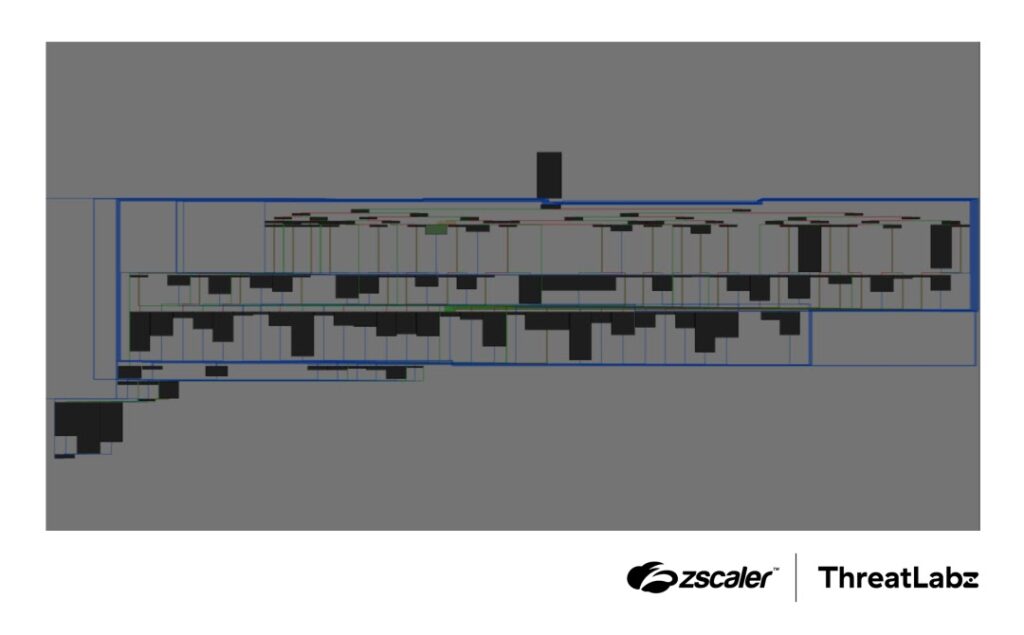
MLTBackdoor uses several techniques to make reverse engineering harder. It relies on Mixed Boolean-Arithmetic obfuscation, control flow flattening, stack-built strings, API hashing, and indirect system calls.
Zscaler says around 95% of the malware’s code consists of extra calculations that add noise. This does not improve normal malware function, but it makes the code much harder for researchers and automated tools to understand.
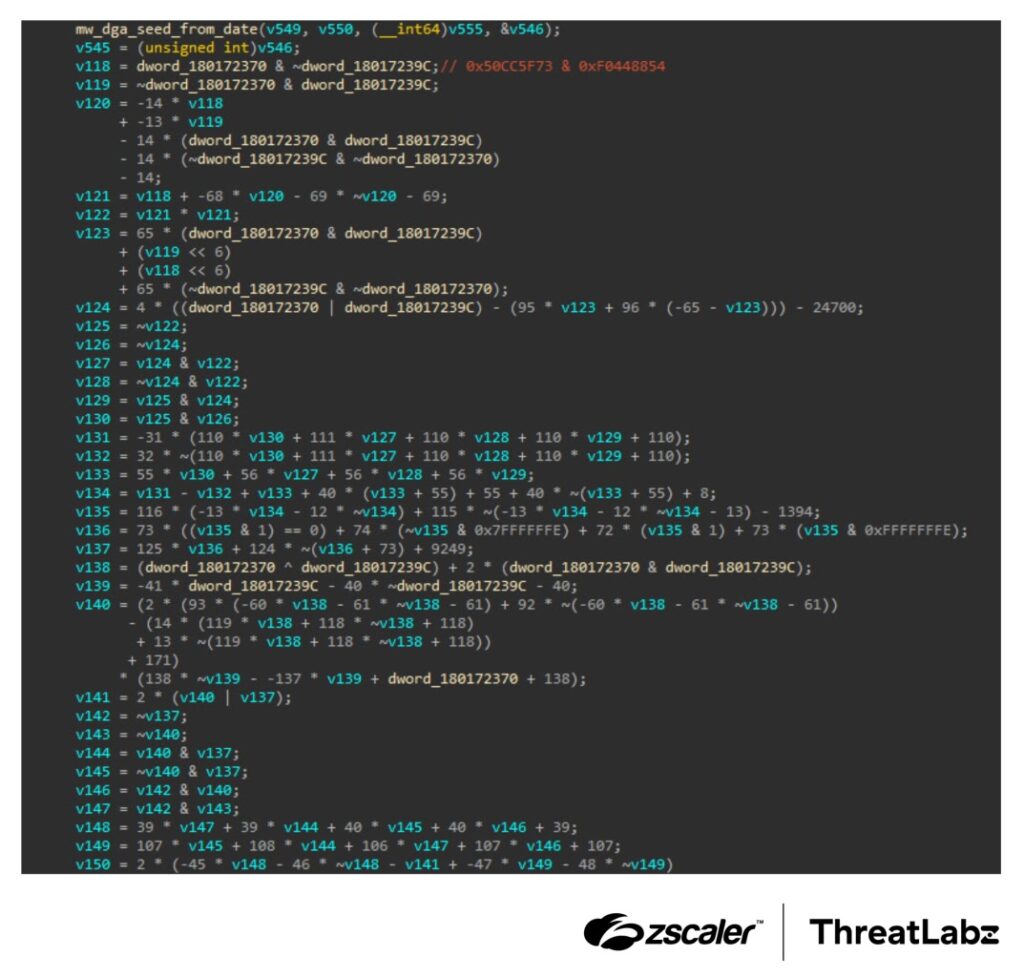
The backdoor also checks for virtualization, debugging tools, sandbox drivers, low RAM, single-CPU systems, short uptime, and other signs that it may be running in an analysis environment.
| Evasion method | Purpose |
| Mixed Boolean-Arithmetic | Adds unnecessary math operations to hide simple logic |
| Control flow flattening | Makes the execution path harder to follow |
| Stack-built strings | Prevents simple static string extraction |
| API hashing | Hides direct Windows API references |
| Indirect system calls | May bypass user-mode monitoring hooks |
| Anti-analysis checks | Collects signals about sandboxes, debuggers, and virtual machines |
The backdoor uses encrypted C2 traffic over port 443
Once active, MLTBackdoor communicates over TLS on port 443 using a custom encrypted binary protocol. It uses the fixed path /api/v1/telemetry and a Microsoft-style user-agent string to blend into normal-looking traffic.
The backdoor uses Elliptic-Curve Diffie-Hellman key exchange with the P-256 curve to create a shared secret. It then uses AES-256-GCM to encrypt later messages between the infected host and the command-and-control server.
Some MLTBackdoor samples contain hardcoded C2 domains, while others use a domain generation algorithm. This gives the malware a backup path if defenders block or seize known domains.
Why the BOF loader raises the risk
MLTBackdoor includes built-in commands for basic file system operations, but its Beacon Object File loader makes it more flexible. BOFs allow attackers to run additional post-exploitation modules in memory.
The technical report says this loader can dynamically add new capabilities without needing a large set of features built into the original malware binary.
That design can help attackers keep the backdoor smaller while still expanding what it can do after infection. It also makes detection harder because new functions may run in memory rather than appearing as separate files on disk.
- Download files from the victim system.
- Upload files to the victim system.
- List files in a directory.
- Delete files or folders.
- Rename or move files and folders.
- Create new folders.
- Load Beacon Object Files for extra post-exploitation tasks.
ClickFix attacks remain hard to stop with basic filtering
ClickFix campaigns work because they turn the user into the execution step. The command may come from a web page, fake CAPTCHA, fake browser error, or document prompt, but the result is the same: the user runs attacker-supplied code.
The Malicious Copy and Paste technique page notes that these attacks can involve fake errors or CAPTCHA prompts that tell users to open a terminal or Windows Run dialog and execute a command.
Red Canary’s ClickFix research also shows how quickly attackers change the commands and payloads used in paste-and-run campaigns. This makes detection rules based on one static command less reliable over time.
Indicators defenders should watch
Security teams should look for suspicious use of conhost.exe, cmd.exe, curl, tar, rundll32, and mpextms.exe in unusual sequences, especially when they run from user profile or temporary directories.
Network monitoring should also flag suspicious TLS traffic to unusual domains with the /api/v1/telemetry path, the Microsoft-Delivery-Optimization/10.1 user-agent string, or connections to domains linked to the campaign.
The following indicators come from public MLTBackdoor research and should be treated as starting points for threat hunting, not as the only possible signs of infection.
| Type | Indicator | Description |
| SHA256 | 1e41c7bfaa6aa3b93b6cc024274a10e33f3e12fe7c98c1db387ef8927f9d1984 | Stage one loader |
| SHA256 | 46b2155c1e71b840d4b7a2e94410b89a61e2446523e6f497206d402eb02e0e93 | Archive with stage one loader and encrypted MLTBackdoor |
| SHA256 | 9e52cc90cff150abe21f0a6440e86e0a99ff383b81061b96def8948e21d0ac66 | MLTBackdoor with domains and DGA |
| SHA256 | ced6b0f44410f6133ad63b61e04613a8b56cc3338d7b34497540e9541163e7ec | MLTBackdoor DGA only |
| SHA256 | 1d09357b6a096fdc35cd5c873eed15665d6b3c879d20c8cf01e6bca0005512cf | MLTBackdoor DGA only |
| SHA256 | 2cd88d5280a61714836f5f07a16df190911c5b952af2998dbbcda910b3b1c494 | MLTBackdoor domains only |
| SHA256 | d34e4038c5c80728f9648ba84833f69bc1ccea82e2e8e748b7b7f02fb687b92b | MLTBackdoor update sideload archive |
| Domain | hrs2y15sungu[.]com | DGA domain used for distribution and C2 |
| Domain | carrolc[.]com | MLTBackdoor C2 |
| Domain | cwrtwright[.]com | MLTBackdoor C2 |
| Domain | thomphon[.]com | MLTBackdoor C2 |
| URL | powwowski[.]com/payloads/update.zip | MLTBackdoor update URL |
| File name | endpointdlp.dll | DLL used to decrypt and sideload the backdoor |
| File name | data.bin | RC4-encrypted second-stage payload |
| File name | mpextms.exe | Legitimate Microsoft Defender binary abused for DLL sideloading |
How organizations can reduce exposure
Organizations should treat ClickFix as both a technical and training problem. Users need to know that websites should not ask them to paste commands into Windows tools, while security teams need detection for the process chains that follow those prompts.
The Red Canary analysis recommends focusing on behavior because paste-and-run campaigns change quickly. That approach fits MLTBackdoor as well, since the initial command chain, DLL sideloading, and unusual outbound traffic all provide hunting opportunities.
Defenders should also watch for legitimate Microsoft binaries launching unexpected DLLs from temporary folders. That pattern can point to DLL sideloading, especially when it appears after a browser, Run dialog, command prompt, or PowerShell session.
- Block or monitor suspicious copy-and-paste command execution from browsers.
- Alert on curl or tar activity launched from unusual user-driven command chains.
- Monitor rundll32 execution from temporary directories.
- Watch for mpextms.exe loading DLLs from unexpected paths.
- Block known MLTBackdoor hashes, domains, and URLs.
- Inspect TLS traffic patterns that use suspicious user-agent strings or fixed API paths.
- Train users not to run commands copied from web pages, CAPTCHA prompts, or fake fixes.
MLTBackdoor shows how ClickFix attacks can move from a simple user prompt to a full post-exploitation framework. The campaign combines social engineering, DLL sideloading, heavy obfuscation, encrypted C2, DGA fallback, and in-memory expansion through BOFs, making early detection especially important.
FAQ
MLTBackdoor is a Windows backdoor identified by Zscaler ThreatLabz in May 2026. Researchers say it is likely used by a ransomware-related threat actor to establish a foothold, move laterally, and expand capabilities through a Beacon Object File loader.
MLTBackdoor uses a multi-stage ClickFix infection chain. A fake prompt tricks the victim into copying and running a command, which downloads an archive, decrypts a hidden payload, and loads the backdoor through DLL sideloading.
MLTBackdoor uses Mixed Boolean-Arithmetic obfuscation, control flow flattening, stack-built strings, API hashing, indirect system calls, and multiple anti-analysis checks. These techniques make static and dynamic analysis harder.
MLTBackdoor can download and upload files, list directories, delete files or folders, rename or move items, create folders, and load Beacon Object Files to add more post-exploitation capabilities.
Organizations should monitor for suspicious ClickFix-style command execution, unusual use of curl, tar, rundll32, and mpextms.exe, DLL sideloading from temporary paths, outbound traffic to known MLTBackdoor domains, and TLS traffic using unusual fixed paths or user-agent strings.


Read our disclosure page to find out how can you help VPNCentral sustain the editorial team Read more


Improve this guide


User forum
0 messages