
Authorities shut down €50 million online fraud network running scam call centres in Albania


 4 min. read
  Published on

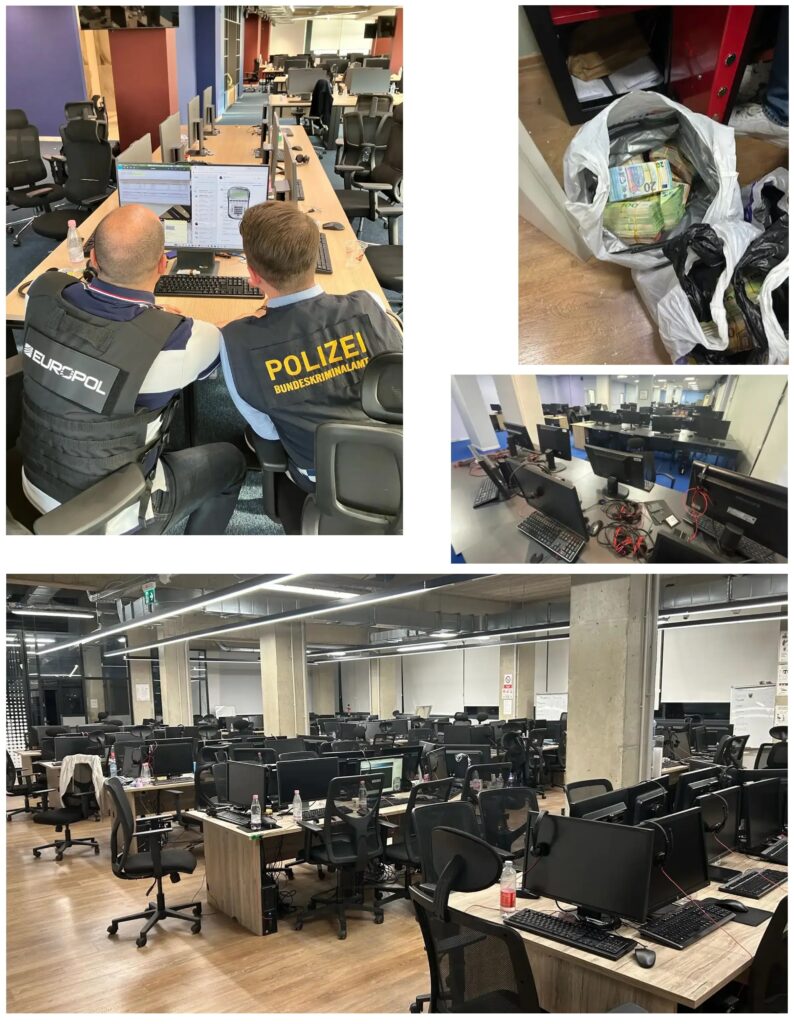
Austrian and Albanian authorities have dismantled a large online investment fraud network that caused more than €50 million in losses. The operation targeted several scam call centres in Tirana and led to 10 arrests.
The coordinated action took place on April 17, 2026, after an investigation that lasted more than two years. Eurojust and Europol supported the case, while authorities searched three call centres and nine private homes in Albania.

Access content across the globe at the highest speed rate.
70% of our readers choose Private Internet Access
70% of our readers choose ExpressVPN

Browse the web from multiple devices with industry-standard security protocols.

Faster dedicated servers for specific actions (currently at summer discounts)
Investigators seized €891,735 in cash, 443 computers, 238 mobile phones, six laptops, and several storage devices. The digital evidence will now support further investigations into the wider network and its victims.
At a glance
| Item | Details |
|---|---|
| Case type | Online investment fraud |
| Estimated losses | More than €50 million |
| Main location | Tirana, Albania |
| Action day | April 17, 2026 |
| Arrests | 10 people |
| Searches | Three call centres and nine private residences |
| Agencies involved | Austrian and Albanian authorities, supported by Eurojust and Europol |
How the scam call centres worked
The fraud network operated like a legitimate business. Eurojust said the call centres had clear roles, team leaders, managers, and a hierarchical structure that resembled a real company.
Operators worked in language-based teams of six to eight people. The languages included German, English, Italian, Greek, and Spanish, which helped the fraudsters target victims in different markets with a more convincing approach.
The employees reportedly received a monthly salary of about €800. They also earned progressive commissions for successful scams, paid partly in cash and partly through bank transfers.
Victims were lured through fake investment offers
The scam began with deceptive online ads and fake investment platforms. Victims believed they were signing up for legitimate trading or investment services that could generate high returns.
After registration, callers posing as brokers or investment advisers contacted them by phone. These operators built trust, explained fake trading opportunities, and pushed victims to send more money over time.
The funds were not invested. Authorities said the suspects convinced victims to transfer significant sums while presenting the operation as a professional financial service.
A second scam targeted previous victims
The network also ran a recovery scam against people who had already lost money. This made the scheme more damaging because it exploited victims who were still trying to get their funds back.
Operators contacted previous victims under different usernames and pseudonyms. They claimed they could help recover the lost investments if the victims opened cryptocurrency accounts and made an initial €500 deposit.
This tactic gave the criminals another chance to extract money from the same people. It also made the fraud look more believable because victims were already searching for help after the first loss.
Timeline of the investigation
| Date | Development |
|---|---|
| June 2023 | Austrian authorities began receiving a high number of victim reports in Vienna. |
| 2023 to 2026 | Austrian and Albanian authorities conducted a joint investigation with Eurojust and Europol support. |
| April 17, 2026 | Authorities carried out coordinated raids in Tirana, Albania. |
| April 29, 2026 | Eurojust publicly announced the results of the operation. |
What authorities seized
- €891,735 in cash
- 443 computers
- 238 mobile phones
- Six laptops
- Hard drives and DVRs for forensic examination
Europol experts helped preserve large volumes of digital evidence during the operation. Eurojust said the data will be shared with authorities in other affected countries as the investigation continues.
A Virtual Command Post was also used during the action day. This allowed participating teams to exchange data and evidence in real time while searches and arrests took place.
Why this case matters
The case shows how online investment fraud has become more organized. These were not isolated scammers working from a small setup. The network used employees, managers, scripts, technology, and cross-border coordination.
The language-based structure also made the fraud more effective. When victims hear someone speaking their own language and presenting themselves as a financial adviser, the scam can feel more credible.
Authorities also highlighted the role of cross-border cooperation. The victims, infrastructure, suspects, and financial flows did not sit inside one country, which made Eurojust and Europol support important to the final raids.
How people can avoid similar scams
- Check any investment platform with the official financial regulator in your country.
- Do not trust ads promising unusually high returns with low risk.
- Be cautious if a caller pressures you to invest more money quickly.
- Do not install remote access software for someone claiming to be an investment adviser.
- Do not pay recovery fees to unknown people who claim they can retrieve lost funds.
- Report suspected investment fraud to national police or a cybercrime authority.
FAQ
Authorities shut down a large online investment fraud network that operated several scam call centres in Tirana, Albania.
Authorities estimate that victims lost more than €50 million through the fake investment scheme.
Ten people were arrested during the coordinated action day on April 17, 2026.
Victims were lured through deceptive online ads and fake investment platforms. They were later contacted by operators pretending to be brokers or investment advisers.


Read our disclosure page to find out how can you help VPNCentral sustain the editorial team Read more


Improve this guide




User forum
0 messages