
Hackers abuse GitHub issue emails to phish developers into approving malicious OAuth apps


 6 min. read
  Published on

A newly documented phishing technique targets developers by abusing GitHub’s own issue notification system to push malicious OAuth app approvals into victims’ inboxes. Researchers say the attack works because GitHub can send legitimate email notifications when a user gets mentioned in an issue, while the final click takes the target to a real GitHub authorization page for a rogue OAuth app.
That makes this campaign unusually convincing. The email can arrive from GitHub’s normal notification flow, and the approval screen can appear on GitHub itself. If a developer authorizes the app, the attacker can receive an access token tied to the victim’s account and the permissions the app requested. GitHub’s own documentation warns users to authorize OAuth apps only if they trust the developer and have reviewed the permissions being requested.

Access content across the globe at the highest speed rate.
70% of our readers choose Private Internet Access
70% of our readers choose ExpressVPN

Browse the web from multiple devices with industry-standard security protocols.

Faster dedicated servers for specific actions (currently at summer discounts)
The bigger concern is supply chain risk. Developer accounts often sit close to private repositories, CI/CD workflows, release pipelines, and production secrets. That makes them valuable targets. The article you shared also points to recent ecosystem incidents involving Axios and LiteLLM to show how account compromise can ripple into software supply chains.
How the phishing method works
Researchers at Atsika found that attackers do not need an expensive or complex setup. The campaign can start with a free GitHub account, a malicious OAuth app, and a hosted phishing workflow built around GitHub notifications. The attacker reportedly impersonates a security service, creates a fake repository, and uses issue mentions to trigger an email to the target.
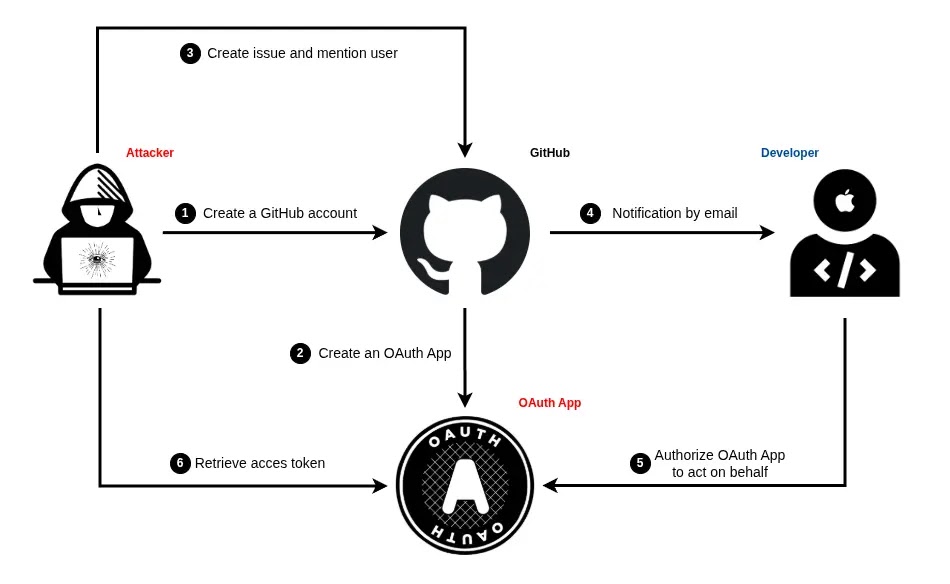
GitHub’s official documentation confirms that users can receive email notifications for mentions on issues and pull requests. GitHub also documents notification reasons in email headers, including mention, which helps explain why this delivery method feels legitimate to the victim.
Once the victim clicks through, the attack moves to the authorization step. GitHub says OAuth apps can request access scopes, and users must review what data and actions those apps want. If the victim approves the request, the app can act using the granted token within the limits of the approved scopes.
Why OAuth approval is the real trap
This attack does not need a fake password prompt to succeed. Instead, it tries to trick developers into granting access voluntarily through GitHub’s normal authorization flow. That matters because phishing-resistant authentication methods can still fall short if the victim knowingly approves a malicious app. This is an inference based on GitHub’s OAuth authorization model and the attack flow described in the shared report.
The sample report says the proof-of-concept OAuth app requested broad access, including read and write access to repositories, GitHub Actions workflows, and user profile data. If that kind of token lands in attacker hands, the result can go far beyond code theft. It can also enable malicious commits, workflow abuse, secret exposure, and persistence inside developer environments.
GitHub’s own scope documentation makes clear that scopes define what an OAuth token can access. Scopes do not create permissions the user never had, but if a victim already has powerful repository or organization access, a malicious app can inherit significant reach.
The TOCTOU angle makes the campaign harder to investigate
One of the more notable details in the material you shared is the alleged Time-of-Check Time-of-Use, or TOCTOU, race condition. Researchers say an attacker can create an issue mentioning the target, trigger GitHub’s email notification, and then quickly edit or wipe the issue content. That means the phishing text arrives in the email while the public issue may later appear empty or harmless.
If accurate, that trick reduces the trail defenders can review after the fact. It also gives the attacker a cleaner social engineering path because the inbox message can carry urgency while the linked repository looks less obviously malicious on a quick check. I have not found a GitHub advisory confirming that specific race condition, so this part currently rests on the Atsika research described in your source text.
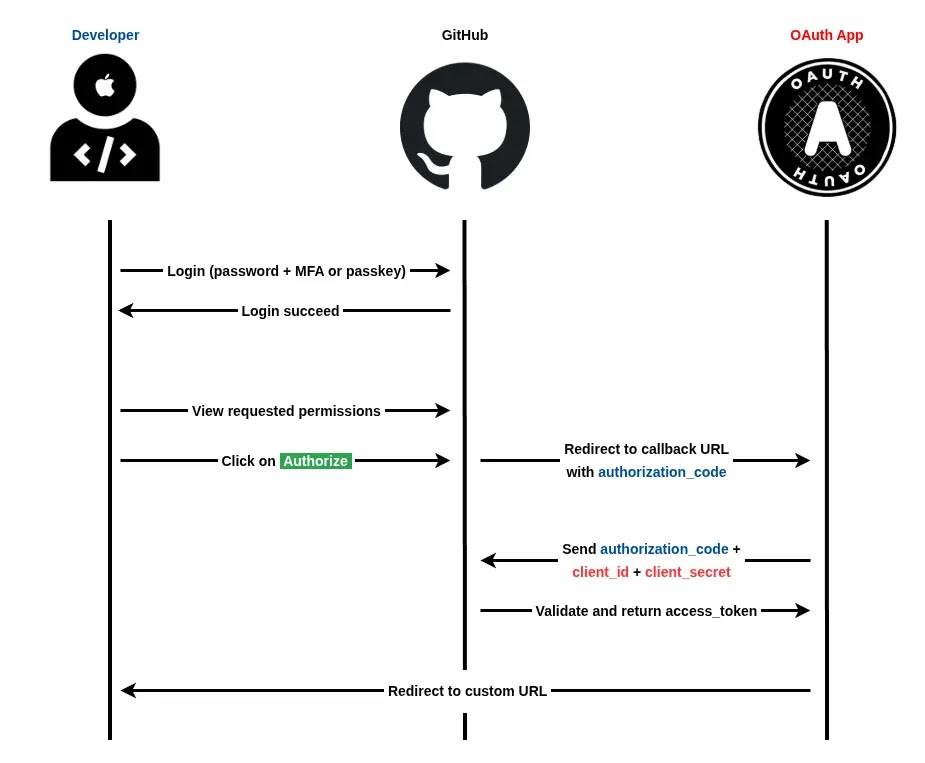
The same report says attackers can also mask the phishing URL with link shorteners and use account or repository names that look security-related. That combination increases the chance that a developer sees the message as a routine account alert rather than a social engineering attempt.
Why developers remain a prime target
Developers control high-value systems. A compromised GitHub account can expose private source code, access tokens, package pipelines, GitHub Actions workflows, and release mechanisms. That is why OAuth phishing against developers can become a software supply chain problem, not just an account security problem.
That broader backdrop matters in 2026. CISA recently warned about the Axios npm compromise, and LiteLLM also disclosed a suspected supply chain incident tied to unauthorized package publishing. Those cases differ from this GitHub phishing technique, but they show how quickly developer account access can turn into downstream risk for many users and organizations.
So the lesson here is not only “watch for phishing.” It is also “treat third-party app approvals like privileged access decisions.” In many environments, clicking Authorize on the wrong OAuth screen can matter almost as much as handing over a password. That is an inference drawn from GitHub’s authorization model and the permissions described in the shared report.
At a glance
| Element | What happens | Why it matters |
|---|---|---|
| GitHub issue mention | Attacker mentions a developer in an issue | GitHub can send a legitimate notification email |
| Security-themed lure | Message claims an account or repo problem | Urgency pushes faster clicks |
| Malicious OAuth app | Victim lands on a real GitHub authorization page | The page looks trustworthy |
| Broad scopes requested | App asks for repo, workflow, or profile access | Approval can hand over meaningful control |
| Fast issue edit or wipe | Original issue content may disappear afterward | Investigation gets harder |
What developers and teams should do
- Review every OAuth app request carefully before approving it.
- Check who built the app and whether the request makes sense for your workflow.
- Audit already authorized OAuth apps in GitHub settings and revoke anything unfamiliar.
- Treat urgent security emails with caution, even if they come through GitHub notifications.
- Limit who can interact with public repositories where mentions can trigger notifications.
- Monitor token use, repo changes, and GitHub Actions activity for unusual behavior.
FAQ
It abuses GitHub’s own notification flow and sends victims to a real GitHub authorization page for a malicious app, rather than using a fake login page.
It can sidestep the need to steal a password if the victim willingly approves a malicious app. The attack succeeds through consent to scopes, not necessarily credential theft.
They often control repositories, secrets, build systems, and release pipelines. One compromised account can create broader supply chain exposure.
Check the app name, publisher, requested scopes, and whether the request matches something you intentionally started. GitHub explicitly advises users to authorize only apps they trust and to review the data the app wants to access.


Read our disclosure page to find out how can you help VPNCentral sustain the editorial team Read more


Improve this guide



User forum
0 messages