
Void Botnet Uses Ethereum Smart Contracts to Keep Its Command Channel Online


 7 min. read
  Published on
A new botnet called Void is using Ethereum smart contracts as part of its command-and-control system, making the malware harder to disrupt through traditional takedowns. Instead of depending only on a central server or domain, the botnet can retrieve operator commands from blockchain-based infrastructure.
Researchers say the malware appeared on a Russian-language cybercrime forum in March 2026 as a commercial loader. The listing priced the tool at $600, with an extra $50 fee per build.

Access content across the globe at the highest speed rate.
70% of our readers choose Private Internet Access
70% of our readers choose ExpressVPN

Browse the web from multiple devices with industry-standard security protocols.

Faster dedicated servers for specific actions (currently at summer discounts)
The campaign matters because Void is not the only recent botnet to move command-and-control activity onto a blockchain. Its emergence shortly after Aeternum C2 suggests that blockchain-based C2 is becoming a practical feature in malware-as-a-service operations, not just an isolated experiment.
What makes Void Botnet different?
Void Botnet stands out because it uses a dual command system. In one mode, the operator writes commands to Ethereum smart contracts, and infected machines check those contracts for new tasks. In another mode, bots can connect directly to a web panel for faster task execution.
This gives attackers a balance between resilience and speed. The blockchain route makes disruption harder because there is no normal server to seize or domain to suspend. The web panel route lets the operator push commands more quickly when the direct channel remains available.
The malware was reportedly developed by a threat actor using the handle TheVoidStl. The same ecosystem has also been linked to tools named TheVoidStealer, WallStealer, and Void Miner.
Void Botnet at a glance
| Detail | Information |
|---|---|
| Malware name | Void Botnet |
| First advertised | March 2026 |
| Main platform | Windows |
| Language | Rust |
| C2 method | Ethereum smart contracts and direct web panel mode |
| Reported price | $600, plus $50 per build |
| Potential uses | Payload delivery, DDoS activity, credential theft support, proxy abuse, and remote control |
How the Ethereum command system works
In decentralized mode, the operator places instructions inside an Ethereum smart contract. Infected systems then poll public blockchain access points and retrieve those commands at regular intervals.
Researchers say this polling can deliver new tasks within about three to five minutes. That is slower than a direct web panel, but it gives the operator a more durable backup channel.
The key advantage for attackers is infrastructure survival. A traditional botnet often depends on domains, hosting providers, or command servers. Defenders can block, seize, or sinkhole those assets. A public blockchain does not offer the same single point of failure.
Why direct panel mode still matters
Void does not rely only on Ethereum. It also includes a direct panel mode that can issue commands in under 30 seconds, according to the published research.
This design makes the botnet more flexible. When the direct channel works, the operator can use it for faster control. If defenders disrupt that path, the blockchain channel can keep the botnet reachable.
The operator panel also gives buyers information about infected systems. That includes details such as the device location, operating system, antivirus software, and whether the compromised user has administrator privileges.
What attackers can do with Void Botnet
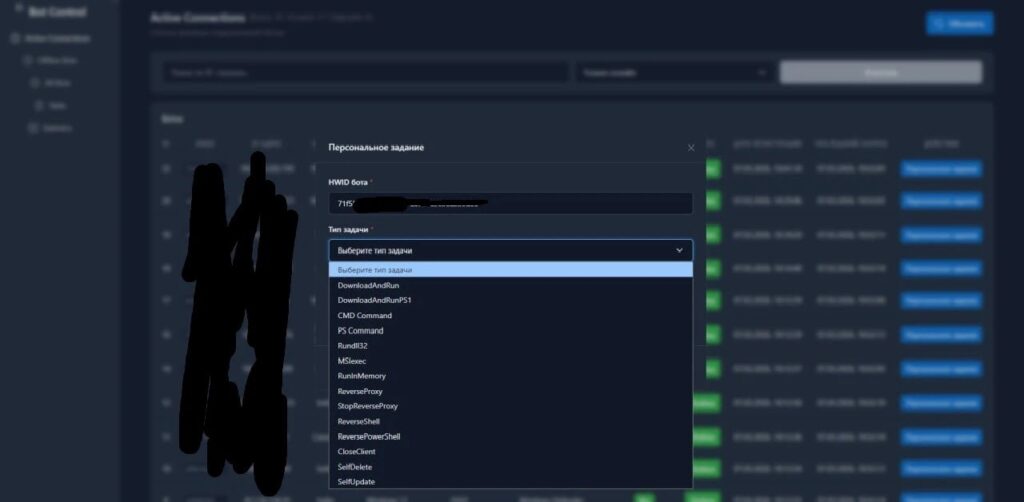
Void is marketed as a loader, which means its core value comes from delivering and running other payloads on infected machines. That can support several criminal operations after the first compromise.
- Run executable payloads on infected systems.
- Load DLL files or MSI packages.
- Execute PowerShell commands.
- Open reverse shell sessions.
- Run payloads in memory to reduce disk-based detection.
- Update the bot agent after deployment.
- Remove the bot through a self-delete function.
- Filter infected machines by country for targeted campaigns.
These features can support malware distribution, credential theft, proxy networks, and DDoS operations. The exact risk depends on how a buyer uses the infected machines after deployment.
Aeternum C2 showed the same direction
Void appeared after researchers documented Aeternum C2, another commercial botnet loader that used blockchain infrastructure for command delivery. Aeternum used Polygon smart contracts, while Void uses Ethereum smart contracts.
The two malware families reportedly differ in language, developer, and blockchain choice. Aeternum was described as a C++ loader, while Void is written in Rust.
The shared idea is more important than the technical differences. Criminal operators are trying to make command infrastructure harder to remove by moving instructions into decentralized systems.
Why defenders should care
Blockchain-based C2 changes the response model. A company can still block known network indicators, remove infected hosts, and monitor endpoint behavior, but it cannot treat server seizure as the only answer.
Security teams also need to watch for loaders that switch between command channels. A direct panel connection may appear during normal operation, while blockchain polling may appear when the operator wants more resilience.
Detection should focus on behavior, process activity, payload execution, persistence, PowerShell use, unusual outbound traffic, and signs of bot enrollment. The blockchain element makes disruption harder, but it does not make infected endpoints invisible.
Possible warning signs
| Area | What to watch |
|---|---|
| Endpoint behavior | Unexpected loaders, new scheduled tasks, suspicious PowerShell commands, and in-memory execution patterns |
| Network activity | Unusual access to public blockchain RPC endpoints from standard user devices |
| Payload execution | Unknown executables, DLL loading, MSI installation, and unsigned or suspicious binaries |
| Privilege context | Malware activity running under administrator-level accounts |
| Bot management | Traffic patterns suggesting periodic task polling or centralized panel communication |
How organizations can reduce the risk
Organizations should treat Void as part of a broader malware-as-a-service trend. The most useful defensive steps are still the basics, but they need consistent enforcement.
- Restrict PowerShell and script execution where users do not need it.
- Monitor unusual access to blockchain RPC endpoints from corporate devices.
- Use endpoint detection rules that focus on behavior rather than file names alone.
- Block unauthorized remote shells, loaders, and in-memory execution attempts.
- Review scheduled tasks and startup entries for unknown persistence.
- Segment important systems so one infected endpoint cannot expose the wider network.
- Keep Windows, browsers, endpoint agents, and security tools updated.
Security teams should also review DDoS and bot mitigation plans. A loader with resilient command infrastructure can help attackers maintain access to a fleet of infected machines for longer periods.
The bigger trend
Void Botnet shows how cybercriminals are adapting ideas from decentralized technology for malware operations. Smart contracts were built for programmable blockchain activity, but attackers can abuse the same availability and persistence for command delivery.
This does not mean every blockchain connection is suspicious. Many legitimate tools use blockchain infrastructure. However, unusual blockchain polling from endpoints that do not need it should receive closer attention.
The main lesson is that takedown-resistant command channels are becoming easier for criminal buyers to access. Defenders need visibility across endpoints, scripts, outbound traffic, and post-compromise activity to keep pace.
FAQ
Void Botnet is a commercial malware loader that targets Windows systems and uses Ethereum smart contracts as part of its command-and-control infrastructure.
Void Botnet uses Ethereum smart contracts to make its command channel harder to disrupt. Since commands can be stored on a public blockchain, defenders cannot remove the infrastructure through a normal server seizure or domain takedown.
Void Botnet uses Ethereum and is written in Rust, while Aeternum C2 was reported to use Polygon and C++. Both show how criminal operators are moving botnet command systems toward blockchain-based infrastructure.
Attackers can use Void Botnet to deliver payloads, run executables, execute PowerShell tasks, open reverse shell sessions, update the malware, and manage infected systems through an operator panel.
Security teams should monitor suspicious loaders, PowerShell activity, unusual outbound traffic to blockchain RPC endpoints, new scheduled tasks, reverse shell behavior, and malware that switches between direct and decentralized command channels.


Read our disclosure page to find out how can you help VPNCentral sustain the editorial team Read more


Improve this guide




User forum
0 messages