
WhatsApp is testing its own encrypted cloud backup provider


 6 min. read
  Published on
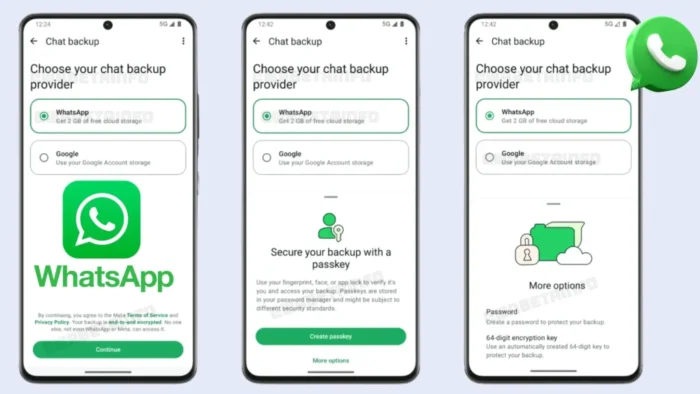
WhatsApp is working on a first-party cloud backup provider that would let users store chat backups on WhatsApp’s own servers instead of relying only on Google Drive or iCloud. The feature is still under development, but early details point to backups that use end-to-end encryption by default.
The change could give users more control over chat storage, especially if their existing Google or Apple cloud storage is already full. WhatsApp backups can grow quickly because they often include years of photos, videos, voice notes, and documents.

Access content across the globe at the highest speed rate.
70% of our readers choose Private Internet Access
70% of our readers choose ExpressVPN

Browse the web from multiple devices with industry-standard security protocols.

Faster dedicated servers for specific actions (currently at summer discounts)
The new system would not replace Google Drive or iCloud immediately. Instead, WhatsApp appears to be building another option, so users can choose whether to keep using their existing cloud provider or move their backup to WhatsApp’s own storage.
What WhatsApp is building
The feature is described as a first-party encrypted cloud backup provider. In simple terms, WhatsApp would host the backup itself while still protecting the data with end-to-end encryption.
That matters because WhatsApp currently depends on external cloud platforms for chat backups. Android users generally back up to Google Drive, while iPhone users use iCloud. WhatsApp already supports end-to-end encrypted backups on those services, but users still need available storage in their Google or Apple account.
WABetaInfo reports that WhatsApp’s own backup provider would make encryption mandatory by default. Users would still have multiple ways to protect and recover the backup, including passkeys, passwords, or a 64-digit encryption key.
At a glance
| Feature | Expected details |
|---|---|
| Feature name | First-party WhatsApp cloud backup provider |
| Current status | Under development |
| Main purpose | Store WhatsApp backups without relying only on Google Drive or iCloud |
| Encryption | End-to-end encryption by default |
| Free storage | Reportedly up to 2 GB |
| Paid storage | Reportedly 50 GB option under testing |
| Security options | Passkey, password, or 64-digit encryption key |
| Rollout status | Not available publicly yet |
| Main benefit | More control over backup storage and security |
Why WhatsApp wants its own backup option
The biggest practical reason is storage. Many users already use their Google or Apple cloud accounts for photos, device backups, email, documents, and app data.
When WhatsApp backups grow, they compete with all that other storage. A large chat history can push users toward deleting files or buying more space from Google or Apple.
A WhatsApp-hosted option would reduce that pressure. It would also give WhatsApp a more consistent backup experience across Android and iOS, instead of depending on two different cloud systems.
Possible storage limits and pricing
Early reports suggest WhatsApp may offer up to 2 GB of free storage for backups. It remains unclear whether that free tier would be available to everyone or tied to a subscription.
Reports also mention a possible 50 GB paid tier priced around $0.99. WhatsApp has not officially announced final storage limits, pricing, supported countries, or rollout timing, so these details may change before launch.
The pricing could make the feature attractive for users who want to keep large chat archives without upgrading their broader Google Drive or iCloud plans. It may also help WhatsApp build a more direct storage business around backups.
How encryption would work
WhatsApp already lets users protect backups with end-to-end encryption. According to WhatsApp’s help page, encrypted backups can use a passkey, a password, or a 64-digit encryption key.
Passkeys make the process easier for many users. Instead of remembering a backup password, users can rely on device-based authentication, such as fingerprint, face unlock, or screen lock, depending on the device. WhatsApp says passkeys use cryptographic protection and do not work like SMS codes or traditional passwords.
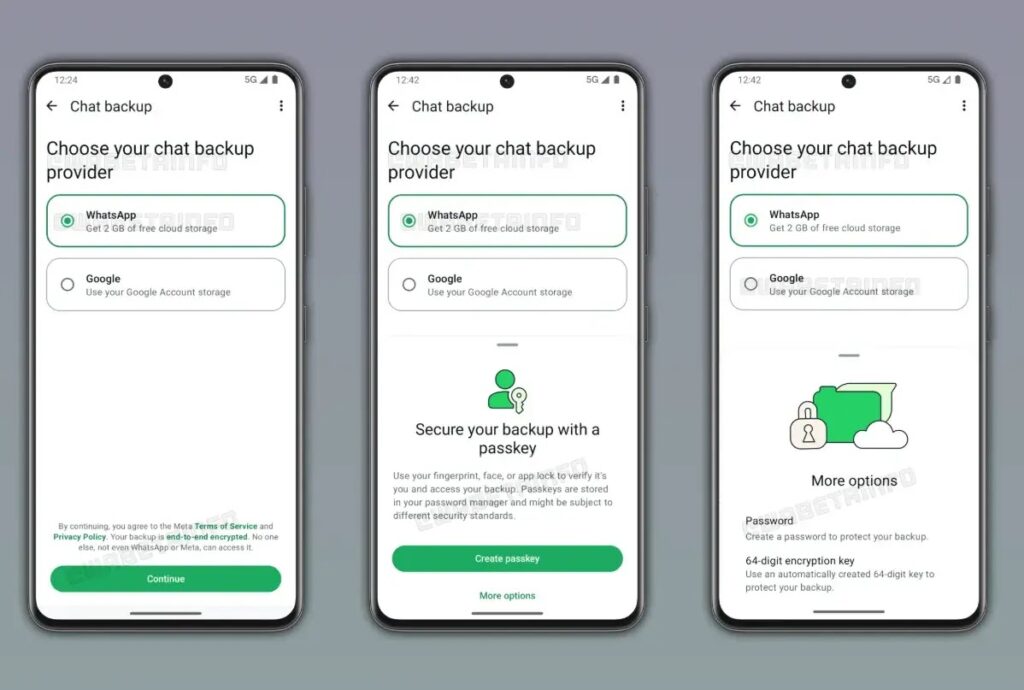
For users who want manual control, the 64-digit encryption key remains an option. That gives strong protection, but it also places responsibility on the user to store the key safely.
Security options compared
| Option | Best for | Main advantage | Main drawback |
|---|---|---|---|
| Passkey | Most users | Fast unlock with device authentication | Depends on trusted device and password manager support |
| Password | Users who prefer manual entry | Familiar and easy to understand | Can be forgotten or reused |
| 64-digit key | Advanced users | Strong manual control | Hard to store and recover safely |
Why this matters for privacy
Backups have always been a sensitive part of messaging security. Live WhatsApp chats already use end-to-end encryption, but cloud backups need their own protection because they sit outside the live chat flow.
WhatsApp’s current encrypted backup system protects messages and media stored in Google Drive or iCloud. The upcoming first-party provider would extend that idea while moving the storage layer closer to WhatsApp’s own ecosystem.
If implemented well, the feature could make encrypted backups easier to use by default. That would matter because many users never adjust security settings unless the app makes the safer option simple.
What still needs to be confirmed
WhatsApp has not officially published a launch date for this first-party backup provider. The feature remains in development, so it may change before it reaches beta testers or stable users.
Several details still need confirmation:
- Whether the 2 GB free tier will apply to all users.
- Whether the 50 GB tier will launch at the reported price.
- Whether the feature will roll out on Android and iOS at the same time.
- Whether existing Google Drive and iCloud backups can move directly to WhatsApp storage.
- How WhatsApp will handle account recovery if users lose access to their passkey, password, or encryption key.
What users should do now
Users do not need to change anything yet because the feature has not rolled out publicly. However, it is a good time to review current backup settings.
Open WhatsApp, go to chat backup settings, and check whether end-to-end encrypted backup is turned on. WhatsApp’s support page says users can protect backups with a passkey, password, or 64-digit encryption key.
Users should also check the size of their current backup. If photos and videos take up too much space, cleaning up large media files can reduce backup size before any future storage migration.
What this means for WhatsApp’s future
A native backup provider would give WhatsApp more control over one of its most important user features. Chat backups help users move to a new phone, recover conversations, and preserve years of personal data.
It would also make WhatsApp less dependent on Google Drive and iCloud for backup storage. That could help the app offer a more unified backup system across platforms.
For users, the main promise is convenience with stronger default security. For WhatsApp, it is another step toward owning more of the account recovery and data portability experience.
FAQ
It is a backup system under development that would let users store WhatsApp chat backups on WhatsApp’s own servers instead of relying only on Google Drive or iCloud.
Reports say WhatsApp’s own cloud backups would use end-to-end encryption by default. WhatsApp already supports encrypted backups with passkeys, passwords, or 64-digit encryption keys.
Early reports mention up to 2 GB of free storage, but WhatsApp has not announced final storage limits.
Reports mention a possible 50 GB paid tier for about $0.99, but pricing and availability remain under development.


Read our disclosure page to find out how can you help VPNCentral sustain the editorial team Read more


Improve this guide


User forum
0 messages