Pakistan-aligned threat groups APT36 and SideCopy are actively targeting Indian defense and government-linked organizations with cross-platform remote access trojans designed for long-term espionage. The latest campaigns deploy malware families such as Geta RAT, Ares RAT, and DeskRAT across both Windows and Linux systems, focusing on persistence, credential theft, reconnaissance, and remote command execution.
Security researchers tracking these operations say the activity reflects an evolution in delivery methods and cross-platform tooling rather than a shift in strategic objective. The threat actors continue to rely on phishing and impersonation tactics, but the malware architecture is becoming more modular and adaptable.
According to researchers at Aryaka, the activity shows a steady refinement of espionage tradecraft.
“Taken together, these campaigns reinforce a familiar but evolving narrative. Transparent Tribe and SideCopy are not reinventing espionage. They are refining it,” said Aditya K. Sood, Vice President of Security Engineering and AI Strategy at Aryaka.
The campaigns primarily target Indian defense institutions, government-aligned research organizations, and policy entities. Analysts note that the attackers use defense-themed documents and regionally trusted infrastructure to increase credibility and bypass suspicion.
Initial Access: Phishing and Multi-Stage Infection Chains
The intrusion typically begins with spear-phishing emails containing:
Malicious Windows shortcut files (LNK)
Embedded download links
Rogue PowerPoint Add-In files
ELF binaries for Linux systems
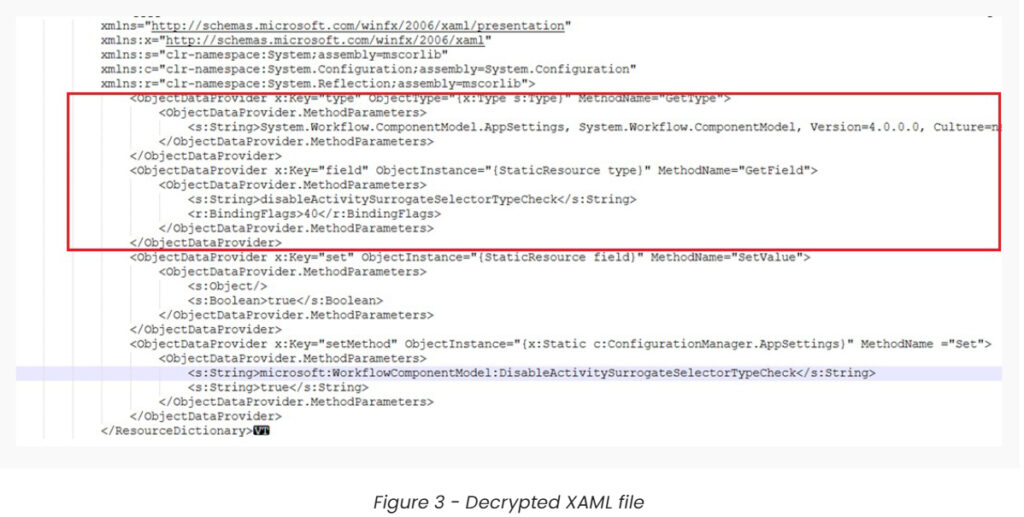
One observed attack chain begins with a malicious LNK file that invokes mshta.exe to execute a remote HTML Application (HTA) file. The HTA then decrypts and loads a DLL payload into memory. A decoy document is dropped to reduce suspicion while the malware establishes command-and-control communication.
Researchers previously analyzing related activity described how the payload stages are layered to avoid static detection and blend into normal system behavior.
Malware Families Used in the Campaign
The campaign uses multiple RAT families optimized for stealth and long-term access.
1. Geta RAT (Windows)
Geta RAT provides attackers with:
System information collection
Process enumeration and termination
Clipboard manipulation
Screenshot capture
File upload and download
USB device data harvesting
Arbitrary shell command execution
The malware adapts persistence mechanisms based on detected security products, which increases survivability.
2. Ares RAT (Linux)
The Linux branch of the campaign uses a Go-based loader that downloads a Python-based Ares RAT. Once deployed, Ares RAT can:
Execute remote Python scripts
Harvest system and network information
Collect sensitive files
Maintain persistent access
This cross-platform capability expands targeting beyond traditional Windows-centric espionage campaigns.
3. DeskRAT (Golang)
DeskRAT is delivered via a malicious PowerPoint Add-In file that executes embedded macros. It establishes outbound communication with a remote server to retrieve additional payloads.
Security researchers have described DeskRAT as part of APT36’s evolving toolkit for persistent operations across enterprise environments.
Technical Infection Flow
Stage
Action
Initial Lure
Phishing email with LNK or PowerPoint Add-In
Execution
mshta.exe or macro launches staged payload
Payload Decryption
Embedded DLL or script decrypted in memory
C2 Communication
Hard-coded remote server contacted
Persistence
Registry modification or scheduled task
RAT Deployment
Geta RAT, Ares RAT, or DeskRAT installed
The layered design reduces signature-based detection and allows flexible payload replacement.
Key Characteristics of the Campaign
Cross-platform malware targeting Windows and Linux
Defense-themed decoy documents
Use of legitimate system binaries for execution
Modular, multi-stage payload delivery
Hard-coded command-and-control infrastructure
Researchers emphasize that this activity focuses on sustained espionage rather than immediate disruption.
Enterprise Risk Implications
Organizations in the defense and policy ecosystem should view these campaigns as targeted intelligence-gathering efforts. The threat actors aim to maintain access for extended periods while minimizing noise.
Risk factors include:
Trusted domain impersonation
Memory-resident payload execution
Adaptive persistence techniques
Credential harvesting across platforms
Enterprises with mixed Windows and Linux environments are particularly exposed if monitoring is inconsistent across systems.
Defensive Measures
Security teams should prioritize:
Email filtering with attachment sandboxing
Blocking execution of unsigned HTA files
Monitoring abnormal mshta.exe usage
Restricting macro execution in Office applications
Enforcing endpoint detection on Linux systems
Network monitoring for unusual outbound C2 traffic
Layered detection across identity, endpoint, and network layers reduces dwell time.
Frequently Asked Questions
What is APT36?
APT36, also known as Transparent Tribe, is a Pakistan-aligned threat group linked to long-running espionage campaigns targeting Indian government and defense organizations.
What is SideCopy?
SideCopy is believed to operate as a subgroup aligned with APT36, sharing infrastructure and targeting patterns.
What makes this campaign different?
The cross-platform deployment of RAT families across Windows and Linux environments increases operational reach and resilience.
Which sectors are most at risk?
Defense, government agencies, research institutions, and defense-adjacent contractors.
I am a Business Analytics student with a strong interest in publishing well-researched and data-driven news articles. I focus on analyzing trends in business, finance, and technology to create clear, accurate, and engaging content for readers. I enjoy transforming complex data and information into simple, meaningful stories that help audiences understand current developments. With analytical thinking and attention to detail, I aim to deliver credible and insightful news that adds real value to readers.
Readers help support VPNCentral. We may get a commission if you buy through our links.
Read our disclosure page to find out how can you help VPNCentral sustain the editorial team Read more



 4 min. read
  Updated on










User forum
0 messages