
Rumored Claude Oceanus Model Sparks Red-Team Leak Questions as Anthropic Expands Mythos Access


 6 min. read
  Published on
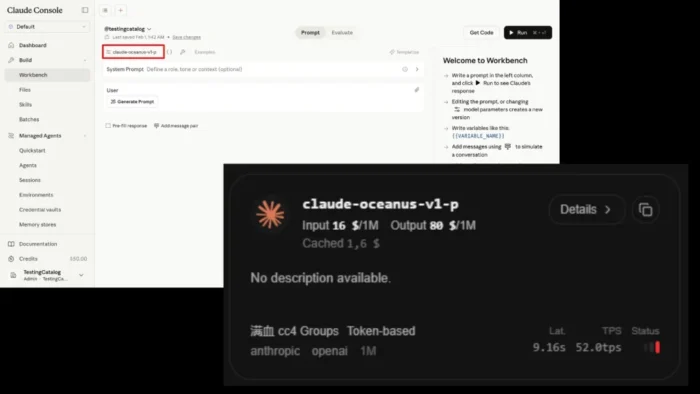
Reports of a new Anthropic model identifier, claude-oceanus-v1-p, have triggered fresh questions about how frontier AI models are tested, distributed, and protected before release. The model name appeared in third-party reporting and social posts, but Anthropic has not publicly announced Oceanus or confirmed a compromised distribution channel.
The claims matter because they arrived days after Anthropic expanded Project Glasswing, its restricted cybersecurity program built around Claude Mythos Preview. Anthropic said the expanded program gives vetted organizations access to powerful cyber capabilities for defensive work, including vulnerability detection, patching, and security testing.

Access content across the globe at the highest speed rate.
70% of our readers choose Private Internet Access
70% of our readers choose ExpressVPN

Browse the web from multiple devices with industry-standard security protocols.

Faster dedicated servers for specific actions (currently at summer discounts)
The reported Oceanus activity should therefore be treated carefully. Cyber Security News reported that claude-oceanus-v1-p had surfaced in restricted testing and unauthorized proxy channels. A TestingCatalog post also claimed the model had become available to red teams, fueling speculation about a possible Mythos-class successor.
What is confirmed and what remains unclear
The strongest confirmed information comes from Anthropic’s own Project Glasswing material. The company describes Claude Mythos Preview as a gated research preview and says it can help partners find and fix weaknesses in critical software systems.
Reuters also reported that Anthropic planned to expand Mythos access from about 50 organizations to roughly 200 Project Glasswing partners. The Reuters report said partners had already identified more than 10,000 high or critical-severity security flaws through the program.
The Oceanus claims sit in a different category. There is no public Anthropic model card, product page, pricing page, or safety report for Claude Oceanus-v1-p. There is also no on-record Anthropic statement confirming that a red-team distribution was paused because of unauthorized resale.
| Claim | Status | Why it matters |
| Project Glasswing exists | Confirmed by Anthropic | It gives vetted partners restricted access to Claude Mythos Preview for cybersecurity work |
| Claude Mythos Preview exists | Confirmed by Anthropic | It is Anthropic’s most capable model for coding and agentic security tasks |
| Glasswing access expanded in June 2026 | Confirmed by Anthropic and Reuters | The program now reaches more organizations and sectors |
| Claude Oceanus-v1-p appeared in red-team channels | Reported by third parties | It suggests possible testing, but does not equal an official launch |
| Unauthorized proxy resale occurred | Reported, not publicly confirmed by Anthropic | It would raise access control and model governance concerns if confirmed |
Why unauthorized AI proxy access is a serious issue
Even without confirmation of the Oceanus resale claim, the broader proxy-access risk is real. In February, Anthropic said it had detected industrial-scale distillation campaigns that used fraudulent accounts and proxy services to extract Claude capabilities.
The company said some networks used large clusters of fake accounts to disguise traffic and make enforcement harder. That history gives the Oceanus reports a plausible security context, even though the new model claims remain unconfirmed.
Proxy resale can create several risks for model developers, red-team partners, and enterprise users. It can bypass regional restrictions, obscure the real user, expose prompts and outputs to third parties, and make it harder to tell legitimate evaluation traffic from abuse.
- Unauthorized proxies can resell access without the model provider’s controls.
- Users may unknowingly send private code, credentials, or customer data through third-party infrastructure.
- Model providers may lose visibility into who uses high-risk capabilities.
- Red-team programs can face delays if access controls or identity checks fail.
- Competitors and threat actors can attempt large-scale model extraction through blended traffic.
How Project Glasswing fits into the story
Project Glasswing is Anthropic’s attempt to put advanced cyber-capable AI into defensive hands first. On its Project Glasswing page, the company says Mythos Preview has already identified thousands of zero-day vulnerabilities across critical infrastructure.
The June expansion widened the program’s scope. Anthropic said new partners include organizations whose codebases support healthcare, power, water, communications, hardware, and other critical systems.
That expansion also shows why access control matters. A model that can help defenders find serious vulnerabilities can also create risk if attackers gain comparable capability without safeguards, logging, contracts, or limits.
Why the Oceanus reports should be framed cautiously
The reported Oceanus identifier has generated attention because it appears close to Anthropic’s Mythos timeline. Still, a model name appearing in a console, proxy menu, or social post does not prove that the model is final, generally available, or intended for public release.
The Cyber Security News report described a premium proxy resale price and a pause in broader red-team access. However, without a public Anthropic statement, those details should be presented as allegations rather than confirmed facts.
The TestingCatalog post helped spread the model identifier across AI-watching communities. That kind of public signal can be useful, but it should not replace official release notes, system cards, or direct company confirmation.
What Anthropic has already said about Mythos-class risk
Anthropic has said it does not plan to make Claude Mythos Preview generally available in its current form. The company says it wants to develop stronger safeguards before broader deployment of Mythos-class systems.
That cautious approach aligns with its earlier warnings about unauthorized model extraction. In its distillation attack report, Anthropic described how proxy services can help restricted users access frontier models at scale while hiding behind many accounts.
Reuters reported that Anthropic sees many other companies reaching Mythos-class cyber capabilities within six to 12 months. The same Reuters coverage said Anthropic wants to make stronger tools available to defenders before similar capabilities spread more widely.
What this means for AI security teams
The Oceanus reports show how quickly model identifiers can become news, even before a company confirms a product. For AI labs, that increases the pressure to secure console access, partner onboarding, API credentials, rate limits, and model routing before red-team testing starts.
For customers and researchers, the main lesson is simpler. Avoid unofficial API resellers, especially when testing sensitive code or security workflows. Third-party proxies may log prompts, substitute models, resell outputs, or expose private data.
Until Anthropic comments directly, the safest reading is that Claude Oceanus-v1-p remains an unconfirmed model identifier tied to third-party reports. The verified story is that Anthropic is expanding controlled access to Mythos Preview while trying to keep high-risk cyber capabilities inside vetted defensive programs.
FAQ
Claude Oceanus-v1-p is a reported Anthropic model identifier that appeared in third-party reporting and social posts. Anthropic has not publicly announced it or released an official model card for it.
No public Anthropic statement has confirmed that Claude Oceanus access was compromised or resold through unauthorized proxy channels. Current claims come from third-party and social reports.
Claude Mythos Preview is Anthropic’s restricted research-preview model for advanced coding and cybersecurity tasks. It is available through Project Glasswing to vetted partners for defensive security work.
Unofficial AI API proxies can hide the real user, violate provider rules, expose private prompts or code, and bypass safety or regional restrictions. They can also make abuse harder to detect.


Read our disclosure page to find out how can you help VPNCentral sustain the editorial team Read more


Improve this guide




User forum
0 messages