
Alibaba Reportedly Bans Claude Code at Work Over Alleged Backdoor Risks


 7 min. read
  Published on
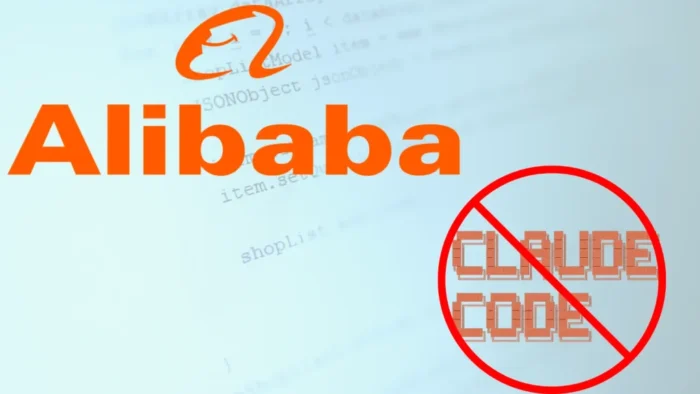
Alibaba has reportedly banned employees from using Anthropic’s Claude Code in workplace environments after concerns emerged over features that may help identify China-linked users.
The restriction is set to apply from July 10, 2026, according to Reuters, which cited a person familiar with the internal order. Alibaba has not publicly confirmed the decision.

Access content across the globe at the highest speed rate.
🔥 Save 81% + 2 bonus months! 🔥
70% of our readers choose Private Internet Access
70% of our readers choose ExpressVPN
2
Browse the web from multiple devices with industry-standard security protocols.
🔥 Save 73%! 🔥

Faster dedicated servers for specific actions (currently at summer discounts)
🔥 Save 69%! 🔥
The reported ban follows developer claims that Claude Code inspected user environments, including proxy and timezone details, and inserted subtle markers into prompts sent to Anthropic’s servers.
What Claude Code Does
Claude Code is Anthropic’s AI coding assistant for software developers. It runs in development workflows and can help read codebases, edit files, run commands, and support debugging tasks.
Anthropic describes Claude Code as an agentic coding tool that works across terminals, IDEs, the desktop app, browser, and other developer environments.
That deep access makes security review important for large companies. A coding assistant can interact with source code, internal repositories, build tools, and developer machines, so enterprises often apply stricter rules than individual users.
Why Alibaba Is Reportedly Restricting Claude Code
The reported Alibaba order comes after reverse-engineering claims circulated online. A Reddit user using the name LegitMichel777 alleged that Claude Code contained hidden checks tied to proxy use, system timezone, and domains associated with Chinese AI labs.
The Reddit post claimed the behavior appeared in Claude Code starting with version 2.1.91, released on April 2, 2026. The user said the tool modified prompt text in small ways based on the detected environment.
Reuters reported that an Anthropic employee wrote on X that the feature was an experiment launched in March to prevent account abuse by unauthorized resellers and protect against model distillation.
| Issue | Reported Detail | Why It Matters |
|---|---|---|
| Internal ban | Alibaba staff are reportedly being told not to use Claude Code at work from July 10. | It shows how AI coding tools are becoming a formal enterprise security concern. |
| Detection feature | Claude Code allegedly checked proxy and timezone signals. | Developers may worry about hidden environment checks in local tools. |
| Prompt markers | Claims say the tool changed prompt formatting to encode detection results. | Subtle signaling can be difficult for normal monitoring tools to notice. |
| Anthropic position | An employee reportedly described the feature as an anti-abuse experiment. | The dispute centers on whether the behavior was defensive or a privacy risk. |
| Alibaba alternative | Employees are reportedly being directed to Qoder. | Companies may favor internal coding tools when external vendor risk rises. |
The Backdoor Claim Remains Disputed
The word “backdoor” carries a serious meaning in security. It usually implies hidden access or covert control that bypasses normal authorization.
The public allegations describe environment detection and covert prompt marking, not confirmed remote access to Alibaba systems. No public third-party forensic report has confirmed that Claude Code gave Anthropic a backdoor into enterprise machines.
Still, the controversy matters because hidden software behavior can create trust problems even when the stated purpose is abuse prevention. Developers and security teams expect local development tools to disclose sensitive checks clearly.
How the Alleged Mechanism Worked
The reverse-engineering claim says Claude Code checked whether a user had a proxy enabled. It also allegedly reviewed whether the system timezone matched China-related time zones and whether proxy details matched certain domains or AI lab identifiers.
The same technical post claimed those results were encoded through small changes to the date format or punctuation inside the system prompt.
For normal users, those changes may look insignificant. For a service receiving the prompt, however, the marker could help classify where the request came from or whether it matched a restricted usage pattern.
The Dispute Follows Anthropic’s Alibaba Accusation
The reported workplace ban also lands during a broader dispute between the two companies. In June, Anthropic accused Alibaba-linked operators of illicitly extracting Claude model capabilities through a large-scale distillation campaign.
According to a separate Reuters report, Anthropic said the campaign generated more than 28.8 million Claude exchanges through almost 25,000 fraudulent accounts between April 22 and June 5, 2026.
Anthropic described distillation as training a less capable model on the outputs of a stronger one. Alibaba did not immediately respond to Reuters’ request for comment on that allegation.
Why China Access Controls Are Part of the Story
Anthropic has tightened access rules around unsupported regions. The company has said it restricts Claude access in some locations and does not support use from every country or territory.
Anthropic’s supported countries page lists the locations where Claude.ai access is available. Mainland China does not appear in that supported-access list.
That creates a practical enforcement problem. Users can route traffic through overseas servers, proxies, cloud infrastructure, or resellers. AI companies may then use technical signals to detect suspected evasion, but those signals can also raise privacy and compliance concerns.
What Makes This Sensitive for Enterprises
Enterprise security teams usually review software based on transparency, data flows, update behavior, telemetry, permissions, and vendor controls. Hidden checks can trigger stricter scrutiny even when they do not directly expose source code.
For a company like Alibaba, the risk calculation goes beyond one developer tool. Claude Code runs close to internal development workflows, which can include proprietary code, credentials, architecture details, and product roadmaps.
Reuters also reported that Alibaba employees were being told to use the company’s own coding platform, Qoder, instead of Claude Code.
What Companies Should Review Before Using AI Coding Tools
The reported Alibaba move may push more organizations to audit AI coding assistants before allowing them in production development environments.
- Check what telemetry the coding tool collects and where it sends data.
- Review whether the tool reads source code, terminal output, environment variables, or local files.
- Require clear documentation for proxy checks, location checks, and account-abuse controls.
- Test whether prompts include hidden markers or environment-derived metadata.
- Limit access to sensitive repositories until vendor behavior is reviewed.
- Keep high-risk engineering environments separate from external AI tools.
- Ask vendors to disclose anti-abuse mechanisms that affect enterprise traffic.
What Anthropic Says About Claude Code Security
Anthropic says Claude Code runs locally in the terminal and talks directly to model APIs without requiring a backend server or remote code index.
The company also says the tool asks permission before making file changes or running commands. Those design choices address part of the security picture, but they do not remove concerns about undisclosed environment checks.
Anthropic’s supported regions policy helps explain why the company may monitor access patterns, especially when it suspects unsupported-region use or unauthorized resale.
The Bigger Lesson for AI Coding Assistants
The Alibaba and Anthropic dispute highlights a growing tension around enterprise AI tools. Vendors want to stop abuse, resale, and model extraction, while customers want clear disclosure about what software on their machines is doing.
AI coding assistants are no longer simple productivity add-ons. They are becoming part of core software development infrastructure, which means companies will judge them like other privileged engineering tools.
The model distillation dispute shows why AI labs are adding stronger defenses. The Claude Code controversy shows why those defenses need transparency when they run inside enterprise environments.
FAQ
Reuters reported that Alibaba has banned employees from using Anthropic’s Claude Code at work from July 10, 2026, citing a person familiar with the order. Alibaba has not publicly confirmed the decision.
The reported ban follows concerns over Claude Code features that may help identify China-linked users, including alleged checks involving proxies, timezones, and prompt markers.
No public third-party forensic report has confirmed a malicious backdoor. The public claims describe environment detection and subtle prompt marking, while an Anthropic employee reportedly described the feature as an anti-abuse experiment.
Claude Code is Anthropic’s AI coding assistant for developers. It can work in terminals and other development environments to help read code, edit files, run commands, debug issues, and support software workflows.
Companies should review telemetry, permissions, data flows, proxy and location checks, prompt contents, vendor documentation, and access to sensitive repositories before allowing AI coding assistants in enterprise environments.


Read our disclosure page to find out how can you help VPNCentral sustain the editorial team Read more


Improve this guide

User forum
0 messages