
Best Legal Torrent Sites in 2026: Six Safe P2P Sources


 14 min. read
  Published on

The Internet Archive is the best legal torrent site in 2026 for most users because it offers a large collection of books, films, audio recordings, software, and other downloadable materials. Academic Torrents is better for research data, while Etree specialises in artist-approved concert recordings.
BitTorrent itself is a legitimate peer-to-peer file-sharing technology. Linux developers, researchers, archivists, independent creators, and public-domain libraries use it to distribute large files efficiently without relying on one central download server.

Access content across the globe at the highest speed rate.
🔥 Save 81% + 2 bonus months! 🔥
70% of our readers choose Private Internet Access
70% of our readers choose Private Internet Access
2
Browse the web from multiple devices with industry-standard security protocols.
🔥 Save 73%! 🔥

Faster dedicated servers for specific actions (currently discounted)
🔥 Save 69%! 🔥
Legality depends on the file, its licence, and whether the person sharing it has permission. A torrent file does not become legal simply because it appears on a public website, so users should confirm the source and usage rights before downloading or continuing to seed it.
Best legal torrent sites at a glance
| Legal torrent source | Best for | Account required | Main limitation |
|---|---|---|---|
| Internet Archive | Books, films, audio, software, and historical media | No for most downloads | Licences vary between uploaded items |
| Public Domain Torrents | Classic public-domain films | No | Old interface and limited video quality |
| Academic Torrents | Research datasets, papers, and courses | No for downloads | Designed for academic material |
| Etree | Artist-approved live concert recordings | Usually no | Only trade-friendly performances qualify |
| Ubuntu | Official Ubuntu installation images | No | Only Ubuntu and related editions |
| Fedora Project | Official Fedora Linux releases | No | Only Fedora editions and architectures |
These services do not operate like broad piracy indexes. Each one focuses on content that the operator, creator, copyright holder, or open-source project has authorised for distribution.

Users must still inspect individual licences. The Internet Archive and Academic Torrents, for example, contain user-contributed material, so the existence of a download option cannot guarantee that every possible use is permitted.
1. Internet Archive: Best legal torrent site overall
The Internet Archive is a nonprofit digital library containing books, recordings, videos, software, websites, and other cultural materials. Many downloadable items include a BitTorrent option alongside direct file formats.
Its Archive BitTorrents documentation says more than 1.4 million Archive items are available through the protocol, representing almost a petabyte of public-domain material.
The collection includes public-domain films, live music, old radio programmes, digitised books, historical software, government publications, and community uploads. Available formats depend on what the uploader provided and what the Archive generated automatically.
- More than 1.4 million items available through BitTorrent
- Books, video, music, radio, software, and historical collections
- No payment required for most downloads
- Direct downloads available alongside many torrents
- Large files can use Internet Archive web seeds
- Accounts generally required for uploading, not downloading
The Internet Archive automatically creates or updates torrent files for many downloadable items. Its servers can act as web seeds, while other users help distribute file pieces through the peer-to-peer network.
Users should check the rights statement on each item. Some works sit in the public domain, while others use Creative Commons licences or appear with permission from their owners.
The official Internet Archive torrent guide also warns that some items cannot receive a torrent when their file structure or access restrictions make automatic generation unsuitable.
2. Public Domain Torrents: Best for classic movies
Public Domain Torrents focuses on older films that the site believes have entered the public domain. Its catalogue includes silent cinema, science fiction, horror, comedy, animation, and low-budget B-movies.
The Public Domain Movie Torrents library lets visitors browse films and download versions encoded for different devices and video formats.
The website looks dated, and many files reflect the video quality and encoding standards available when they were added. It remains useful for viewers seeking legally shareable classic films rather than current theatrical releases.
- Free classic film downloads
- No account required
- Simple genre and title browsing
- Several formats for selected films
- Strong focus on older and cult cinema
Public-domain status can become complicated because different countries apply different copyright terms. A film that has entered the public domain in the United States may still receive protection elsewhere.
The site also says its films are believed to be public domain and provides a process for rights holders to report disputed listings. Users planning commercial reuse should conduct a more thorough copyright check.
For personal viewing and historical film discovery, the Public Domain Torrents catalogue provides a more focused experience than searching the much larger Internet Archive collection.
3. Academic Torrents: Best for research datasets
Academic Torrents uses BitTorrent to distribute large research datasets, academic papers, courses, and reproducibility materials. Researchers created the project to reduce hosting costs and prevent valuable datasets from disappearing when a single server closes.
The Academic Torrents repository currently makes hundreds of terabytes of research material available through a distributed network.
Its catalogue spans machine learning, computer vision, natural-language processing, medicine, astronomy, biology, economics, and other disciplines. Some entries mirror widely used public datasets, while researchers upload others to support published work.
| Academic Torrents content | Typical use |
|---|---|
| Datasets | Machine learning, statistical analysis, and replication |
| Research papers | Reading and preserving scholarly work |
| Collections | Grouping related files and research resources |
| Courses | Sharing educational material |
| Database snapshots | Offline analysis and archival research |
The platform distributes files rather than granting new rights to them. Researchers must review each dataset’s licence, citation requirements, privacy restrictions, and acceptable-use conditions.
Some datasets may contain sensitive, restricted, or separately licensed material even when the torrent metadata appears publicly. Users should not assume that public access permits redistribution, commercial use, or publication of personal data.
The Academic Torrents website works particularly well for very large datasets because multiple seeders can share the delivery load and preserve the material across independent systems.
4. Etree: Best for legal live concert recordings
Etree is a long-running music community that distributes recordings of live performances from artists who allow non-commercial fan trading. The collection primarily uses lossless audio formats such as FLAC.
The Etree community torrent tracker lists live concert recordings shared under each performer’s taping and trading policy.
Etree does not provide a legal route to every concert recording. Some artists permit fans to record and trade shows, while others prohibit recording entirely or limit how recordings may circulate.
- Live concert recordings
- Lossless audio files
- Community-maintained torrents
- Artist-specific trading policies
- Non-commercial sharing focus
- Historical recordings preserved by fans
Users should confirm that a listing complies with the artist’s current policy. Permission to trade a live recording does not necessarily allow commercial sale, remixing, streaming monetisation, or distribution of official studio material.
Seed availability can vary because the tracker depends heavily on its community. Older or less popular performances may have few active peers and take longer to download.
For fans of trade-friendly artists, the official Etree torrent tracker remains one of the most established legal uses of BitTorrent for music preservation.
5. Ubuntu: Best for official Ubuntu downloads
Canonical provides official BitTorrent files for Ubuntu installation images. This method can offer faster or more reliable distribution during major releases when direct download servers experience heavy demand.
The Ubuntu alternative downloads page currently provides torrents for Ubuntu Desktop and other supported editions.
Because Canonical publishes the files, users do not need to question whether the software has been authorised for distribution. They should still verify the downloaded image using the official checksum and signature information.
- Official Ubuntu installation images
- Desktop and server editions
- Support for several processor architectures
- Checksums available for verification
- Reliable distribution during busy release periods
Ubuntu torrents do not provide commercial games, films, or unrelated applications. They exist specifically to distribute free and open-source operating-system images.
Continuing to seed after the download helps Canonical and other users by sharing pieces of the image. Users can stop seeding whenever required, although leaving the client active contributes bandwidth to the project.
The official Ubuntu torrent section remains safer than downloading an ISO from an unofficial mirror or an unknown torrent index.
6. Fedora Project: Best Fedora torrent source
The Fedora Project operates an official torrent service for its Linux editions. Users can download Workstation, Server, Spins, Labs, and architecture-specific images when available.
The Fedora BitTorrent download portal currently distributes Fedora Linux 44 and related official releases.
Like Ubuntu, Fedora uses BitTorrent as a legitimate software-delivery system. The peer-to-peer approach reduces pressure on project mirrors and can improve reliability when thousands of users download a new release simultaneously.
| Fedora download type | Intended user |
|---|---|
| Fedora Workstation | Desktop and laptop users |
| Fedora Server | Server administrators |
| Fedora Spins | Users seeking alternative desktop environments |
| Fedora Labs | Specialised creative, scientific, or technical work |
| Alternative architectures | ARM and other supported hardware |
Users should compare the downloaded file’s checksum with the value published by Fedora. A matching checksum confirms file integrity, while signature verification provides stronger evidence that Fedora produced the image.
Old torrents found on third-party indexes may contain unsupported releases. The official portal helps users locate the latest maintained edition and correct architecture.
The Fedora torrent page is therefore the recommended source for anyone who wants to download Fedora through a peer-to-peer client.
Legal download sites that are not torrent sites
Project Gutenberg and Jamendo remain useful legal download services, but describing them as major torrent sites creates the wrong expectation.
Project Gutenberg primarily offers public-domain ebooks through direct EPUB, Kindle, HTML, and plain-text downloads. Jamendo provides independent music through streaming, conventional downloads, and commercial licensing services.
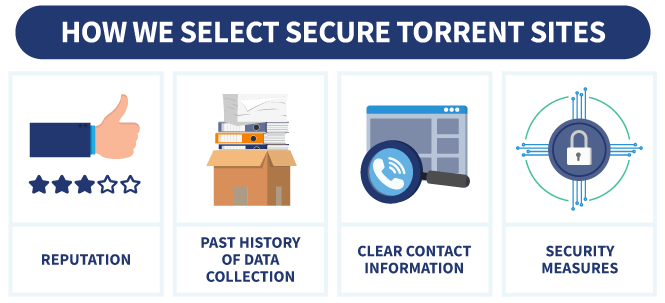
Both may belong in a guide to free and legal media, but neither currently provides the broad BitTorrent catalogue expected from a torrent directory. This guide therefore focuses on services that actively publish or track torrent files.
Is torrenting legal?
BitTorrent technology has many lawful uses. Open-source projects distribute operating systems, researchers share large datasets, and creators release files under public-domain or Creative Commons terms.
Legal problems arise when users reproduce or distribute copyright-protected work without permission or another lawful basis. Most torrent clients upload file pieces while downloading, so a user may distribute a work as well as receive it.
Copyright rules vary between countries and sometimes between types of work. Broad claims that torrenting itself is banned across entire countries oversimplify the law and confuse the protocol with unauthorised content sharing.
- Public-domain content can generally be copied and shared.
- Open-source software may be distributed under its licence.
- Creative Commons works must follow the selected licence terms.
- Artist-approved recordings must follow the artist’s trading policy.
- Commercial films, games, books, and music usually require permission.
- Local copyright exceptions differ by jurisdiction.
Users who remain uncertain about a file should obtain it directly from the creator, publisher, open-source project, recognised archive, or another authorised distributor.
Do you need a VPN for legal torrents?
You do not need a VPN simply because you use BitTorrent. Official Ubuntu and Fedora torrents remain legal whether the download travels through a VPN or a regular internet connection.
A VPN can hide a user’s normal IP address from other peers and encrypt traffic between the device and the VPN server. It may provide additional privacy on public Wi-Fi or prevent a local network from easily identifying BitTorrent traffic.
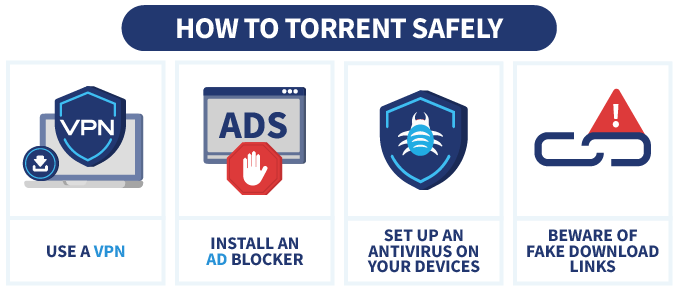
However, a VPN does not inspect every downloaded file, remove malware, make illegal activity legal, or guarantee anonymity. The VPN provider can also see account and connection information depending on its infrastructure and logging practices.
| A VPN can | A VPN cannot |
|---|---|
| Hide the home IP address from torrent peers | Confirm that a file is legal |
| Encrypt traffic to the VPN server | Scan all files for malware |
| Reduce visibility on a local network | Prevent every form of tracking |
| Provide an alternative public IP address | Grant permission to share copyrighted work |
| Help on networks that permit VPN use | Guarantee faster downloads |
Some internet providers manage congestion, but claims that a VPN always prevents throttling or improves speeds are misleading. Encryption and additional routing usually introduce some overhead.
How to download legal torrents safely
Use a reputable client and confirm that the publisher has permission to distribute the file before starting the download.
- Install a trusted BitTorrent client.
- Open an authorised source from this guide.
- Read the item’s licence or rights statement.
- Download the torrent file or select its magnet link.
- Review the files before starting the transfer.
- Scan downloaded files with updated security software.
- Verify checksums or signatures when the publisher provides them.
- Remove or stop sharing files when their licence prohibits redistribution.
The official qBittorrent download page provides an open-source client for major desktop operating systems. Users should avoid modified installers distributed through advertisements or unrelated download portals.
When downloading software, an ISO image, or an executable file, compare its checksum with the publisher’s official value. Malware scanners add another safeguard, although no scanner can guarantee that every new threat will be detected.
Why fake torrent download buttons are dangerous
Legal torrent sources generally provide a clear torrent file, magnet link, or official download option. Unregulated indexes may surround the real link with advertisements designed to resemble download buttons.
These advertisements can redirect users to browser extensions, notification scams, fake software updates, gambling sites, or malicious installers. A page that tells users to disable antivirus protection deserves particular suspicion.
- Do not disable antivirus protection for a torrent installer.
- Do not open password-protected archives from unknown uploaders.
- Do not install a browser extension to access a torrent.
- Check file names and extensions before running anything.
- Avoid executable files when expecting a film, book, or song.
- Use the publisher’s official checksum when available.
Users can obtain the genuine open-source client from the qBittorrent project website rather than clicking client advertisements on a torrent page.
How to check whether a torrent is legal
Start with the publisher. Canonical can legally distribute Ubuntu, the Fedora Project can distribute Fedora, and an artist can authorise the sharing of a live recording.
Look for a licence, public-domain statement, open-source notice, creator permission, or another clear rights declaration. Comments and user ratings can identify technical problems, but they do not prove copyright ownership.
| Positive sign | Warning sign |
|---|---|
| Download appears on the creator’s official site | New commercial release offered without explanation |
| Clear Creative Commons or open-source licence | No uploader identity or rights information |
| Public-domain status documented | Instructions to disable security software |
| Official checksum or digital signature | Unexpected executable files |
| Artist-approved trading policy | Copied descriptions from unrelated websites |
A popular torrent can still infringe copyright, and a small torrent can remain entirely legal. Seeder counts, download totals, and positive comments measure activity rather than legality.
Legal torrent sites to use with caution
User-uploaded repositories require more checking than official operating-system portals. Internet Archive and Academic Torrents host valuable legitimate material, but users must read the licence and description attached to each item.
Public Domain Torrents also relies on its assessment of copyright status. People planning to republish or sell a film should verify that assessment independently, especially outside the United States.
Etree users must follow performer-specific rules. A band may allow non-commercial concert trading while prohibiting the distribution of soundboard recordings, officially released tracks, or recordings from selected venues.
Torrent sites to avoid
Avoid clones of torrent sites that shut down years ago. Domains using names such as RARBG, ExtraTorrent, or Kickass Torrents do not represent the original operators and may exist primarily to generate advertising revenue or distribute unsafe files.
Also avoid sites that require an unknown browser extension, custom download manager, media player, or antivirus exception before providing a torrent. A standard torrent file or magnet link should open in an ordinary BitTorrent client.
Unauthorised indexes often contain current films, paid games, commercial software, and subscription television episodes. Their popularity does not make the downloads lawful or safe.
Final verdict
The Internet Archive is the best all-purpose legal torrent source because of its large and varied collection. Public Domain Torrents offers a simpler destination for classic movies, while Academic Torrents serves researchers working with large datasets.
Etree remains a valuable source for artist-approved live recordings. Ubuntu and Fedora demonstrate that BitTorrent also plays an important role in legitimate open-source software distribution.
Users do not need a VPN to make these downloads legal. They need an authorised source, a clear licence, a reputable client, updated security software, and careful verification of every file.
FAQ
The Internet Archive is the best general legal torrent source because it offers books, films, audio, software, and other downloadable materials. Users should still check the rights statement for each item.
No. BitTorrent is a legal file-sharing protocol. Downloading or distributing copyright-protected material without permission may be illegal, depending on the work and local law.
No. A VPN is optional for legal torrent downloads. It can hide your normal IP address from peers, but it does not make unlawful sharing legal or protect files from malware by itself.
Many Internet Archive torrents contain public-domain, Creative Commons, or authorised material. Because the Archive also accepts uploads, users should review the licence and rights information for each item.
qBittorrent is a popular open-source option without the advertising found in some commercial clients. Download it only from the official project website and keep it updated.
Yes. A legal distribution method does not guarantee that every uploaded file is safe. Verify the source, inspect file extensions, use checksums when available, and keep antivirus protection enabled.


Read our disclosure page to find out how can you help VPNCentral sustain the editorial team Read more


Improve this guide




User forum
0 messages