
DPRK cyber program uses modular malware strategy to stay resilient under pressure


 6 min. read
  Published on
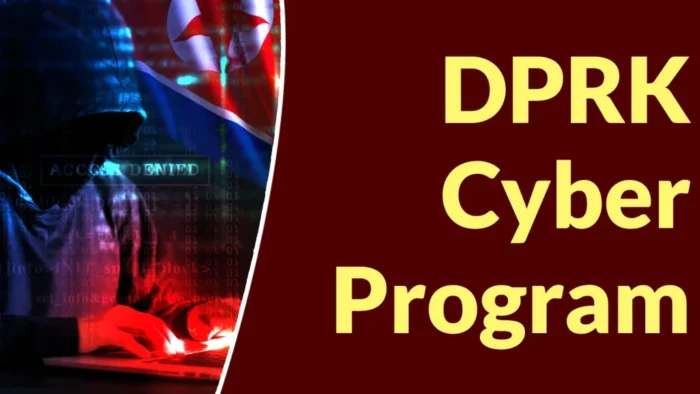
North Korea’s cyber program increasingly looks less like one giant hacking machine and more like a set of specialized teams using different malware families for different jobs. DomainTools says the ecosystem now works as a compartmentalized portfolio built for espionage, crypto theft, and strategic disruption, which helps the regime keep operating even when one toolchain gets burned.
That matters because defenders often hunt for one malware family, one cluster, or one campaign. DomainTools argues that this can miss the larger design, where disposable infrastructure and mission-specific tooling help North Korean operators survive takedowns and keep pressure on multiple targets at once.

Access content across the globe at the highest speed rate.
70% of our readers choose Private Internet Access
70% of our readers choose ExpressVPN

Browse the web from multiple devices with industry-standard security protocols.

Faster dedicated servers for specific actions (currently at summer discounts)
The broader policy record supports that view. The US Treasury says DPRK cyber actors conduct espionage, disruptive attacks, and financial theft at a scale unmatched by any other country, while also using cybercrime and fraudulent IT work to fund weapons and missile programs.
Why analysts see this as a mature strategy
The basic idea is simple. If one operation gets exposed, the rest of the program does not have to collapse with it. Separate toolchains, infrastructure, and targets reduce the chance that one incident will reveal everything else. That makes the whole program more durable under sanctions, takedowns, and public attribution.
This structure also fits years of official US and allied reporting. Treasury has already separated North Korean activity into groups such as Lazarus, Bluenoroff, and Andariel, with different patterns that range from espionage and destructive attacks to cyber-enabled financial theft.
In other words, what looks fragmented from the outside may actually be deliberate. DomainTools describes the DPRK malware ecosystem as a collection of specialized instruments governed by shared standards and strategic goals, not as a loose set of unrelated crews.
Three main tracks appear again and again
The espionage track focuses on patience and intelligence collection. MITRE says Kimsuky has targeted governments, think tanks, business services, education, research, and manufacturing, with a strong interest in geopolitical and nuclear policy. CISA also notes that Kimsuky has gone after think tanks and South Korean government entities.
The financial track centers on theft and sanctions evasion. Treasury says DPRK cyber actors steal funds worldwide to support regime priorities, including weapons programs, and points to major cryptocurrency theft as a key revenue source. CISA’s TraderTraitor advisory tied North Korean actors to fake crypto apps and other social engineering tactics used against blockchain and exchange targets.
The disruption track is the loudest and most visible. Treasury’s 2019 sanctions announcement says Lazarus and Andariel have been linked to destructive attacks, while MITRE says Andariel has targeted government agencies, military organizations, and domestic companies, including operations with destructive impact.
Human trust still sits at the center of the model
Across all three tracks, one pattern keeps returning. Social engineering opens the door. Treasury says DPRK cyber actors and IT workers use false identities, fake personas, forged documentation, and deceptive online behavior to gain access and generate revenue.
CISA’s TraderTraitor advisory shows the same logic in the crypto space. North Korean actors posed as legitimate blockchain recruiters and used fake crypto applications to infect targets. That confirms the same entry model described in your draft, where the first compromise often starts with trust rather than with a loud exploit.
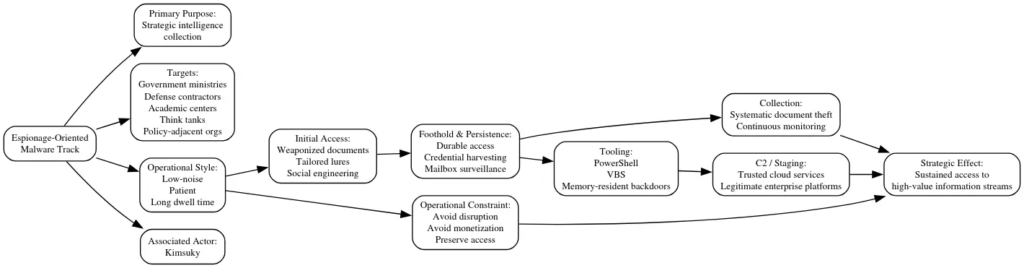
This approach also helps explain why the malware can stay modular. If operators can swap lures, infrastructure, and payloads depending on the mission, they do not need one universal implant for every target set. They only need a reliable way in. That inference follows from the combined DomainTools, Treasury, and CISA reporting.
What this means for defenders
The old habit of chasing malware names is not enough. If North Korea can rotate tooling while keeping the same mission logic, then defenders need to focus more on behavior, identity abuse, cloud activity, supply chain risk, and unusual social engineering patterns. DomainTools makes that case directly, and Treasury’s descriptions of DPRK tradecraft support it.
This matters most for sectors that appear again and again in public reporting. Government agencies, defense organizations, think tanks, cryptocurrency exchanges, software ecosystems, and remote hiring pipelines all remain exposed because they line up with North Korea’s core intelligence and revenue goals.
The biggest mistake is to treat DPRK cyber activity as one narrow problem. A team that only hunts for crypto theft may miss espionage. A team focused only on wipers may miss long-term access or insider-style abuse through fraudulent workers. That is exactly why the modular model works.
DPRK cyber tracks at a glance
| Track | Main goal | Common targets | Supporting evidence |
|---|---|---|---|
| Espionage | Long-term intelligence collection | Governments, think tanks, defense, research | MITRE and CISA describe Kimsuky targeting these sectors |
| Financial theft | Revenue generation and sanctions evasion | Crypto exchanges, blockchain firms, financial systems | Treasury and CISA describe crypto theft and fake crypto apps |
| Disruption | Strategic damage and signaling | Government, military, enterprise targets | Treasury and MITRE tie Andariel and Lazarus to destructive activity |
Key signs of the modular model
- Separate missions appear tied to different tooling and target sets rather than one all-purpose malware family.
- Social engineering remains a shared entry point across espionage, theft, and access operations.
- Financial theft and IT worker fraud both help fund DPRK state priorities, especially weapons and missile programs.
- Destructive and espionage campaigns can run in parallel without exposing the full program at once. This is an inference from the compartmentalized design described by DomainTools and the mission diversity described by Treasury.
FAQ
DomainTools says North Korea’s malware ecosystem now works like a compartmentalized architecture built around functional specialization, especially espionage, crypto theft, and strategic disruption.
Yes. Treasury says DPRK cyber actors carry out espionage, disruptive attacks, and financial theft, and also use fraudulent IT work to generate revenue for the regime.
Public reporting often points to Kimsuky for espionage, Lazarus and related subgroups such as Bluenoroff for financial theft, and Andariel for destructive or mixed operations. Official and MITRE sources use different naming systems, but the mission split stays broadly consistent.
Because separate toolchains and infrastructure reduce overlap. If one campaign gets exposed, investigators may only see one slice of the program rather than the full architecture behind it. That conclusion follows from DomainTools’ compartmentalization argument.


Read our disclosure page to find out how can you help VPNCentral sustain the editorial team Read more


Improve this guide



User forum
0 messages