
Russia Says Foreign Spyware Was Found On Phones Used By Senior Officials


 7 min. read
  Published on
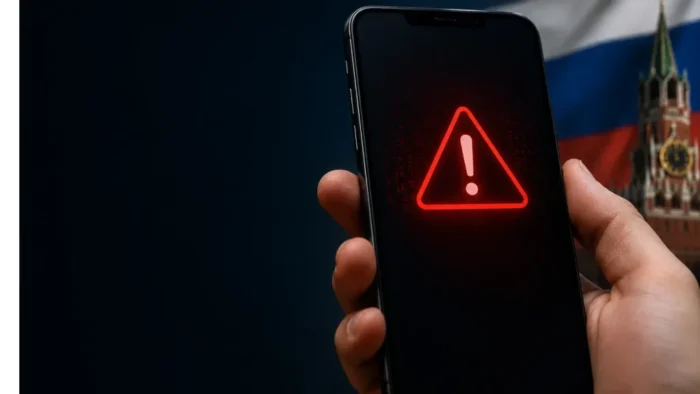
Russia’s Federal Security Service says it uncovered a large-scale cyber-espionage operation that placed malicious software on mobile devices used by high-ranking Russian officials.
The FSB statement claims foreign intelligence services used malware to secretly collect information from smartphones and other mobile communication devices. The agency said the operation targeted sensitive communications, contacts, location data, and the environment around the infected devices.

Access content across the globe at the highest speed rate.
70% of our readers choose Private Internet Access
70% of our readers choose ExpressVPN

Browse the web from multiple devices with industry-standard security protocols.

Faster dedicated servers for specific actions (currently at summer discounts)
The claim was also summarized by Meduza, which reported that the FSB described the campaign as an effort to plant malicious software on phones used by senior Russian government officials and monitor conversations.
What Russia Claims Happened
According to the FSB, foreign intelligence services used compromised mobile devices to gain covert access to messages, phone conversations, geolocation data, contact lists, and nearby audio or video activity.
The agency did not publish a malware sample, spyware family name, exploited vulnerability, or full list of affected device models. It also did not provide public indicators of compromise that would allow outside researchers to confirm the technical details independently.
The Moscow Times reported that the FSB alleged the operation involved Western intelligence services and named Fastly and Cloudflare in connection with the alleged infrastructure. Those claims remain allegations from Russian authorities, not vendor-confirmed findings.
| Area | What has been reported |
|---|---|
| Reporting agency | Russia’s Federal Security Service |
| Target group | High-ranking Russian officials |
| Device type | Mobile communication devices, including smartphones |
| Claimed activity | Message access, call monitoring, geolocation collection, contact harvesting, audio and video surveillance |
| Attribution | Foreign intelligence services, according to the FSB |
| Technical details | No public malware sample or IOC list has been released |
Why The Alleged Spyware Operation Matters
Mobile devices are high-value intelligence targets because they combine private messaging, calls, calendars, email, location history, contacts, cameras, microphones, and authentication apps in one place.
The public FSB notice says attackers used malicious software to collect information from officials’ devices without authorization. If accurate, that kind of access could expose both official planning and private relationships around targeted people.
Meduza’s coverage of the announcement noted that the FSB framed the alleged operation as a foreign intelligence effort aimed at senior Russian officials, but the agency did not name a specific malware platform.
What The FSB Said About Data Collection
The FSB said the alleged spyware could support covert access to correspondence, wiretapping of phone conversations, acoustic monitoring, video monitoring, geolocation tracking, and contact collection.
Those capabilities match the general category of advanced mobile spyware. However, the FSB did not connect the case to a known commercial spyware family such as Pegasus, Predator, or any other named tool.
The Moscow Times report said Russian authorities described the alleged campaign as a major cyber operation involving foreign intelligence services and major international technology infrastructure.
- Messages and chat content may become exposed when mobile spyware gains device-level access.
- Microphone and camera access can turn a phone into a surveillance device.
- Location data can reveal meetings, travel, and routines.
- Contact lists can map official, personal, and professional networks.
- Authentication apps on the same device may increase account takeover risk.
No Public Indicators Have Been Released
The biggest gap in the public record is technical evidence. Without malware hashes, command-and-control domains, exploit chains, mobile OS versions, or forensic artifacts, outside defenders cannot turn the FSB claim into a standard detection package.
That does not mean the risk should be dismissed. It means security teams should avoid assuming that a specific spyware family, vendor, country, or exploit chain has been proven from the public information alone.
For high-risk government and enterprise environments, the safer approach is to treat the case as another reminder that mobile endpoints need the same security planning as laptops, servers, and identity systems.
How High-Risk Users Can Reduce Mobile Spyware Exposure
High-risk users should keep devices fully updated, limit app installation, remove unused apps, reduce permissions, and separate highly sensitive communications from everyday personal use.
Apple says Lockdown Mode is designed for users who may be personally targeted by highly sophisticated digital threats. The feature limits certain message attachments, web technologies, FaceTime calls from unknown contacts, wired connections, and other attack surfaces.
For Android users, Google says Advanced Protection gives stronger security and privacy defenses against online attacks, harmful apps, and data risks. It can help users who face elevated risk because of their work, public profile, or access to sensitive information.
| Risk area | Practical step |
|---|---|
| Operating system vulnerabilities | Install iOS, iPadOS, and Android updates quickly |
| Malicious apps | Block sideloading where possible and use trusted app stores |
| Account compromise | Use hardware security keys or phishing-resistant MFA for important accounts |
| Device-level surveillance | Use hardened device modes for high-risk travel or sensitive work |
| Data exposure | Keep sensitive files and long-term archives off daily-use phones |
What Government And Enterprise Teams Should Review
Security teams should review mobile device management policies, device compliance rules, app allowlists, VPN and DNS logging, and privileged-user mobile access. Senior officials and executives should receive stricter controls than standard users.
Organizations should also prepare a process for mobile forensic review. That includes preserving device logs, isolating suspected devices, reviewing recent account activity, checking for unusual cloud sessions, and rotating credentials used on affected phones.
Apple’s Lockdown Mode guidance and Google’s Android Advanced Protection guidance both show that major platform vendors now offer stronger modes for people who face targeted threats, even if those modes may reduce convenience.
- Create a separate mobile policy for executives, officials, journalists, lawyers, and other high-risk roles.
- Limit sensitive work to managed devices with enforced updates and app controls.
- Disable unnecessary cloud backups for sensitive apps and documents.
- Use dedicated devices for travel to hostile or high-risk environments.
- Rotate passwords, tokens, and MFA methods after suspected mobile compromise.
- Train users not to discuss sensitive information near untrusted mobile devices.
Why Attribution Remains Unclear
The FSB attributed the alleged operation to foreign intelligence services, but public reports do not include enough technical detail to support independent attribution. That leaves important questions open, including the initial infection vector, the mobile platforms affected, and whether the campaign used zero-click exploits, phishing, physical access, or network-level interception.
Russian officials have made similar claims in the past about foreign-backed mobile espionage. The current case fits a broader pattern of governments warning about high-end mobile spyware, but each incident needs technical evidence before defenders can make precise conclusions.
The immediate lesson is still clear. Mobile phones used by officials and executives should not be treated as ordinary personal devices. They carry sensitive conversations, identity access, travel patterns, and private networks that can make them valuable intelligence targets.
What Users Should Do If They Suspect Infection
Users who believe their phone may have been targeted should stop using it for sensitive communication, preserve it for forensic review, and contact the organization’s security team through a separate trusted channel.
They should avoid wiping the device before investigators collect evidence. A factory reset may remove some traces, but it can also destroy logs and artifacts that help determine what happened.
After a suspected mobile compromise, teams should assume that credentials used on the device may be exposed. That means resetting passwords, revoking active sessions, rotating tokens, replacing MFA methods, and reviewing connected cloud accounts.
FAQ
The FSB claimed it uncovered a large-scale foreign intelligence operation that placed malicious software on mobile devices used by high-ranking Russian officials to collect messages, calls, location data, contacts, and nearby audio or video information.
No. The public FSB statement did not name a malware family, publish a malware sample, or release indicators of compromise such as hashes, domains, or exploited vulnerabilities.
High-risk users such as officials, executives, journalists, activists, lawyers, and people with access to sensitive information face the greatest risk from targeted mobile spyware campaigns.
They should keep devices updated, limit app installation, reduce permissions, use phishing-resistant MFA, enable hardened modes such as Lockdown Mode or Advanced Protection where appropriate, and separate sensitive work from daily-use phones.
They should stop using the device for sensitive communications, preserve it for forensic review, contact security staff through a separate trusted channel, rotate credentials, revoke active sessions, and replace MFA methods used on the device.


Read our disclosure page to find out how can you help VPNCentral sustain the editorial team Read more


Improve this guide



User forum
0 messages