
Crimenetwork Relaunch Taken Down as Police Seize Data on 22,000 Users


 5 min. read
  Published on
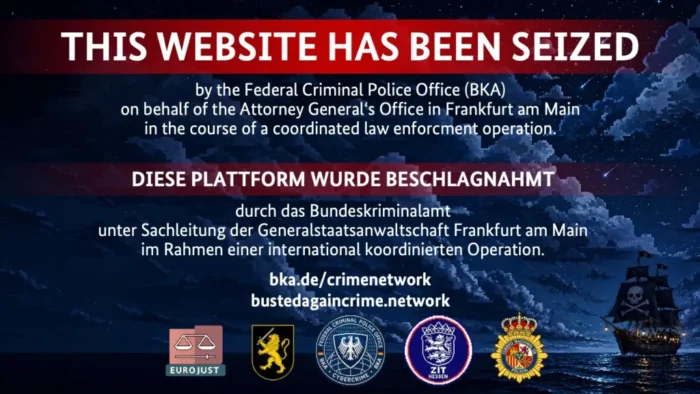
German authorities have shut down the relaunched Crimenetwork marketplace and arrested its suspected operator in Mallorca, Spain. The operation targeted a rebuilt version of one of the best-known German-language underground marketplaces.
The new platform had already gathered more than 22,000 users and over 100 vendors before law enforcement took it offline. Investigators also seized user and transaction databases, which could now help identify buyers, sellers, and other people tied to the marketplace.

Access content across the globe at the highest speed rate.
70% of our readers choose Private Internet Access
70% of our readers choose ExpressVPN

Browse the web from multiple devices with industry-standard security protocols.

Faster dedicated servers for specific actions (currently at summer discounts)
The arrest shows that the first Crimenetwork takedown in December 2024 did not end the case. Authorities say the suspect built a new technical infrastructure within days of the earlier shutdown and continued offering illegal goods and services under the same name.
Police arrested the suspected operator in Spain
The suspected operator is a 35-year-old German citizen. A special unit of Spain’s National Police arrested him at his residence in Mallorca under a European Arrest Warrant.
The investigation was coordinated by the Frankfurt am Main Public Prosecutor’s Office, the Central Office for Combating Internet Crime, and Germany’s Federal Criminal Police Office. Spanish police, Moldovan cybercrime units, and Eurojust also supported the wider operation.
Authorities accuse the suspect of operating criminal trading platforms online and dealing in narcotics in significant quantities. Regional German authorities also connected the arrest to separate commercial fraud investigations involving fake online shops.
Key facts at a glance
| Item | Details |
|---|---|
| Platform | Crimenetwork |
| Type | German-language criminal marketplace |
| Suspect | 35-year-old German citizen |
| Arrest location | Mallorca, Spain |
| Users | More than 22,000 |
| Vendors | More than 100 |
| Estimated revenue | More than €3.6 million |
| Assets seized | About €194,000 linked to the marketplace |
The rebuilt marketplace copied the old model
Crimenetwork had operated for years as a major marketplace in the German-speaking cybercrime scene. Before the first shutdown, it was known for listings involving stolen data, forged documents, drugs, and other illegal goods and services.
The relaunched version followed a similar model. Buyers used cryptocurrencies such as Bitcoin, Litecoin, and Monero to pay for goods and services. Vendors also paid platform fees and advertising charges.
Investigators say the new version generated more than €3.6 million in revenue. The suspected operator allegedly earned money from commissions on sales and from recurring vendor charges.
User and transaction data could drive new cases
The most important part of the operation may not be the seizure page itself. Investigators now have extensive records tied to users and transactions, which can support follow-up cases across German-speaking regions.
Dark web marketplaces often promote anonymity, but they still leave behind operational data. Account records, internal messages, vendor histories, cryptocurrency traces, and server logs can all become evidence once police control the infrastructure.
That creates legal risk beyond the suspected administrator. Buyers and sellers who used the new Crimenetwork may now face investigation if their activity appears in seized records.
Authorities are sending a message to darknet users
After the shutdown, law enforcement placed a seizure notice on a public portal connected to the takedown. The page uses the “Busted Again Crimenetwork” branding and identifies the German Federal Criminal Police Office and Frankfurt prosecutors.
Carsten Meywirth, Director at the BKA and Head of its Cybercrime Department, said the relaunch of Crimenetwork had failed and that another administrator would have to answer before a German court.
The message targets both operators and users. Authorities want to show that rebuilding a seized marketplace does not remove criminal exposure, especially when investigators continue tracking infrastructure and payment flows after the first takedown.
Why the second takedown matters
- It shows how quickly criminal marketplaces can return after a seizure.
- It gives investigators fresh user and transaction records.
- It disrupts vendors selling stolen data, forged documents, and drugs.
- It creates new leads across German-speaking cybercrime communities.
- It shows stronger cross-border coordination between police and prosecutors.
The earlier Crimenetwork case is still important
The original Crimenetwork platform was taken down in December 2024 after more than a decade of activity. At the time, authorities described it as one of the central marketplaces of the German-speaking underground economy.
In March 2026, the alleged operator of the predecessor version received a prison sentence of seven years and ten months from the Gießen Regional Court. The court also ordered confiscation of more than €10 million in criminal proceeds, although that ruling was not yet final.
The new arrest adds another chapter to the same broader enforcement campaign. It also shows that authorities continue to track attempts to rebuild marketplaces after infrastructure seizures.
FAQ
Crimenetwork was a German-language criminal marketplace used to trade illegal goods and services, including stolen data, forged documents, and drugs.
Investigators secured evidence suggesting that the relaunched platform generated more than €3.6 million in revenue.
The suspected operator, a 35-year-old German citizen, was arrested at his residence in Mallorca, Spain.
Authorities said the relaunched platform had more than 22,000 users and over 100 vendors before the latest takedown.
Summary
- German and Spanish authorities shut down the relaunched Crimenetwork marketplace.
- A 35-year-old German suspect was arrested in Mallorca under a European Arrest Warrant.
- The platform had more than 22,000 users and over 100 vendors.
- Investigators seized around €194,000 in assets and extensive platform records.
- The seized user and transaction data could support further investigations.


Read our disclosure page to find out how can you help VPNCentral sustain the editorial team Read more


Improve this guide




User forum
0 messages