
DCloud Uni-App Scam Network Powers RainbowEx-Style Crypto Fraud and WhatsApp Phishing


 7 min. read
  Published on
A legitimate Chinese development framework called DCloud Uni-App has become a common foundation for large-scale online scam infrastructure. New research from Infoblox Threat Intel links at least 236,493 distinct second-level domains to DCloud-built scam sites.
The framework itself is not malicious. DCloud Uni-App lets developers write one Vue.js codebase and publish it across multiple platforms, including mobile apps, web apps and mini-programs. The official DCloud Uni-App repository describes it as a cross-platform framework for building front-end applications.

Access content across the globe at the highest speed rate.
🔥 Save 81% + 2 bonus months! 🔥
70% of our readers choose Private Internet Access
70% of our readers choose ExpressVPN
2
Browse the web from multiple devices with industry-standard security protocols.
🔥 Save 73%! 🔥

Faster dedicated servers for specific actions (currently at summer discounts)
🔥 Save 69%! 🔥
Scammers have repurposed that convenience for fraud. Infoblox says DCloud-built sites now support fake crypto exchanges, wallet drainers, WhatsApp phishing pages, gambling impersonation, brand impersonation and pig-butchering investment scams.
RainbowEx Was Only One Visible Case
The investigation grew from the RainbowEx scandal in San Pedro, Argentina, where thousands of residents were drawn into a suspected crypto investment fraud in 2024. El País reported at the time that local authorities estimated about 12,000 people had invested in the platform.
RainbowEx promised unusually high returns and showed users trading activity inside an app. When concerns mounted, the platform froze withdrawals for Argentina-linked accounts, leaving many victims unable to recover their funds.
Infoblox later found that RainbowEx was built with DCloud Uni-App, but the same technical pattern appeared far beyond one Argentine town. The company said the framework had become part of a wider scam economy that had been active since at least mid-2022.
| Scam type | How DCloud Uni-App is used | Victim impact |
|---|---|---|
| Fake crypto exchanges | Creates realistic trading dashboards and account portals | Victims deposit funds and later lose access to withdrawals |
| Wallet drainers | Impersonates verification flows for crypto services | Connected wallets can be emptied |
| WhatsApp phishing | Copies support or verification pages | Users may hand over credentials or account access |
| Investment portals | Shows fake balances, referral flows and payment screens | Victims are pushed into deposits and recruitment |
Why the Framework Appeals to Fraud Operators
DCloud Uni-App gives developers speed and reuse. Those same traits help criminals clone interfaces, localize scam pages and deploy campaigns across many domains. The official Uni-App project says developers can write one codebase and publish it to several platforms.
SecurityWeek, covering the Infoblox findings, noted that Uni-App powers legitimate products and that its maker does not appear to be involved in the fraudulent use of the toolkit. SecurityWeek also reported that threat actors appear to be selling investment scam templates built with the framework.
The technical pattern gives defenders a useful clue, but it also creates a challenge. Uni-App is widely used for legitimate software, so the presence of the framework alone does not prove fraud.
The Scale Grew After RainbowEx
Infoblox said the scam population grew sharply after international attention around RainbowEx in late 2024. Before that point, researchers saw a few thousand newly observed DCloud-fingerprinted scam sites per month. At peak after October 2024, that number rose to roughly 15,000 per month.
The Hacker News, summarizing the research, reported that the templates power fake crypto exchanges, WhatsApp phishing networks, fake gambling sites, brand impersonation and crypto wallet drainers. The Hacker News also noted that Infoblox identified 236,493 distinct second-level domains.
Infoblox does not attribute all of the infrastructure to a single actor. Instead, the company says there are likely multiple operators, possibly dozens or hundreds, while some clusters show signs of centralized ownership.
- Scam sites have appeared across many hosting providers.
- Some operators stripped default DCloud fingerprints to avoid simple detection.
- Investment fraud is the largest category in the identified dataset.
- Several campaigns use multilingual templates to reach victims in different regions.
- Some scam fronts combine online portals with real-world paperwork or storefronts.
WhatsApp Phishing and Wallet Drainers Are Part of the Network
DCloud-built phishing pages also impersonate WhatsApp-related verification and help flows. The official WhatsApp Help Center advises users to pause, stop the conversation, block and report suspicious accounts, and use privacy and security settings when messages look suspicious.
Infoblox observed WhatsApp-themed domains that presented themselves as security or help center pages. Some of the pages were simple, with basic login fields, stock images and a clean layout designed to avoid immediate suspicion.
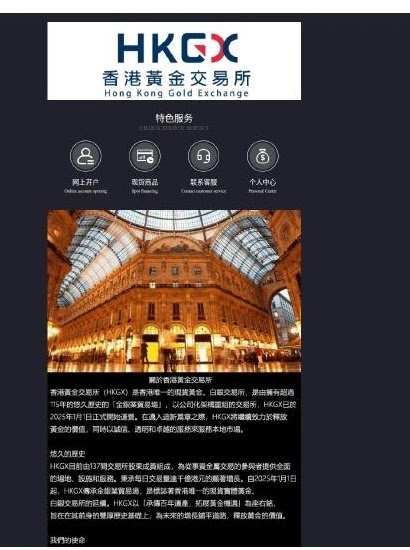
Other DCloud-built pages targeted crypto users through wallet-draining flows. These pages impersonated verification processes for services such as BNB Chain or Tether, then tried to convince users to connect wallets or approve transactions.
Physical-World Scams Used the Same Playbook
The DCloud scam ecosystem does not stop at online-only fraud. Infoblox linked the same template family to Lightning Shared Scooter Co., a scooter investment operation in the United States, and Yuechi Sharing Technology Ltd., a bicycle-themed investment operation targeting Australia, New Zealand and the United States.
These schemes used real-world credibility signals, including storefronts, corporate paperwork and public-facing claims of legitimacy. In the Yuechi case, Infoblox said operators displayed genuine registrations, but warned that paperwork does not validate the underlying investment pitch.
The U.S. Treasury’s Financial Crimes Enforcement Network states that its mission is to safeguard the financial system from illicit activity and counter money laundering. Infoblox highlighted FinCEN’s warning that fraudsters can misuse MSB registration records to deceive consumers.
| Warning sign | Why it matters |
|---|---|
| Guaranteed or unusually high returns | Scam operators often use impossible profit claims to create urgency |
| Withdrawal delays or extra fees | Victims are often blocked when they try to recover funds |
| Invitation-only registration | Referral gates can help turn victims into recruiters |
| Government registration used as proof | Registration does not mean an investment is safe or approved |
| Requests to connect a crypto wallet | Wallet drainers can use approvals to steal funds |
What Defenders and Users Should Do
For security teams, the best approach is domain-level blocking and DNS-based detection that looks for scam-specific DCloud fingerprints. Blocking the framework itself would create false positives because many legitimate businesses also use Uni-App.
Infoblox recommends tracking shared ownership patterns, hosting choices and scam-specific technical markers rather than treating all DCloud sites as suspicious. Infoblox Threat Intel also warns that some operators have started removing default framework traces, which makes deeper analysis more important.
For consumers, the safest rule is to avoid investment platforms reached through WhatsApp, Telegram, referral codes or unknown social media contacts. The WhatsApp safety guidance recommends blocking and reporting suspicious messages rather than continuing a conversation with unknown senders.
Coverage from SecurityWeek and The Hacker News shows that the abuse has now reached a scale that goes beyond one campaign or one country. The same templates can support crypto fraud, phishing and wallet theft with only small changes.
The RainbowEx case remains a useful warning because it mixed online promises with social pressure, local trust and a professional-looking app. El País reported that Argentina’s National Securities Commission said RainbowEx and Knight Consortium were not registered as virtual asset service providers.
Users should also treat federal or corporate registration numbers with caution. The Financial Crimes Enforcement Network provides public information about financial crime and MSB registration, but a listing alone does not prove that an investment offer is legitimate.
FAQ
DCloud Uni-App is a legitimate open-source framework that lets developers build cross-platform applications from a shared Vue.js codebase. It is widely used for normal software development, but scammers have abused it to create fake investment and phishing sites.
Infoblox says it has no evidence that DCloud is involved in the fraudulent use of its framework. The abuse comes from threat actors who use Uni-App as a building block for scam websites and fake apps.
Infoblox identified at least 236,493 distinct second-level domains tied to DCloud-built scam infrastructure, including fake crypto exchanges, wallet drainers, WhatsApp phishing pages and investment fraud portals.
RainbowEx was a fake crypto investment platform used in San Pedro, Argentina. Infoblox found that RainbowEx was built with DCloud Uni-App, which helped researchers connect it to a much larger ecosystem of similar scam infrastructure.
Users should avoid investment links sent through unknown contacts, WhatsApp groups, Telegram channels or referral codes. They should not connect crypto wallets to unfamiliar verification pages, and they should treat guaranteed returns, withdrawal fees and registration paperwork as warning signs.


Read our disclosure page to find out how can you help VPNCentral sustain the editorial team Read more


Improve this guide


User forum
0 messages