
India Tells Meta to Pause WhatsApp Usernames Rollout Over Fraud Concerns


 6 min. read
  Published on
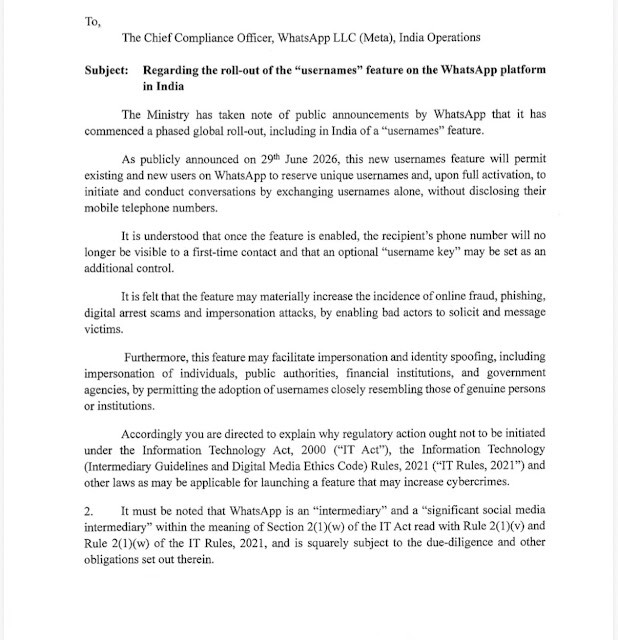
India has told Meta-owned WhatsApp not to activate its new username feature in the country until government consultations are complete, according to a Times of India report based on PTI.
The notice comes days after WhatsApp announced a system that will let users reserve usernames and, later this year, contact others without sharing phone numbers. Meta has positioned usernames as a privacy feature, while the WhatsApp Help Center says the feature is optional and designed to keep phone numbers private.

Access content across the globe at the highest speed rate.
70% of our readers choose Private Internet Access
70% of our readers choose ExpressVPN

Browse the web from multiple devices with industry-standard security protocols.

Faster dedicated servers for specific actions (currently at summer discounts)
Indian officials are worried that the same privacy layer could make fraud harder to spot. The concern is that scammers may use usernames to impersonate officials, businesses, banks, police officers, or known contacts while hiding the phone number that victims often use as an early warning sign.
What India Has Asked WhatsApp To Do
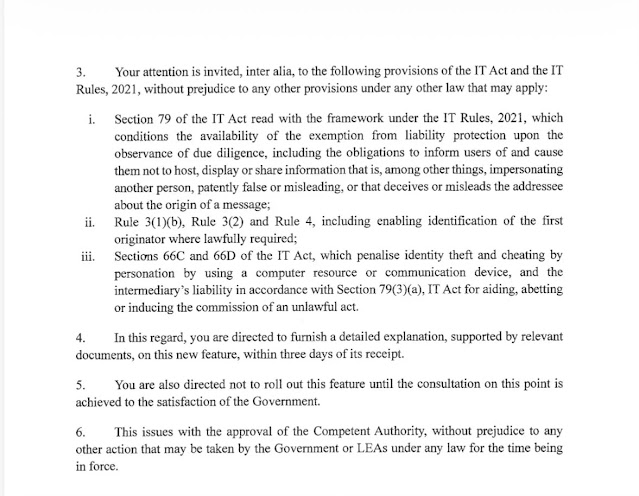
The government has reportedly asked WhatsApp to explain its safeguards within three days and support its response with documents. The PTI report says WhatsApp has also been instructed not to roll out the feature in India until the consultation process ends to the government’s satisfaction.
The move follows earlier scrutiny from the Ministry of Electronics and Information Technology. An India Today report said officials were examining the privacy and security impact of WhatsApp usernames before deciding whether to issue a formal notice.
Regulators are looking at the feature through the lens of online safety and platform accountability. India’s IT Rules, 2021 set due diligence obligations for intermediaries, including major social media and messaging platforms.
| Issue | Current position | Why it matters |
|---|---|---|
| India rollout | Paused until consultations conclude | Government wants fraud risks reviewed first |
| WhatsApp response | Explanation reportedly due within three days | Meta must show how the feature prevents misuse |
| Usernames | Reservations have begun in supported regions | Full username messaging is expected later this year |
| Core concern | Phone numbers may be hidden from first-time contacts | Scammers could impersonate trusted people or institutions |
How WhatsApp Usernames Work
WhatsApp says usernames will give people a way to connect without immediately sharing a phone number. In its announcement, the company said users can reserve a username now, before the feature becomes available for messaging later this year.
Once usernames launch, a user who has enabled the feature will be able to message a new person or business without showing their phone number at first contact. WhatsApp says there will be no public username directory, which means people must know the exact username before starting a chat.
The company is also adding an optional username key. According to WhatsApp’s support page, usernames are meant to act as unique identifiers while keeping the phone number private.
Why India Is Worried About Fraud
India’s main concern is not username reservation itself. The bigger issue is what happens when the feature becomes a working contact method and phone numbers become less visible during first-time interactions.
Phone numbers often help users identify suspicious messages, especially when they see a foreign country code, an unfamiliar number, or a mismatch between a profile name and the number shown. If a scammer can hide that number behind a convincing username, victims may have fewer visible clues.
India already deals with digital arrest scams, fake police calls, banking fraud, KYC scams, investment fraud, and impersonation attempts on messaging platforms. The government’s Chakshu portal lets citizens report suspected fraud communication received through calls, SMS, or WhatsApp.
- Scammers could create usernames that closely resemble public officials or government departments.
- Fraudsters could use photos, names, and handles that look similar to real people or organizations.
- Foreign numbers may become less obvious to users if the phone number is hidden during first contact.
- Businesses and public figures could face username squatting or impersonation attempts.
- Law enforcement may need clearer logs and escalation channels to trace abuse quickly.
What Safeguards Officials May Expect
The government is likely to focus on whether WhatsApp can prevent impersonation at scale before usernames reach Indian users. That may include better checks for government-like usernames, brand impersonation, fake support accounts, and usernames designed to look almost identical to verified entities.
Officials may also ask how WhatsApp plans to handle user complaints, account takedowns, traceability requests, and emergency law enforcement coordination. These questions fit into India’s broader demand that digital platforms treat fraud prevention as a product responsibility, not only a post-incident moderation problem.
Under the IT Rules, significant intermediaries face additional compliance duties, including grievance redressal and due diligence requirements. A username-based messaging system could bring those obligations into sharper focus if it changes how people identify unknown senders.
| Fraud risk | Possible misuse | Possible safeguard |
|---|---|---|
| Official impersonation | Fake police, tax, court, or government handles | Reserved handles and faster impersonation review |
| Banking scams | Fake support accounts asking for OTPs or KYC details | Warnings on first contact from unknown usernames |
| Business fraud | Lookalike handles targeting customers | Verified business indicators and brand protection tools |
| Cross-border abuse | Foreign numbers hidden behind local-looking usernames | Risk signals, reporting tools, and lawful trace support |
What This Means For WhatsApp Users In India
For now, Indian users can continue using WhatsApp normally. The reported government direction targets the new username feature, not regular chats, voice calls, video calls, groups, or phone-number-based messaging.
Users should still treat unexpected WhatsApp messages with caution, especially if the sender asks for money, OTPs, remote access, account verification, or urgent action. Suspicious messages can be reported through WhatsApp’s in-app reporting tools and through Sanchar Saathi when they involve suspected fraud communication.
The dispute also shows the tension around privacy features in high-fraud markets. Hiding phone numbers can protect ordinary users from unwanted exposure, spam, and harassment. At the same time, India wants Meta to prove that the feature will not make impersonation easier or reduce accountability for first-time messages.
What Happens Next
WhatsApp now has to convince Indian regulators that usernames can be rolled out safely. The government will likely assess whether Meta’s existing safeguards are enough for India’s fraud environment, or whether the company needs India-specific controls before launch.
The outcome could affect more than WhatsApp. If India requires stricter protections for username-based messaging, other communication platforms may face similar expectations when they introduce privacy features that change how users identify strangers.
For Meta, the challenge is to keep the privacy benefit of usernames while addressing India’s concern that anonymity, lookalike handles, and hidden phone numbers may create new opportunities for scams.
FAQ
India reportedly told Meta-owned WhatsApp not to activate usernames in the country until officials review fraud, impersonation, and user safety concerns.
WhatsApp opened username reservations on June 29, 2026. The full feature that lets users message through usernames is planned for later this year.
No. The reported government direction concerns the new username feature. Regular WhatsApp chats, calls, groups, and phone-number-based messaging continue to work.
The feature can improve privacy by hiding phone numbers, but officials worry scammers could use usernames to impersonate trusted people, businesses, or government officials.
Possible safeguards include stronger impersonation checks, reserved handles for official entities, visible warnings for unknown usernames, faster reporting tools, and better coordination with law enforcement.


Read our disclosure page to find out how can you help VPNCentral sustain the editorial team Read more


Improve this guide




User forum
0 messages