
Researcher Used AI to Find $500,000 in Google Bug Bounty Flaws


 7 min. read
  Published on

A security researcher used an AI-assisted testing pipeline to find more than $500,000 worth of vulnerabilities across Google services in less than three months. The work, detailed in a new Brutecat write-up, focused on broken access controls and exposed internal APIs rather than malware or a conventional network breach.
The researcher, Arvin Shivram of Brutecat Security, said the project examined about 1,500 Google APIs and used roughly 3,600 API keys during testing. The findings were reported through the Google Vulnerability Reward Program, which pays outside researchers for responsibly reported security issues.

Access content across the globe at the highest speed rate.
70% of our readers choose Private Internet Access
70% of our readers choose ExpressVPN

Browse the web from multiple devices with industry-standard security protocols.

Faster dedicated servers for specific actions (currently at summer discounts)
The research is notable because it shows how AI can help scale API security testing when a human researcher still controls the workflow. The AI system did not replace manual review. It helped sort endpoints, test access-control assumptions, and flag suspicious responses for human confirmation.
Google API Testing Exposed Repeated Access-Control Problems
The campaign started with Google discovery documents. These are machine-readable API descriptions that list services, methods, parameters, and request formats. Some Google APIs publish these documents publicly, while others require valid keys or sit behind internal access controls.
Shivram and collaborator Michael Dalton gathered large numbers of API keys from mobile apps and web traffic, then filtered the results to stay within Google-owned infrastructure. The research then mapped internal and semi-internal APIs and tested whether endpoints enforced proper authorization before returning data or allowing changes.
Several findings involved the same broad weakness: APIs accepted requests without checking whether the caller had permission to read or modify the target resource. That pattern appeared across consumer services, Google Cloud products, media systems, advertising tools, and internal admin surfaces.
| Area affected | Reported issue | Reported reward |
|---|---|---|
| Google Voice and Google Fiber | Account data exposure and unauthorized phone-number assignment | $20,000 |
| AdExchange | Staging system connected to production data, with admin escalation | $30,000 |
| Translation Hub | Cross-tenant read and write access, plus cloud storage exposure | $36,500 |
| YouTube TV CMS | Unauthorized campaign management and leaked CMS account emails | $24,000 |
| Vertex AI Search for Commerce | Unauthorized access to intent-classification configuration | $30,000 |
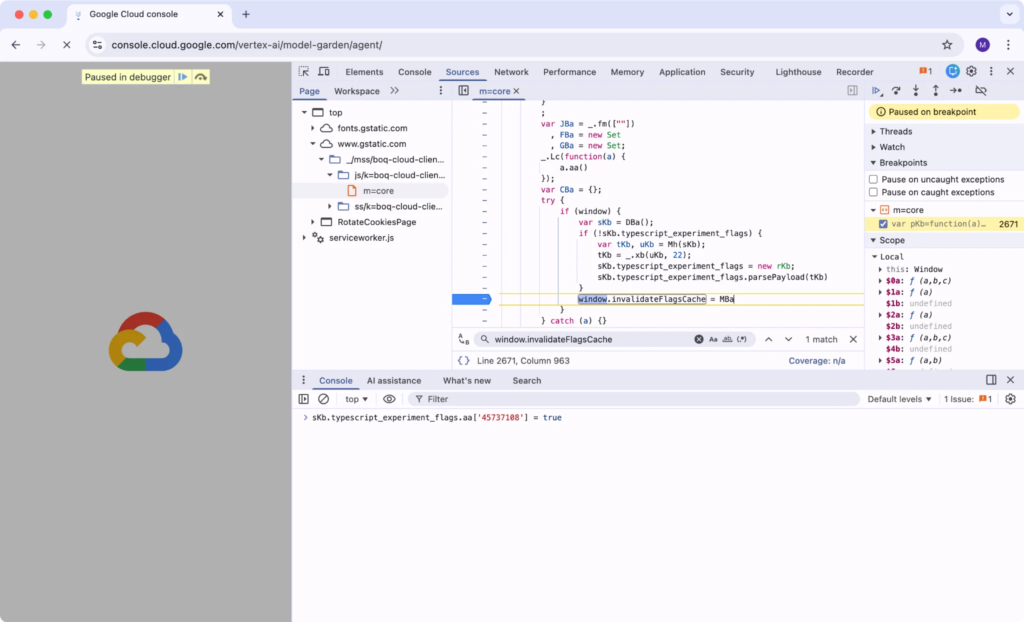
| Cloud Console GraphQL | Unauthenticated access to sensitive service data in several GraphQL surfaces | Up to $30,000 per issue |
AI Helped Prioritize the Most Suspicious API Responses
After mapping the API surface, the researcher built a custom testing system and connected it to Claude. The system gave the model a limited set of tools for probing APIs, reporting possible vulnerabilities, and marking tests as complete.
The research notes say the workflow improved after a month of tuning. The AI grouped similar endpoints, compared responses across multiple keys, and translated confusing Google API errors into clearer labels.
That mattered because many authorization bugs do not look obvious from a single response. A request may return data for one key, deny another key, and leak metadata for a third. The AI helped compare those patterns at scale, while the researcher still validated the results before submitting reports.
- The testing focused on broken access control and insecure direct object reference flaws.
- The AI helped classify endpoints and responses faster than manual review alone.
- Human review remained necessary before reports were submitted to Google.
- The research stayed within Google’s vulnerability disclosure process.
The Most Serious Finding Involved Google Voice and Fiber
One of the highest-impact findings involved a Google Voice and Google Fiber management API. According to the report, the API exposed personal information and allowed unauthorized phone-number changes when given a target Google account identifier.
The risk was serious because phone numbers can play a role in account recovery and identity verification. If abused, a flaw of that kind could support account-takeover or SIM-swap-style attack paths. Google reportedly rated the issue at its highest severity level and fixed it within hours.
Other findings were less direct but still important. Some APIs exposed internal privacy assessments, YouTube-related data, Widevine organization information, Translation Hub operations, Vertex AI Search for Commerce configuration, and Cloud Console GraphQL data.
| Finding type | Why it matters |
|---|---|
| Missing authorization checks | Attackers may access or change resources they do not own. |
| Cross-tenant access | One customer or project may see data belonging to another. |
| Staging connected to production | Test environments may expose real user or business data. |
| GraphQL introspection and weak validation | Attackers may discover sensitive schemas or query data without proper checks. |
| Prompt and configuration control | Attackers may alter behavior in AI-powered customer-facing systems. |
Google’s Bug Bounty Program Gives Context to the Payout
Google has run vulnerability reward programs for years, and the company says these programs help it receive reports from outside researchers before flaws can be exploited by malicious actors. The official program rules define scope, reporting expectations, and reward categories.
Google also created a dedicated Google Cloud Vulnerability Reward Program in 2024. The company said at the time that the cloud-specific program would give researchers clearer paths for reporting Google Cloud issues and more direct interaction with cloud security engineers.
Google’s 2025 VRP year in review shows the scale of the program. Google said it paid more than $17 million to over 700 researchers in 2025, marking an all-time high for its vulnerability rewards.
Why This Research Matters for API Security
The findings show that access-control bugs remain one of the hardest problems in large cloud and consumer platforms. Modern services often depend on thousands of APIs, internal tools, staging systems, identity layers, and machine-readable service definitions.
AI changes the economics of testing that surface. A researcher can use an AI system to process more endpoints, compare more responses, and spot patterns faster. That can help defenders, but it can also raise pressure on companies to harden APIs before attackers automate similar workflows.
The research also highlights why staging environments and internal APIs need the same security discipline as public products. If a test service can reach production data, a small access-control mistake can become a high-impact exposure.
- Companies should treat internal discovery documents as sensitive infrastructure maps.
- Every API endpoint should enforce authorization on the server side.
- Staging systems should not have unrestricted access to production data.
- GraphQL endpoints should restrict introspection and enforce per-object access checks.
- AI-assisted testing should support human review, not replace it.
Google Fixed Reported Issues Through Responsible Disclosure
All reported issues were submitted through Google’s vulnerability reward process. The public write-up does not claim that attackers exploited the bugs in the wild, and the findings should be understood as controlled security research.
The case still sends a clear message to enterprise security teams. API inventories, access-control tests, and authorization reviews need to scale as fast as the systems they protect. AI-assisted testing can help, but only when paired with strong scope controls, careful validation, and responsible reporting.
The latest Google Cloud VRP structure and Google’s latest VRP review show that large vendors expect outside researchers to keep playing a major role in finding complex flaws. Shivram’s research shows that the next wave of bug hunting will likely involve more AI-assisted workflows and much larger API coverage.
FAQ
A researcher used AI-assisted testing to find and report vulnerabilities in Google services through the company’s bug bounty program. This was responsible security research, not a confirmed malicious breach of Google.
The research reportedly earned more than $500,000 in Google bug bounty rewards across multiple submitted vulnerabilities in less than three months.
The findings mostly involved broken access controls, unauthorized API access, cross-tenant data exposure, staging systems connected to production data, GraphQL authorization problems, and unsafe access to AI-related configuration.
The reported findings involved several areas, including Google Voice, Google Fiber, AdExchange, Translation Hub, YouTube-related systems, Widevine, Vertex AI Search for Commerce, and Cloud Console GraphQL services.
No. The AI helped scale testing, group endpoints, compare API responses, and flag possible issues. A human researcher still designed the workflow, reviewed results, confirmed impact, and submitted reports responsibly.


Read our disclosure page to find out how can you help VPNCentral sustain the editorial team Read more


Improve this guide




User forum
0 messages