
Scammers Use Trusted Brand Names in Gambling Ads to Push Users Into Online Casinos


 7 min. read
  Published on
Scammers are using fake gambling ads that impersonate banks, retailers, streaming services, and other trusted brands to drive users toward unrelated online casinos.
The campaigns, identified by Netcraft, use paid social ads, fake app store pages, and Progressive Web Apps to make people believe well-known companies have launched official slots or casino products.

Access content across the globe at the highest speed rate.
70% of our readers choose Private Internet Access
70% of our readers choose ExpressVPN

Browse the web from multiple devices with industry-standard security protocols.

Faster dedicated servers for specific actions (currently at summer discounts)
The ads have appeared on platforms such as Facebook, Instagram, TikTok, and Threads. They often claim that a familiar brand has launched a new gambling app, then push users through a fake installation flow.
How the Gambling Ad Scam Works
The scam usually starts with a sponsored ad. A user sees a post claiming that a recognizable company has launched “Brand Slots” or a similar online casino product.
After tapping the ad, the user lands on a fake page designed to look like a Google Play or App Store listing. The page uses the impersonated brand’s logo, colors, fake reviews, star ratings, and a fabricated developer name.
Instead of installing a real mobile app, the site prompts the user to add a Progressive Web App. MDN Web Docs explains that a Progressive Web App can look and feel like a platform-specific app while still running through web technology.
| Stage | What the User Sees | What Is Really Happening |
|---|---|---|
| Social ad | A trusted brand appears to promote a slots or casino product. | Scammers use the brand name to create trust and increase clicks. |
| Landing page | A fake app store page shows logos, reviews, and ratings. | The page is not an official app store listing. |
| Installation prompt | The user is asked to install or add the app. | A Progressive Web App is added instead of a native app. |
| Casino redirect | The fake brand name remains visible in the app title area. | The user is routed to an unrelated gambling site through affiliate links. |
Fake App Pages Make the Ads Look More Convincing
The fake listings are built to look familiar. Some copy the layout of real app stores, while others use brand-themed spin wheels that always show a prize.
In one reported tactic, the user “wins” a bonus or cash reward, then gets told to install the app to claim it. This adds urgency and reduces the chance that the user will stop and verify the offer.
Cyber Security News reported that Netcraft found several versions of the campaign, including basic image ads, more polished brand-copying ads, and promotional videos designed to look like they were filmed near real company locations.
Scammers Are Targeting Banks, Retailers, and Streaming Brands
The impersonated brands span several industries. Reports mention UK banks such as Monzo, Revolut, and Barclays, as well as household names including Tesco, Amazon, Netflix, Facebook, and the Irish National Lottery.
Most of the activity identified so far appears to target UK users. However, Netcraft also observed German and Spanish variants, plus at least one campaign offering a bonus in Canadian dollars.
The wide brand selection suggests that the operators are not focused on one company. They are testing familiar names that can make a gambling offer look more credible at first glance.
Why Progressive Web Apps Help the Scam
Progressive Web Apps can serve legitimate purposes. They let websites behave more like apps, appear on a home screen, and open separately from the standard browser interface.
In this campaign, scammers use that app-like experience to keep the illusion alive. Once added to a device, the fake app can continue showing the impersonated brand’s name while loading an unrelated casino underneath.
This matters because a PWA can appear more trusted than a normal browser tab. As MDN Web Docs notes, PWAs can integrate with devices in ways that make them feel closer to native applications.
Affiliate Links Create a Financial Incentive
The scheme appears to rely on affiliate traffic. When the user opens the fake app, the gambling site loads through tracking links that can credit the scam operator for the referral.
According to Cyber Security News, affiliate programs can pay between $50 and $350 for each player who signs up and deposits money.
That gives scammers a clear reason to keep launching new ads, domains, and brand variations. Even if one landing page gets removed, the same infrastructure can be reused for another impersonated company.
Why These Ads Are Harder to Stop
The casino sites themselves may not always impersonate the brands directly. The deception often happens in the ad and landing page before the user reaches the gambling site.
This makes enforcement harder. Platforms and security teams may need to remove the ad, the fake app store page, the PWA wrapper, and the related domains instead of focusing only on the final casino destination.
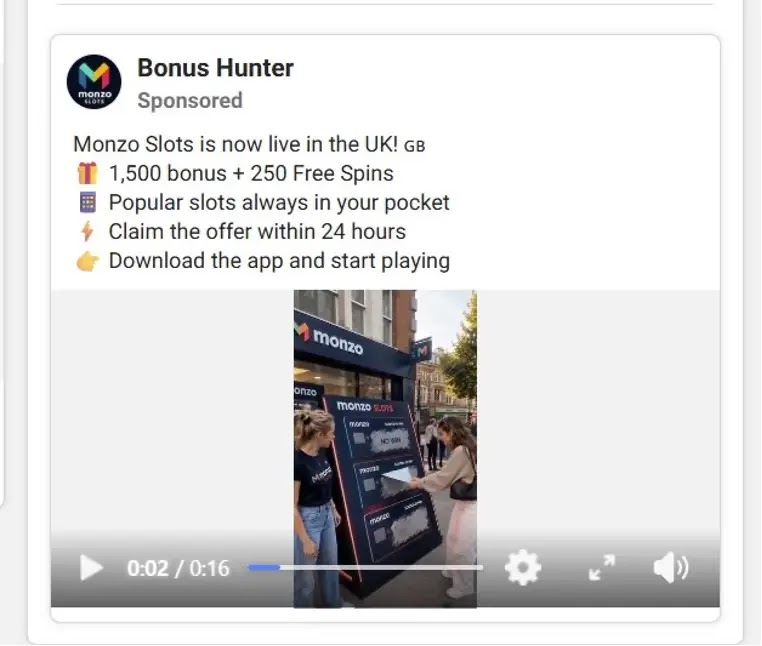
Netcraft also found that some domains created for one impersonated brand were later used in ads for another brand, which points to reusable scam infrastructure.
Meta’s Own Ad Rules Ban Misleading Scam Offers
The campaigns also raise questions about ad review and enforcement. Meta’s advertising standards say ads must not promote offers using deceptive or misleading practices designed to scam people out of money or personal information.
Still, scam ads often exploit visual trust signals before users have time to check whether the promotion is real. A familiar logo, a fake app listing, and a high bonus claim can make the ad look official enough to earn a click.
For brands, the risk goes beyond lost traffic. Impersonation ads can damage customer trust, trigger support complaints, and expose users to gambling platforms the real company has no connection with.
Warning Signs Users Should Watch For
Users should treat any social ad claiming that a bank, supermarket, streaming platform, or tech company has launched an online casino with caution.
- The ad claims a trusted brand has suddenly launched a slots or casino product.
- The landing page looks like an app store but does not open inside the real app store.
- The install button adds a browser-based app instead of downloading from Google Play or Apple’s App Store.
- The offer promises unusually large bonuses, free spins, or guaranteed winnings.
- The developer name looks invented or slightly different from the real company name.
- The website address does not match the brand’s official domain.
What Brands and Platforms Should Do Next
Brands should monitor paid social ads, fake domains, app-like landing pages, and affiliate-linked casino traffic that uses their names or logos without permission.
Ad platforms should also treat fake gambling ads as a combined brand abuse, scam, and user safety problem. The presence of unacceptable business practices rules means enforcement teams already have a policy basis for removing deceptive ads.
Consumers should verify gambling-related claims through a brand’s official website or official app. If the offer only appears inside a social media ad, it should not be trusted.
FAQ
It is a scam where fraudsters use the names and logos of trusted brands in social media ads to make users believe the company has launched an official slots or casino product. The user is then pushed toward an unrelated gambling site.
Reports mention brands including Monzo, Revolut, Barclays, Tesco, Amazon, Netflix, Facebook, and the Irish National Lottery. The campaign appears to target multiple industries rather than one company.
In many cases, users are not installing a real app from an official app store. They are prompted to add a Progressive Web App, which can look like an app while loading an unrelated gambling site through the browser.
Affiliate links can pay the scam operators when a user signs up and deposits money at the gambling site. This gives scammers a financial incentive to keep running fake ads and rotating domains.
Users should avoid installing apps from social media ads, check whether the offer appears on the brand’s official website or app, inspect the real web address, and treat guaranteed winnings or sudden casino launches from trusted brands as suspicious.


Read our disclosure page to find out how can you help VPNCentral sustain the editorial team Read more


Improve this guide




User forum
0 messages