
Does a VPN Extension Work in Incognito? How to Enable and Check It
Unlock privacy: Can VPNs make Incognito browsing safer? Discover the secrets now!


 4 min. read
 Updated on

Yes, a VPN extension can work in Chrome Incognito, but you must allow the extension to run there and check that its connection is active. Opening an Incognito window does not turn on a VPN.
There are two separate checks: whether the browser permits the extension in private windows, and whether the extension is actually routing your traffic. Complete both before relying on it.

Access content across the globe at the highest speed rate.
🔥 Save 84% + 4 bonus months! 🔥
70% of our readers choose Private Internet Access
70% of our readers choose Private Internet Access
2
Browse the web from multiple devices with industry-standard security protocols.
🔥 Save 81% + 4 bonus months! 🔥

Faster dedicated servers for specific actions (currently discounted)
🔥 Save 77% + 3 bonus months! 🔥

Allow your VPN extension in Chrome Incognito
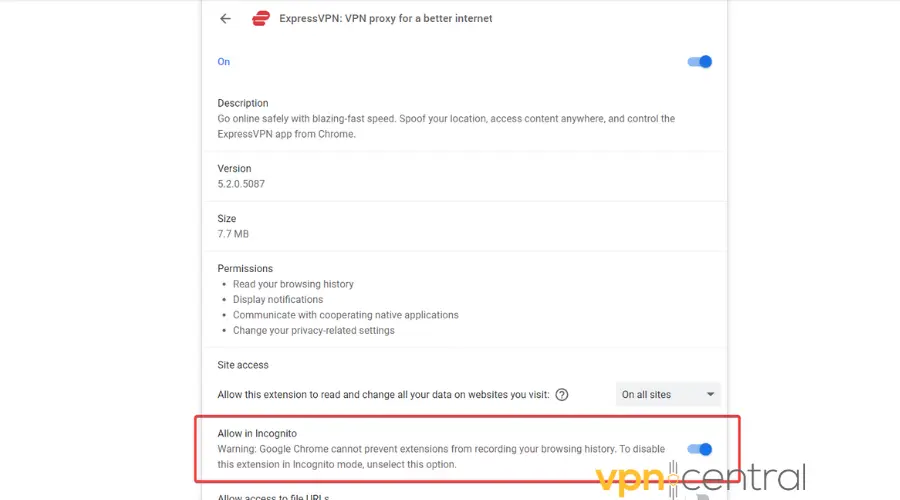
On desktop Chrome, open the three-dot menu, choose Extensions → Manage extensions, and find your installed VPN extension. Select Details, then switch on Allow in Incognito. Google documents this permission in its extension management guide.
Only grant this permission to an extension you trust: it can access data in your private browsing session within its granted permissions. If Chrome is managed by your employer or school, an administrator may restrict extensions or Incognito access.
Connect inside a fresh private window
Open a new Incognito window and open the VPN extension from the toolbar or Extensions menu. Sign in if required, choose a location, and check that it reports a connected state. Permission to run is not proof of an active connection.
If the extension is missing, return to its Details page and check that it is enabled and allowed in Incognito. Close your private windows, open a fresh one, and try again. If it appears but will not connect, check the provider’s account status and support instructions.
Check what the extension protects
Some extensions create a browser-only proxy connection. Others control a separately installed VPN application, and some offer more than one mode. Check your provider’s documentation and the selected mode rather than assuming that every extension behaves the same way.
A browser-only connection does not automatically cover another browser, a game, or a desktop email app. A VPN application can cover traffic outside the browser, subject to its routing settings and exclusions. Our VPN app versus browser extension guide explains the distinction.
As a basic check, open the same public-IP lookup page in a regular window and an Incognito window. If the private window shows your ordinary internet connection’s address while the regular window shows the VPN address, investigate the private-window permission and connection.
Matching addresses alone do not prove success: both windows could be using the desktop VPN, or both could be using your ordinary connection. Compare the result with the extension’s connection status and expected server location. An IP check also does not verify DNS handling or every request the browser makes.
Firefox uses a different permission
In Firefox, open Add-ons and themes → Extensions, select your VPN extension, and look for Run in Private Windows. Choose Allow when that option is available. Then open a private window and check the extension’s connection. Mozilla’s private-window extension guide explains the permission and its limits.
Do not follow the Chrome screenshots for Firefox: the browsers use different menus. If an extension does not support private windows or the setting is controlled by an administrator, use the provider’s supported alternative.
What Incognito plus a VPN does not hide
Incognito limits the browsing history and session data Chrome keeps after you close all Incognito windows. It does not make you anonymous. Websites can still identify an account you sign into, and your VPN provider remains part of the connection path. Downloads and saved bookmarks can remain on the device.
A VPN is not a guarantee of access to every blocked website, and it does not erase records already held by a website or network. Use private browsing for local session separation, and verify the VPN connection separately. To stop an extension running in Incognito, turn off Allow in Incognito and reopen your private windows.


Read our disclosure page to find out how can you help VPNCentral sustain the editorial team Read more


Improve this guide



User forum
0 messages